Webb Telescope Finds Metal-Rich Gas Near Milky Way’s Central Black Hole
The James Webb Space Telescope (JWST) has found that gas surrounding the Milky Way’s central supermassive black hole contains about 1.8 times the heavy elements found in the Sun. The discovery could help astronomers better understand the environment around Sagittarius A*, a black hole with about four million times the Sun’s mass that lies roughly […]
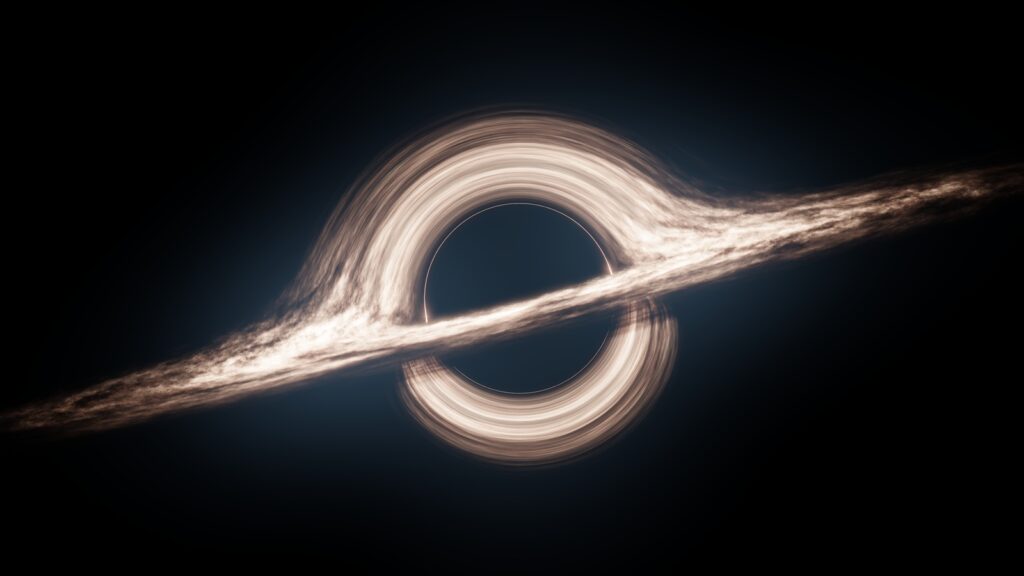
James Webb Space Telescope has discovered gas surrounding the Milky Way's central supermassive black hole, Sagittarius A*, containing roughly 1.8 times the heavy elements present in the Sun. This finding, published in The Astronomical Journal on October 19, may aid astronomers in understanding the environment near the black hole, which has a mass about four million times that of the Sun and lies 26,000 light-years from Earth.
The term "metals" in astronomy refers to elements heavier than hydrogen and helium, such as oxygen, iron, and nickel. These elements are produced by stars and dispersed into space through events like supernova explosions. By examining the chemical signatures of the gas near Sagittarius A*, researchers observed a metal abundance described as "mildly supersolar." This information provides valuable insights into the black hole's surroundings, although it does not directly explain the black hole's slow feeding rate.
The study examined a region approximately one-third of a light-year away from Sagittarius A* using the Mid-Infrared Instrument on JWST. The team focused on a structure called the Minispiral, a three-armed pattern of warm gas that carries material towards the black hole from a cooler ring farther out. By measuring light from neon, argon, sulfur, nickel, and iron, the researchers determined that the metals most likely originated from supernovas occurring near the black hole over time.
The gas shares a similar composition with many nearby stars, suggesting that the gas and stars formed together.
The elevated metal abundance could make the relatively quiet behavior of Sagittarius A* more challenging to explain, as metal-rich gas generally cools more quickly. However, the researchers note that the 1.8 times the Sun's metal abundance is relatively modest and likely cannot significantly increase the cooling rate. They also suggest that ongoing heating from a nearby supernova remnant may help maintain the black hole's slow inflow.
Despite these findings, astronomers cannot rely solely on the gas's composition to determine the black hole's past flaring activity. Nonetheless, the measurements offer a more realistic starting point for computer models simulating the black hole's feeding process and may contribute to our understanding of how metals spread around distant supermassive black holes and their role in the formation of heavy elements on Earth.
Written by urgent.news from Colombia One's reporting — not their text. Machine-written — may contain errors; check the original before relying on it.
This story
This is one outlet's version. Read the fullest account.
- James Webb telescope discovers surprising trove of metals around the Milky Way's supermassive black hole livescience.com
- Milky Way’s Central Black Hole is Surrounded by Metal-Rich Gas, Webb Reveals sci.news
- Inside the Supermassive Debate Over the James Webb Telescope’s ‘Little Red Dots’ wired.com
- The James Webb telescope is watching one of the earliest supernovas in the universe unfold r.smartbrief.com