Tibetan river hosting world’s biggest dam is facing increasing flood risk: study
Chinese researchers have found that the Yarlung Tsangpo River – soon to host the largest mega dam in the world – may face increased run-off and flood risks over this century. Using tree-ring width chronologies in the southeastern Tibetan Plateau, the team reconstructed the river’s run-off history from 1325 to 2020. Along with climate data, this was used to create a model that projected river…
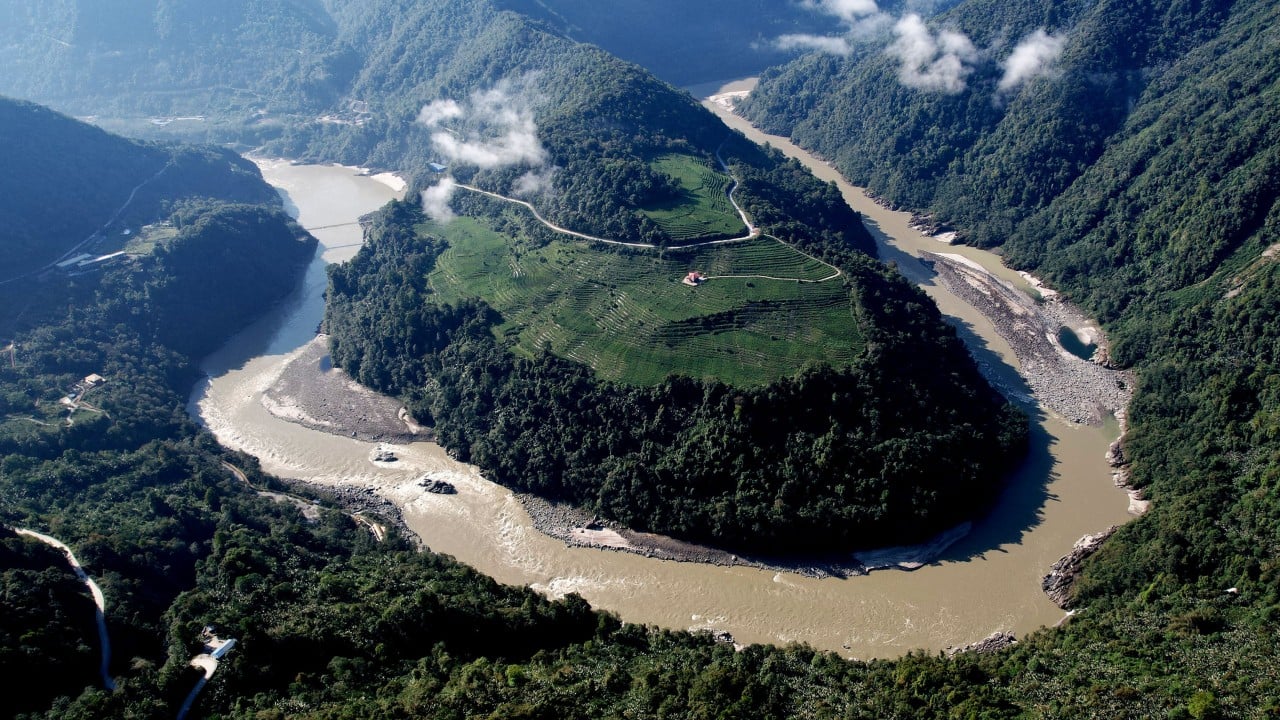
Chinese researchers have discovered that the Yarlung Tsangpo River, which will soon be home to the world's largest dam, may be at greater risk of flooding and increased run-off in the coming century. By analyzing tree-ring widths in southeastern Tibet, the researchers reconstructed the river's runoff patterns from 1325 to 2020. When combined with climate data, they developed a model predicting that future runoff will increase under various climate scenarios, potentially leading to more frequent and severe floods.
The study, published in the Chinese Science Bulletin, emphasizes the importance of considering these hydrological changes in planning water resource development and assessing transboundary water risks in the region. Originating from a glacier in western Tibet, the Yarlung Tsangpo eventually flows south into India as the Brahmaputra, where it is a vital water source for millions downstream.
The Tibetan Plateau has been warming at roughly twice the global average rate, affecting the region's ice cover and hydrological cycle. Rising temperatures have caused accelerated glacial melting, permafrost degradation, and reduced snow cover duration, leading to more unstable rain distribution, increased extreme rainfall events, and altered runoff patterns.
The researchers note that while the current understanding of these changes is limited by data availability, tree rings provide a valuable climate proxy, with ring width and density being sensitive to moisture conditions during the growing season. By analyzing samples from 11 high-altitude sites between 2008 and 2020, the Chinese team found that runoff exhibited inter- and multidecadal variability over the past 700 years, with both wet and dry periods.
Their model projects that runoff in the Yarlung Tsangpo River will increase by 20-29% by 2100 under current climate change scenarios. This projected increase in both mean runoff and extreme high-runoff events highlights the need for comprehensive basin management that balances water resource utilization, flood risk mitigation, and ecological water requirements.
Written by urgent.news from Reuters Business via SCMP's reporting — not their text. Machine-written — may contain errors; check the original before relying on it.
This story
This is one outlet's version. Read the fullest account.