Thousands fly home to have say in tight Israeli election
Amidst the arrivals hall at Ben Gurion Airport, it was clear that many were returning home for Israel's upcoming general election. Some had been traveling the world before deciding to cast their ballot. One woman expressed her happiness at being there, hoping for a change in the country's governance. Israel does not permit its citizens to vote abroad, except for a few exceptions.
Over 70,000 Israelis have signed up for the Fly and Vote initiative to return and vote. Participants in the program expressed a desire for political change and a better future for their nation. Many of those returning shared a common concern - Israel's global perception. One traveler from Bali mentioned that upon returning, people often dismiss those from Israel, expressing a preference for other nations.
Israel's situation could be pivotal in the election, as neither the governing bloc nor the opposition parties have secured a majority in the 120-seat Knesset. Arab citizens, who constitute roughly 20% of the population, could play a crucial role in the outcome. The Joint List, an Arab-majority political alliance, anticipates a higher turnout among Arab voters this year compared to the last.
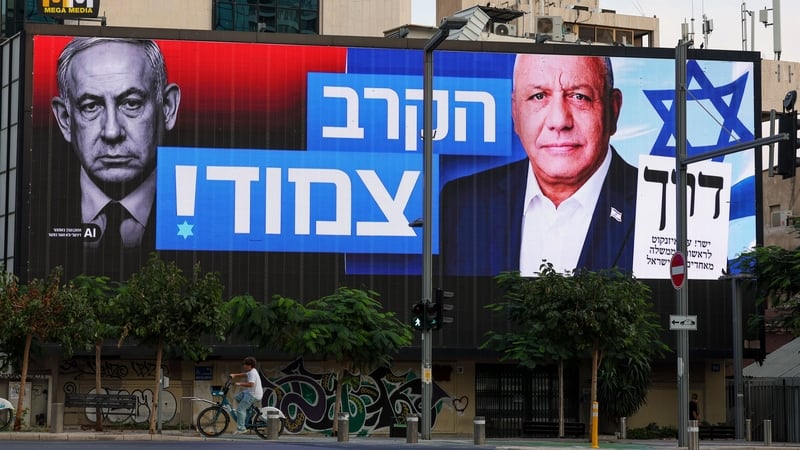
Gadi Eisenkot, the main opposition candidate, has ruled out including Arab parties in a government coalition unless they adhere to specific conditions, including recognizing Hamas as a terrorist organization. Despite this, the Joint List remains committed to working with the opposition to thwart what they perceive as a "Netanyahu-Ben-Gvir-Smotrich" government.
Netanyahu's Likud party has presented the election as a choice between "right or Palestine," aiming to discourage those on the right from supporting left-wing parties that might recognize a Palestinian state. In the ultra-Orthodox city of Bnei Brak, fears surrounding compulsory military service for religious men have been at the forefront of voters' minds.
The Supreme Court recently mandated the drafting of these men, which the opposition candidate, Gadi Eisenkot, has pledged to uphold. For many Haredim, the election outcomes could significantly impact their status within Israeli society.
Written by urgent.news from RTE News's reporting — not their text. Machine-written — may contain errors; check the original before relying on it.