Predatory amphibians swam the seas 237 million years ago
Until now, it was thought that the squishy, permeable skin of amphibians was unsuited for marine life because it would absorb too much salt from sea water – but a fossil found in China upends that view
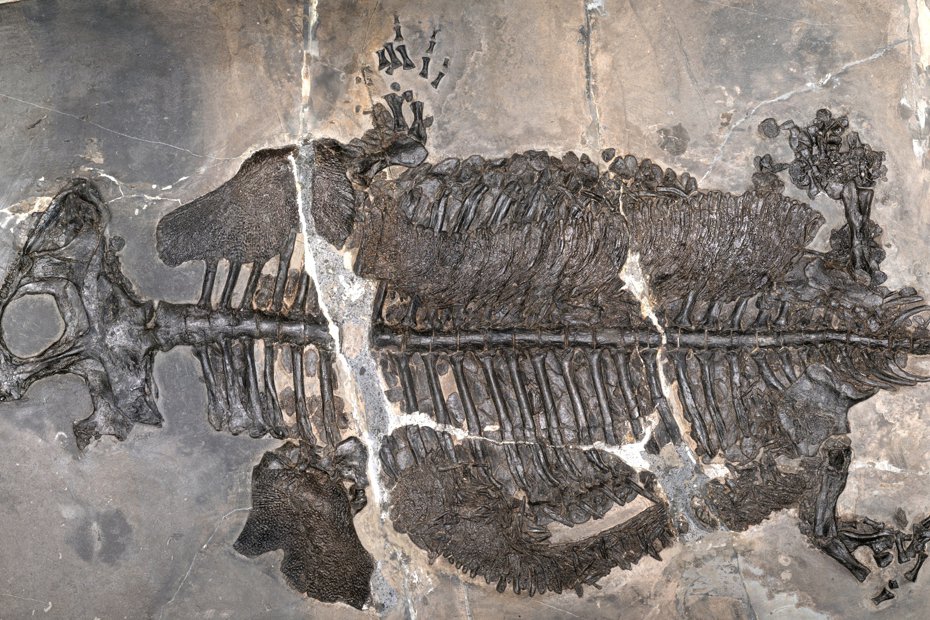
Nearly 237 million years ago, in the Late Triassic Period, a unique marine amphibian called Gerrothorax maritimus swam the seas. Discovered in modern-day China, this fossilized predator was the first evidence of amphibians adapting to life in the ocean. Measuring 74 centimeters long, this exquisitely preserved specimen held the key to its survival in salt water - its robust body armor.
Ryosuke Motani, a researcher at the University of California, Davis, analyzed the fossil and noted that the amphibian likely used suction feeding, similar to modern bottom-dwelling predators. The researchers confirmed the creature was indeed marine by examining strontium isotope ratios in its bones and found that it had adapted to life in the ocean rather than being a land-dwelling creature washed into the sea.
Written by urgent.news from New Scientist's reporting — not their text. Machine-written — may contain errors; check the original before relying on it.