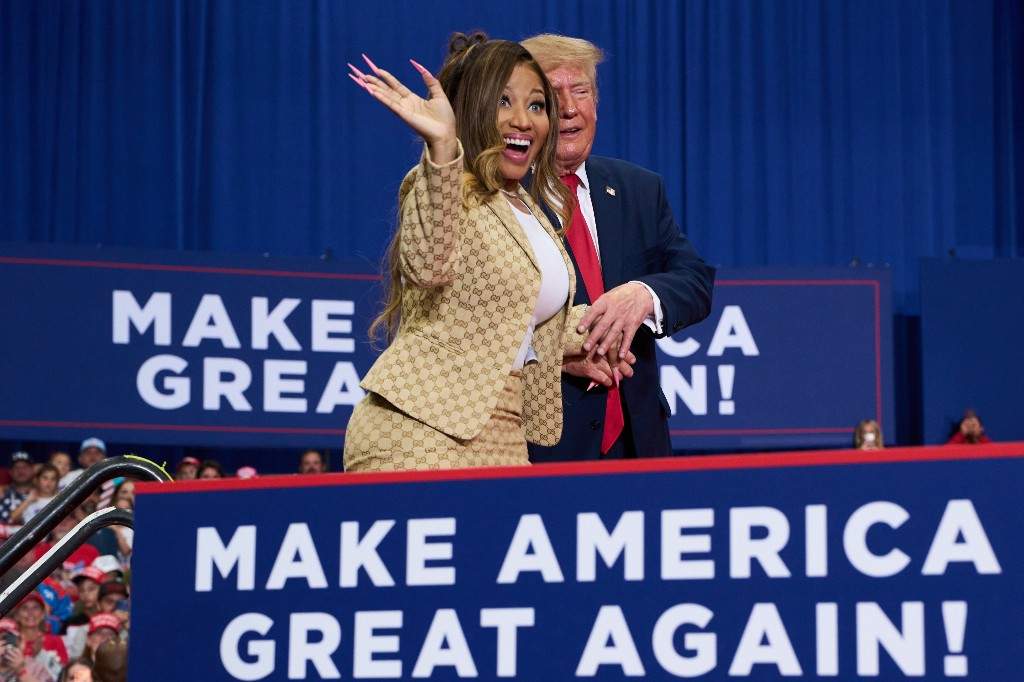
Nicki Minaj joins Trump during rally, says he’s ‘changed the energy’ of U.S.
'I will continue to support you forever and ever. If you run again, I will support you again,' Nicki Minaj told Trump on stage during the rally in Michigan.
Donald Trump's tenure in the White House was marked by a focus on energy dominance as a cornerstone of his economic and foreign policy strategies. However, recent events have led to energy policy becoming a significant liability for him as he approaches the midterm elections. Despite vast US oil and gas resources bolstering the country's global standing and bolstering trade disputes, the war with Iran exposed a critical flaw: dominating energy production does not equate to controlling its prices.
Initially aimed at achieving US energy independence, this pursuit morphed into a doctrine of energy dominance, which now appears to be a case of hubris. Initially, tapping America's shale basins for cost-effective natural gas and petroleum had positioned the US as the largest producer of natural gas in 2009 and the leading exporter of liquefied natural gas (LNG) by 2022, thus exerting unprecedented influence over energy markets.
Upon returning to the White House, Trump declared a national energy emergency, emphasizing oil, gas, coal, and nuclear power while downplaying renewables. The administration's national security strategy directly tied US influence in the Western Hemisphere to energy dominance, mirroring the 19th-century Monroe Doctrine that sought to prevent European political interference in the region.
The high point of Trump's energy doctrine was early in the year when Washington ousted Venezuelan President Nicolas Maduro through a military operation. By February, the US not only possessed more energy than any rival but also had the means to manipulate trade, diplomacy, and security. Nevertheless, Trump's decision to engage in the Iran war tested this doctrine.
The ensuing energy disruption, while crude flows from the Middle East have largely recovered, saw Brent trading around US$110. The war validated Trump's strategy by cementing the US as the top supplier of crude, refined fuels, and LNG, generating substantial profits for domestic producers and exporters. While this provided some protection for US consumers against the energy shock, it was not foolproof.
The Iran war demonstrated that cheap and reliable energy is crucial for economic growth, be it for heavy industry or the burgeoning data centers driving the artificial intelligence race. However, the conflict has also altered the concept of energy security. For import-dependent nations, particularly in Asia, the shock has underscored the risks of relying heavily on distant suppliers, vulnerable shipping routes, and a concentrated global refining system.
This has likely prompted a shift towards broader diversification. Importantly, the conflict has likely permanently undermined Trump's promise that energy dominance would ensure low prices and economic security at home, highlighting the dangers of hubris.
Written by urgent.news from New Straits Times's reporting — not their text. Machine-written — may contain errors; check the original before relying on it.
Also reported by 2 other outlets
- Trump's energy dominance turning into hubris nst.com.my
- Audi CEO’s appearance at Trump rally ‘deeply embarrassing’, says union head freemalaysiatoday.com