Naga Fireballs: Thailand’s unexplained lights draw crowds to the Mekong
NONG KHAI – Under the scorching afternoon sun, visitors spread mats, unfolded chairs and opened umbrellas along the Mekong River in northeastern Thailand, waiting for nightfall and a phenomenon that has fascinated believers and puzzled observers for generations. They had come to witness the Naga Fireballs, glowing reddish-pink orbs said to rise silently from the river […] The post Naga Fireballs:…
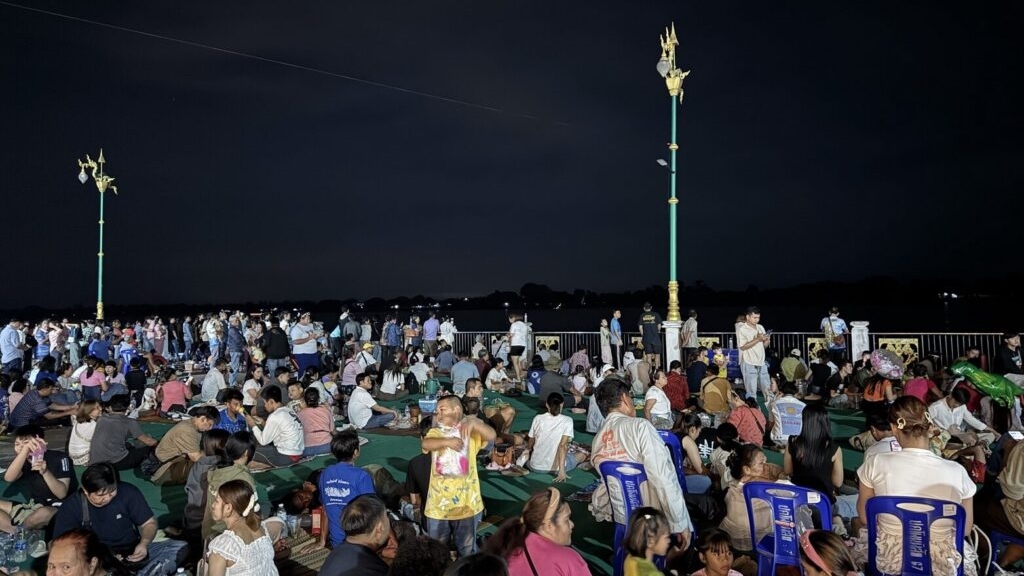
Under the blazing sun, eager spectators settled along the Mekong River in northeastern Thailand, preparing for the arrival of the Naga Fireballs on the night marking the end of Buddhist Lent. These mysterious reddish-pink orbs, believed to originate from the river, attracted both tourists and locals to witness an event shrouded in mystery and legend.
At Wat Thai in Phon Phisai district, a primary gathering spot, people of all ages gathered on the riverbank, hoping to catch a glimpse of the ethereal lights. The annual gathering combines religious devotion, folklore, and tourism, drawing thousands of people along the Thai-Lao border, all eagerly awaiting the spectacle whose origins remain unproven.
Witnesses describe the Naga Fireballs as small, reddish-pink or ruby-red spheres that briefly emerge above the water, rise into the night sky, and vanish without a trace. Unlike fireworks, these lights emit no sound, smoke, or smoke, and quickly disappear without following the typical downward arc of fireworks. Reports suggest the lights appear between sunset and 11 PM on the full moon day of Ok Phansa, ranging in size from a human thumb to a goose egg, and reaching heights of up to 150 meters.
The phenomenon occurs at around 20 locations in Nong Khai province, with Phon Phisai being the most well-known site. Despite decades of public interest, the cause of the Naga Fireballs remains disputed. Some theories propose that gases released from decomposing organic matter beneath the river could ignite and produce the observed lights.
However, questions linger about whether such a process could generate the described colors, movements, and behaviors. Another controversial explanation emerged from a 2002 television documentary suggesting that some apparent fireballs might have been tracer rounds fired from the Lao side of the Mekong. This claim sparked public anger in Nong Khai and remains contentious.
Researchers and skeptics continue to question whether every reported sighting has the same origin, as observations of lights along the river do not conclusively establish their underwater origin or single mechanism of production. The mystery of the Naga Fireballs adds to their allure, blending scientific inquiry with local belief and cultural significance.
For believers, the absence of a definitive explanation does not diminish the spiritual meaning of the event, while others find the mystery itself captivating. Authorities in Nong Khai deployed police and rescue volunteers to ensure public safety, with about 400 officers assigned across the province to manage traffic and reduce congestion.
Authorities also encouraged parents to supervise children playing with fireworks and firecrackers, warning them to handle the devices carefully and avoid disrupting those gathered to witness the fireballs. The event extends beyond a single viewing site, with communities along the Mekong organizing religious ceremonies and cultural activities to mark the end of Buddhist Lent, turning the riverbank into a gathering place for residents, pilgrims, and tourists.
At Phon Phisai, visitors braved the heat, patiently waiting for nightfall, their eyes fixed on the water and the sky above. Whether the lights ultimately prove to be natural phenomena or the result of supernatural forces, the Naga Fireballs remain a compelling spectacle that intertwines faith, tradition, and the enduring human desire to understand the unknown.
Written by urgent.news from Khaosod English's reporting — not their text. Machine-written — may contain errors; check the original before relying on it.