Most of the World's Shallow-Water Coral Reefs Have Been Deemed Critically Endangered, Meaning They Could Collapse Within 50 Years
The first-ever global assessment of these vibrant underwater ecosystems paints a grim picture: Climate change projections put 96 percent of shallow-water reefs at the highest level of threat
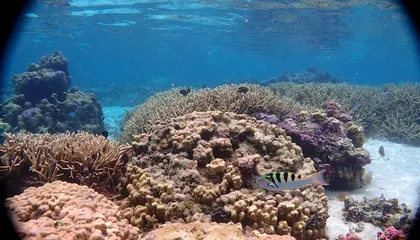
Nearly every shallow-water coral reef ecosystem on Earth faces a high risk of ecological collapse by 2075, according to a new assessment by the IUCN Red List of Ecosystems (RLE). The RLE is a scientific framework for evaluating ecosystem collapse risks. Over 250 experts evaluated shallow-water coral reefs across 127 tropical and subtropical regions, including the Great Barrier Reef in Australia and the Coral Triangle in Southeast Asia.
The assessment, released on October 22, revealed that 24% of coral reefs are already critically endangered. When accounting for projected heat stress due to climate change, the outlook darkens significantly: 96% of coral reefs are expected to be critically endangered within the next 50 years.
The Western Galapagos Islands have already experienced reef collapse, as identified in the assessment. Heat stress stemming from climate change emerges as the primary threat driving coral reef decline worldwide. Heat stress induces coral bleaching, a phenomenon where corals expel the symbiotic algae living in their tissues. Algae provide corals with the majority of their sustenance through photosynthesis; extended bleaching episodes weaken coral, making them susceptible to disease and ultimately leading to their demise.
Coral reefs occupy less than 1% of the ocean floor but harbor around 25% of marine life, making them crucial for marine biodiversity. Marcos Valderrábano, programme manager for the RLE at IUCN, expressed concern in an email to Mongabay. If climate projections prove accurate, most corals will endure repeated severe bleaching, resulting in a less biodiverse ecosystem as corals are supplanted by algae and turf.
Written by urgent.news from Mongabay's reporting — not their text. Machine-written — may contain errors; check the original before relying on it.
This story
This is one outlet's version. Read the fullest account.