‘Mesoamerican Modern’ redefines how we understand Mexican architecture
To walk through Mexico City is to stroll down centuries at once. The ruins of the Aztec empire are exposed on the ground beside colonial structures built from the same stones that once made up the ancient temples. A few blocks farther, 1900s European-inspired townhouses are pressed against 1940s Art Deco apartments, and modern skyscrapers shoulder through the city’s diverse skyline. Outside…
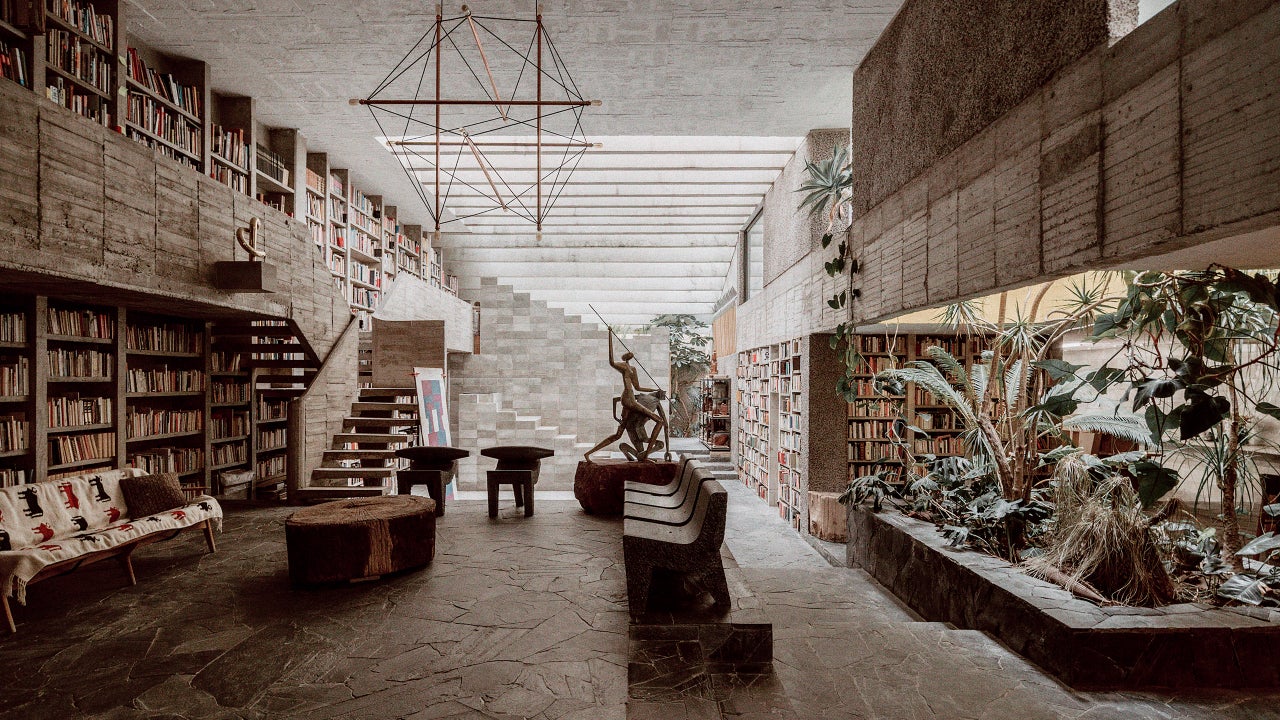
Strolling through Mexico City is akin to walking through epochs, with ancient Aztec ruins juxtaposed against colonial edifices, which in turn stand alongside European-inspired townhouses from the 1900s, Art Deco apartments from the 1940s, and modern skyscrapers. This unique blend of architectural styles is not limited to the capital city but is a prevalent trend across Mexico.
The book Mesoamerican Modern, authored by curator Su Wu and photographer Luis Garvan, delves into this diverse architectural landscape and proposes a new understanding of Mexican contemporary residential spaces as continuations of ancient traditions that have never truly vanished.
Wu, an expatriate who has resided in Mexico City for over a decade, criticizes the conventional use of geographic designations such as Asian, Oceanic, or African art when describing the Americas. She argues that this terminology implies the disappearance of history, resilience, and the relevance of these ideas in modern and contemporary architecture and design. Her book emphasizes a style that draws from shared cultural elements such as history, materials, and a deep appreciation for the natural landscape.
The term Mesoamerica in the book's title encompasses a broader historical and cultural region that stretches across most of Mexico, as well as Guatemala, Belize, and other Central American regions. This area was home to a multitude of tribes and empires, each with distinct languages. Despite this linguistic and cultural diversity, the region shared several similarities, including the development of independent agricultural systems, a shared astronomical calendar, and the construction of highly planned cities with roads converging towards a center of power.
These shared traits have persisted through the centuries and continue to influence contemporary architectural design in the region.
Wu's book highlights 16 contemporary homes in Mexico that exemplify this Mesoamerican modern approach. These homes not only react to or engage with their surroundings but also encourage a flexible understanding of space and function. For instance, Casa Bernal in San Sebastián Bernal, a pueblo mágico, retains a sixteenth-century facade adorned with Mesoamerican symbols while featuring monumental concrete forms inspired by ancient architecture.
In contrast, Casa 720 by architect Fernanda Canales in Valle de Bravo takes the shape of the Aztec calendar and incorporates a central patio for multifunctionality. Finally, Luis Barragán, Mexico's only Pritzker Prize winner, employs local volcanic stone in his designs, creating a harmonious blend with the surrounding terrain.
Written by urgent.news from Fast Company's reporting — not their text. Machine-written — may contain errors; check the original before relying on it.