Israel elections 2026: What happens if no party can secure a 61-seat Knesset majority? Top scenarios explained
Israel’s 2026 elections: With 61 of 120 seats needed for a majority, parties could explore alliances, a unity government, minority rule or fresh elections if negotiations fail.
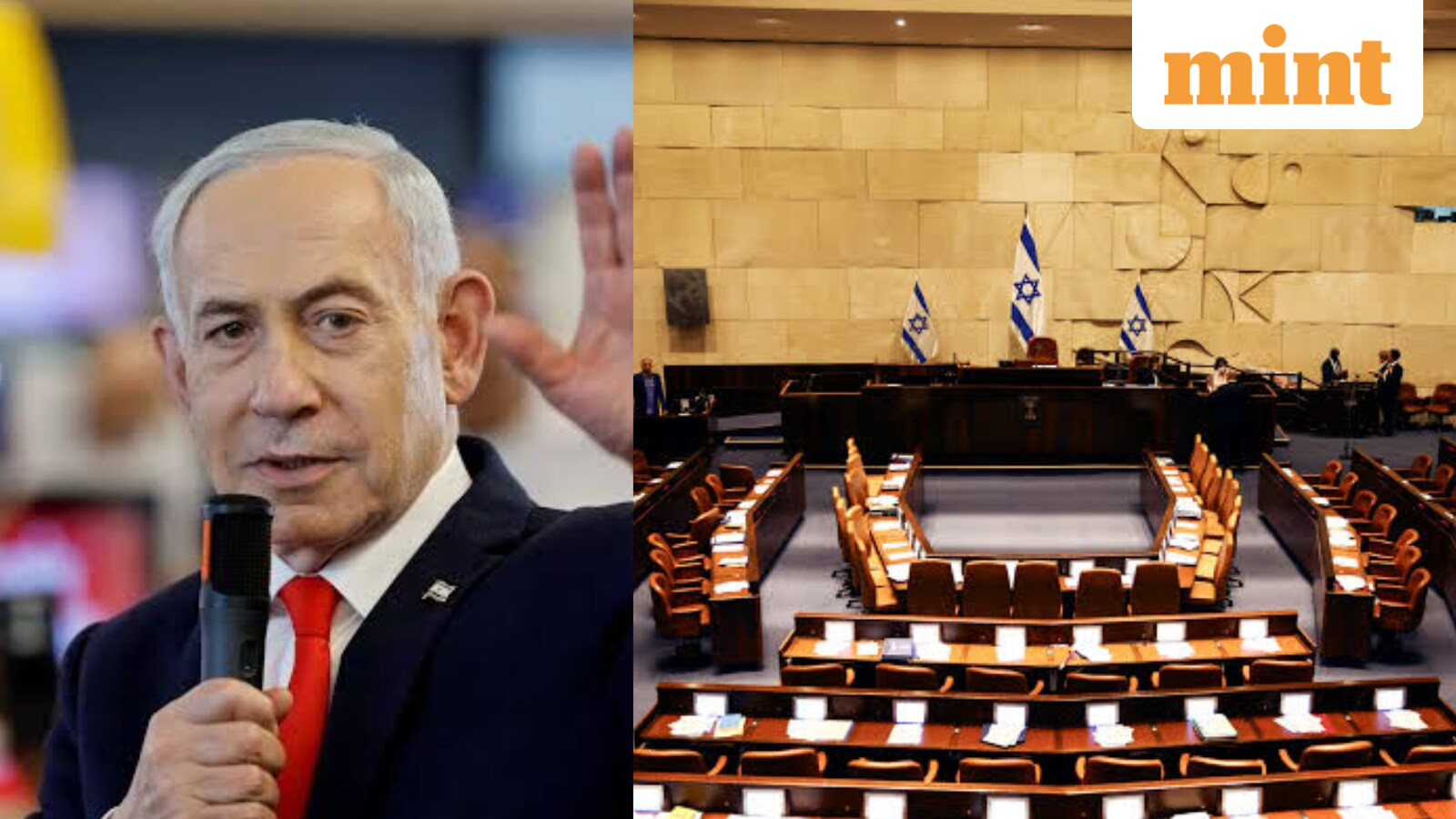
In the 2026 Israeli parliamentary elections, a potential political deadlock may arise if no party can secure the necessary 61 seats to form a government. The election will take place on October 27, with exit polls expected that night, preliminary results on October 28, and official results by November 4. The Knesset, Israel's parliament, consists of 120 seats, requiring a party or coalition to obtain at least 61 seats for a majority.
Given the country's proportional representation system, it is challenging for a single party to win enough seats to secure a majority independently. As a result, coalition negotiations play a crucial role in forming every Israeli government, as stated by the Council on Foreign Relations (CFR).
If the election results in a fragmented parliament with no clear majority, several scenarios could unfold. Prime Minister Benjamin Netanyahu may attempt to form a coalition with his Likud party and its traditional right-wing and religious allies, including Itamar Ben-Gvir's Otzma Yehudit, Bezalel Smotrich's Religious Zionism, Shas, and United Torah Judaism. These parties have previously supported Netanyahu-led governments and could determine whether he remains in power.
Alternatively, an opposition coalition could emerge, comprising parties led by Gadi Eisenkot, Naftali Bennett, Yair Lapid, Avigdor Lieberman, and Yair Golan. While these parties have differing policy views, their opposition to Netanyahu might provide a basis for negotiations. However, they would need additional support if their combined seat count is below 61.
Arab-led political parties, such as the United Arab List (Ra am) led by Mansour Abbas and the Joint List, could also influence the outcome. These parties could provide the necessary support to form a government, but their cooperation may be controversial among Jewish opposition leaders, complicating the negotiations.
Another possibility is a national unity administration, where rival parties form a government without formally including every supporting party in their cabinet. Smaller parties could back confidence motions and essential legislation without joining the coalition. Arab-led parties might support an opposition administration through such an arrangement, though policy disagreements could hinder parliamentary stability.
If no party can form a government independently, rival factions could join forces to create a national unity administration. Such an arrangement has been implemented in the past, with Benjamin Netanyahu and Benny Gantz sharing power through a rotating premiership following multiple election deadlocks in 2020.
Should coalition negotiations fail, Israel may face another parliamentary election. The country has experienced five elections between 2019 and 2022 due to persistent challenges in establishing stable governments. The upcoming election occurs amidst ongoing security concerns following the October 7, 2023, Hamas-led attacks and subsequent military operations.
Major issues shaping the political landscape include Netanyahu's handling of national security, judicial reforms, military service exemptions for ultra-Orthodox Jews, and the economy.
Written by urgent.news from Live Mint's reporting — not their text. Machine-written — may contain errors; check the original before relying on it.