India’s ‘dear friend’ is back in power in Brazil, and a $30 billion trade opportunity is on the table
Prime Minister Narendra Modi congratulated Brazilian President Luiz Inacio Lula da Silva on his re-election, pledging to deepen the India-Brazil Strategic Partnership. Bilateral trade rose 25% to $15.21 billion in 2025, with Lula setting a target of $30 billion.
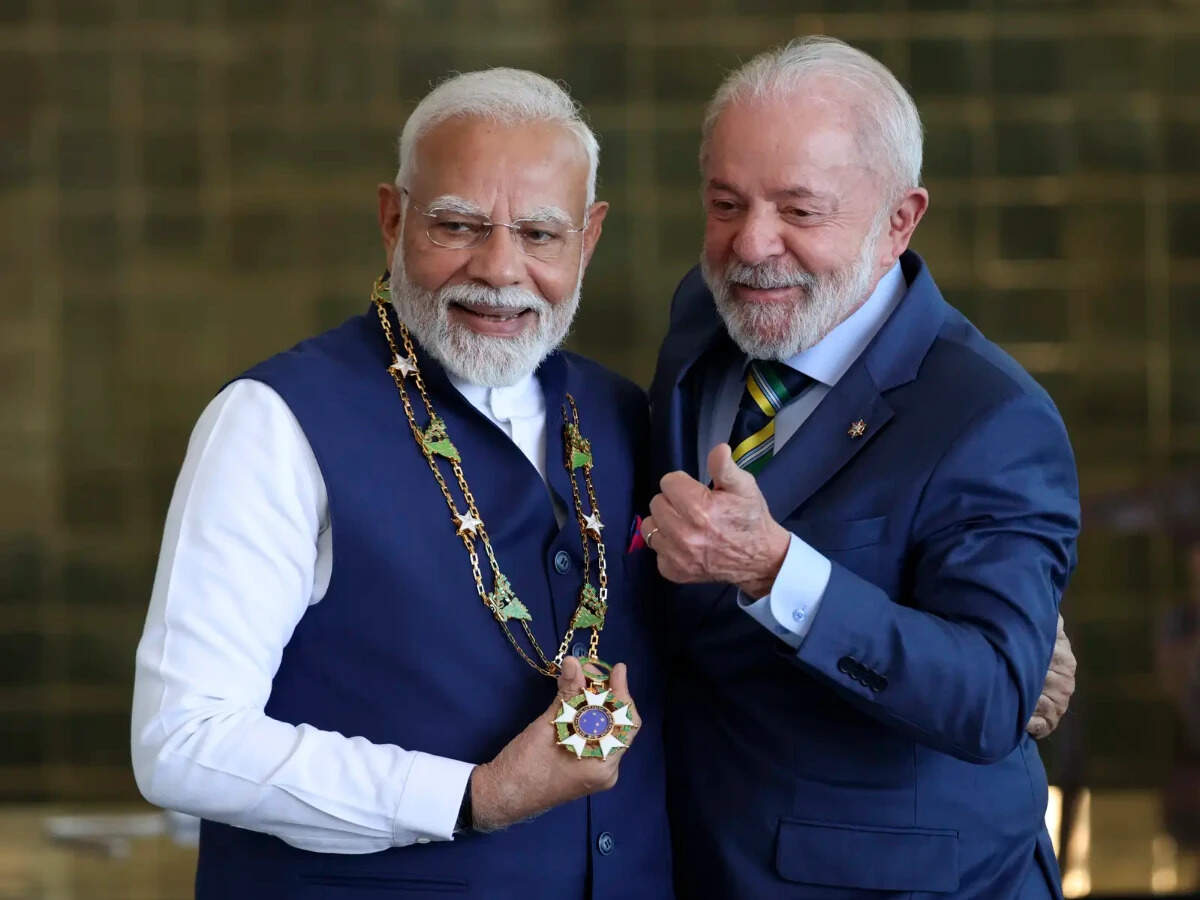
Prime Minister Narendra Modi greeted Brazilian President-elect Luiz Inácio Lula da Silva as his "dear friend" following the latter's re-election, reigniting discussions about the robust bilateral ties between the two nations. Modi expressed his desire to further deepen the India-Brazil Strategic Partnership, emphasizing that both countries would bolster cooperation across sectors and advance shared priorities of the Global South in pursuit of an equitable, sustainable world.
Brazil, India's largest trading partner in Latin America and the Caribbean, has witnessed a significant increase in bilateral trade. The two countries' trade volume rose to $15.21 billion in 2025, a 25% increase from $12.2 billion in 2024. In the first half of 2026 alone, trade climbed to $8.77 billion, a 37% surge from the prior year.
India exported goods worth $8.35 billion, including petroleum, chemicals, pharmaceuticals, and engineering products, while its imports from Brazil totaled $6.85 billion, comprising crude oil, soybean oil, raw sugar, cotton, and iron ore.
President-elect Lula had set an ambitious target of elevating bilateral trade to $30 billion, a goal surpassing the $20 billion target previously set by Modi for 2030. He described India as a "democratic brother in the Global South" and stressed the importance of their relationship being anchored in equality and mutual respect. Lula emphasized that negotiations with India should not be perceived as dealings with a colonizer, drawing a contrast with discussions involving wealthier nations.
The diplomatic relationship between India and Brazil has deep roots. Lula's visit to India in 2004, as the chief guest at the Republic Day celebrations, marked the beginning of a high-profile push for the relationship. In 2006, both nations elevated their ties to a strategic partnership, focusing on commercial engagement and cooperation in technology, energy security, and international security. They also aimed to expand investment and business links, extending their partnership beyond trade.
Lula’s engagement with India further shaped Brazil's economic outlook. Following a visit to India in the mid-2000s, the Brazilian leader recognized the significance of holding foreign exchange reserves, inspired by India's reserves nearing $100 billion at the time. Brazil subsequently built its reserves to about $360 billion, which he considered crucial for the country's economic resilience and standing in international financial institutions.
India and Brazil have also collaborated on issues affecting developing economies, leading to the establishment of the India-Brazil-South Africa Dialogue Forum (IBSA) in 2003. The forum provided a platform for the three nations to collaborate on development and international affairs, addressing concerns in agriculture, energy, health, education, science, and technology. The grouping has also worked together through the BRIC grouping, which included Russia and China, with its first summit held in Brazil in 2010.
As Lula's re-election brings renewed focus on their relationship, Brazil's potential to contribute to India's trade ambitions could further strengthen the India-Brazil Strategic Partnership.
Written by urgent.news from The Economic Times - Economy's reporting — not their text. Machine-written — may contain errors; check the original before relying on it.