How Ukraine's annual radio dictation brings a nation together, one word at a time
As it turns out, dictation exercises are not just for schoolchildren. On Oct. 27, hundreds of thousands of Ukrainians — from diaspora communities abroad to service members on the front lines — will take part in an annual tradition: listening, writing, and testing their mastery of the Ukrainian language. Organized by Ukrainian Radio since 2000, the annual Radio Dictation celebrates the Day of…
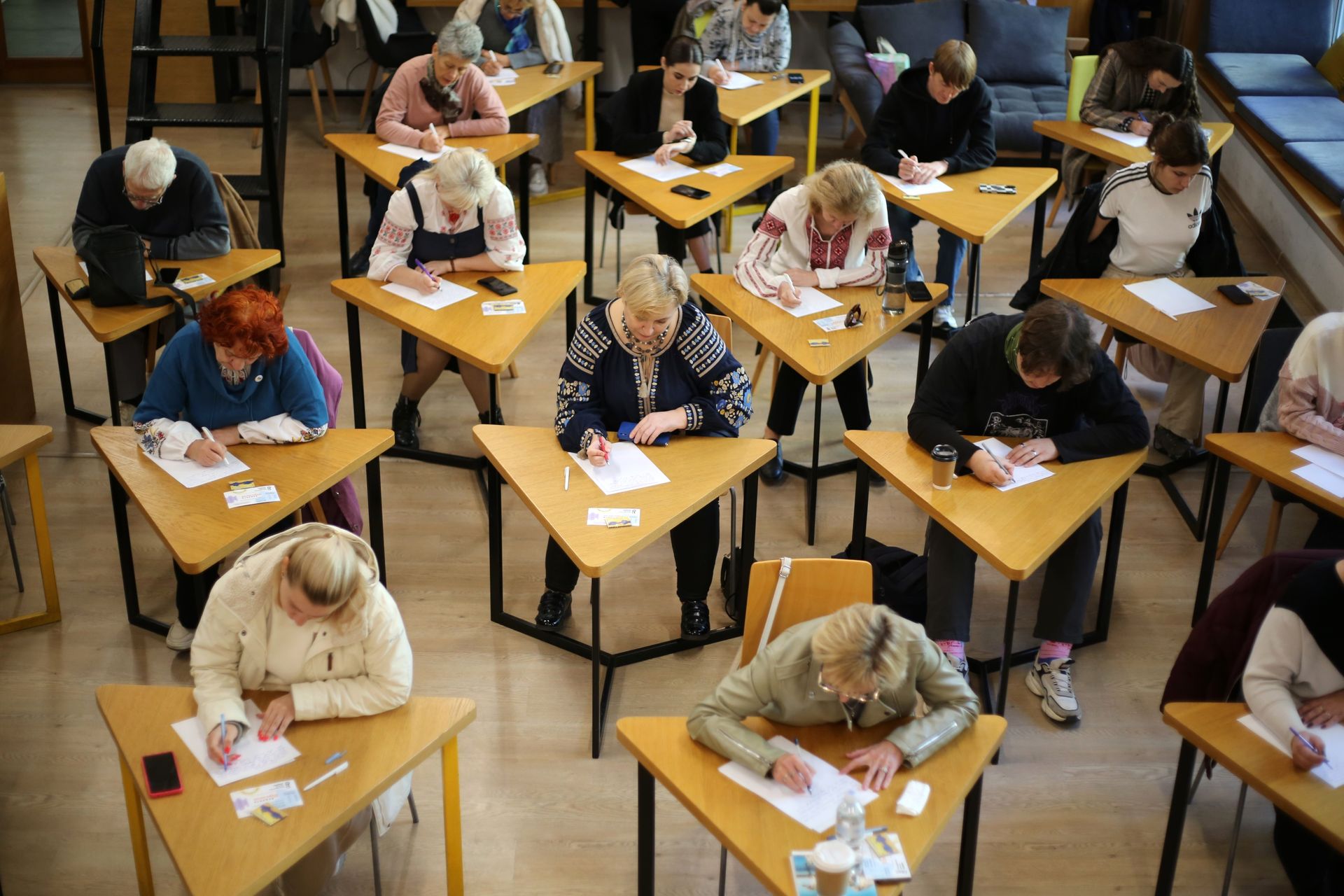
Every year, on Oct. 27, hundreds of thousands of Ukrainians — ranging from diaspora residents abroad to front-line soldiers — unite to participate in the annual Radio Dictation. Coordinated by Ukrainian Radio since 2000, the event takes place on the Day of Ukrainian Writing and Language, uniting participants to transcribe a text broadcast live across various platforms.
Writers and veterans, including Artur Dron, a war hero who penned this year's dictation, find the experience both daunting and special. Ukrainian Radio Executive Producer Yuliia Sheludko emphasizes the role of the dictation as an "anchor" for Ukrainians during wartime, reinforcing the importance of the Ukrainian language amid Russian aggression.
The initiative gains significance as Russian attacks intensify, as history shows the Ukrainian language faced suppression under imperial and Soviet rule. Since Ukraine's 2014 EuroMaidan Revolution, the use of Ukrainian has surged in societal consciousness, with the dictation becoming a powerful symbol of national identity for many.
Despite its unifying power, the Radio Dictation often stirs heated debates. Volunteer Dasha Astafieva faced intense criticism for reading the dictation in 2023, despite her current dedication to Ukrainian culture, while actress Nataliia Sumska drew backlash for her fast-paced reading. The controversy over who reads and the complexity of the texts highlights the tension in balancing a shared national language with differing standards of mastery.
Organizers, however, remain undeterred, encouraging participants to engage in the tradition and celebrate their shared linguistic heritage.
Written by urgent.news from Kyiv Independent's reporting — not their text. Machine-written — may contain errors; check the original before relying on it.