Farming under solar panels: Can agrivoltaics work in India without hurting crop yields?
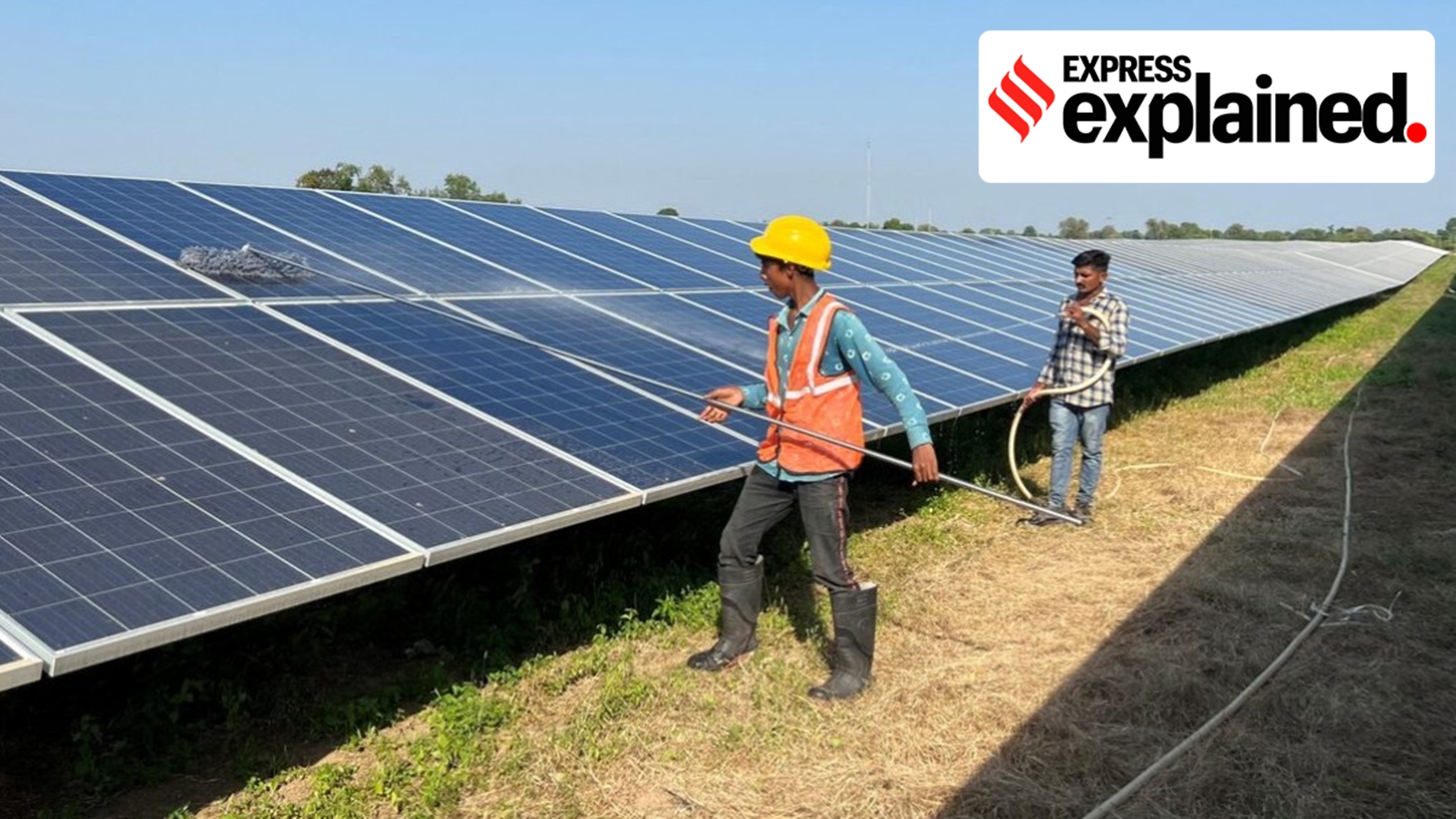
The Indian government unveiled plans this week to integrate solar panels with farming in the second phase of its flagship scheme, Pradhan Mantri Kisan Urja Suraksha evam Utthaan Mahabhiyaan (PM-KUSUM). This initiative, known as agrivoltaics, seeks to allow farmers to continue cultivating crops while simultaneously generating electricity from solar energy installed above the fields.
During the Agrivoltaics World Conference 2026 in New Delhi, Union New and Renewable Energy Minister Pralhad Joshi stated that approximately 30% of India's 160 million hectares of farmland could potentially support agrivoltaic systems. However, the feasibility of agrivoltaics in India hinges on several factors, including crop suitability, project costs, and the impact on farm productivity and farmers' incomes.
Unlike conventional solar projects, agrivoltaics involves mounting solar panels at an elevated height of around 3.5 to 4 meters to accommodate normal agricultural activities beneath them. This additional infrastructure makes agrivoltaic installations about 25-30% more expensive than traditional ground-mounted solar projects. Despite the higher costs, agrivoltaics could play a crucial role in addressing India's land scarcity for solar projects while helping to maintain food security.
Initial assessments indicate that agrivoltaics could be particularly beneficial for growing fruits and leafy vegetables, but not as suitable for crops like rice and sugarcane. Union Agriculture Minister Shivraj Singh Chouhan raised concerns about the potential impact on farmers' livelihoods and crop yields. He emphasized that the policy must protect small and marginal farmers, who constitute over 85% of India's farming community, and ensure that the model benefits agricultural production.
Chouhan highlighted the importance of considering local agro-climatic conditions, as a system successful in Rajasthan may not be appropriate for regions like Manipur, Nagaland, and Assam. Key considerations for the successful implementation of agrivoltaics include determining the appropriate height and orientation of panels, the spacing between them, and the specific crops that will thrive under the solar canopy.
Policymakers must also address the costs associated with installation, financing, maintenance, insurance, and equipment replacement. Establishing clear arrangements for electricity procurement, transmission, and timely payments to farmers is crucial, as is ensuring that farmers retain control over their land and do not experience a decline in crop production.
Farmer producer organisations could play a vital role in developing viable business models and facilitating participation from small farmers. The policy must also outline responsibility for the removal of solar panels and the restoration of the land to a cultivable state once the project concludes.
Written by urgent.news from The Indian Express's reporting — not their text. Machine-written — may contain errors; check the original before relying on it.