Could This Discovery Help Unlock the Voynich Manuscript’s Mysteries?
Researchers studying the Voynich manuscript, a 15th-century illustrated book written in an undeciphered script, propose that its pages were originally arranged as individual folded sheets before someone bound them in the wrong order. Their hypothesis could change how scholars study the mysterious text, although it does not explain what the words mean. The study, Singulion […]
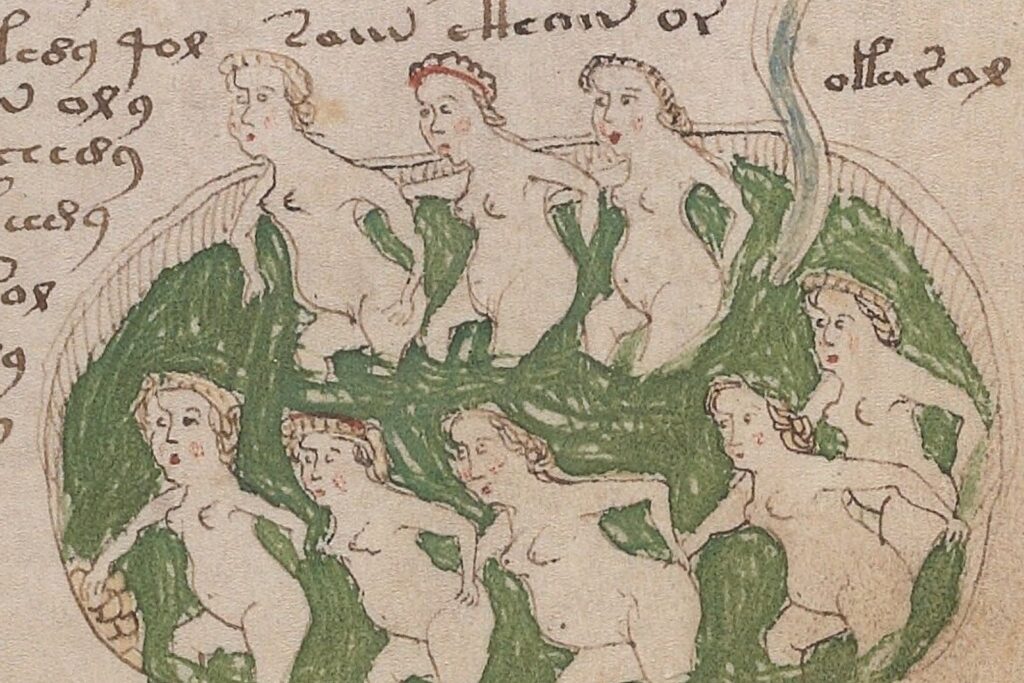
Credit: The 15th-century Voynich Manuscript, still undeciphered, contains a mysterious astronomical-looking chart on page 68r of its foldout. Credit: Public Domain
Researchers Lisa Fagin Davis and Colin Layfield propose a new hypothesis on the manuscript's original arrangement. They argue that the pages were initially separate folded sheets, not bound together in the current order. This idea, detailed in their study "Singulion Structure and the Voynich Manuscript," could alter scholarly understanding of the text, though it doesn't decipher the language. The study appears in Digital Medievalist.
The duo utilizes physical clues, such as illustrations that bridge separated pages, alongside statistical analysis employing latent semantic analysis (LSA). This computational technique identifies patterns in text without needing comprehension of its language. The results suggest the manuscript's original structure differed from the surviving copy, though reconstructing the actual sequence remains uncertain.
Medieval books were typically made from quires, groups of folded sheets sewn together. Davis and Layfield suggest the Voynich manuscript started as individual folded sheets, forming pairs known as singulions, which were not meant to be bound together. Someone later assembled them into the present volume, disrupting the original order.
Their statistical analysis compared text from different pages, leaves, folded sheets and gatherings, using known medieval manuscripts as calibration material. However, similarity scores don't establish meaning or correct page placement.
Distinct handwriting styles and illustrations provide further clues. Inconsistent page attribution, combined illustrations spanning pages, and unknown plant and astronomical diagrams have inspired various theories about the manuscript's purpose, but no consensus has emerged. Its history is incomplete, with Voynich acquiring it from a Jesuit collection in 1912, but its author, language, and origin remain unknown.
Radiocarbon dating places the parchment between 1404 and 1438, but this refers to the material, not the text's production.
Written by urgent.news from Colombia One's reporting — not their text. Machine-written — may contain errors; check the original before relying on it.