China’s First AI-Generated Feature Film Struggles at Box Office
China’s first fully AI-generated feature film has struggled to attract paying audiences, despite a production process that involved more than a million images and over two years of work. Its weak opening raises questions about whether advances in artificial intelligence can translate into commercially successful cinema. Sanxingdui: Future Past debuted in Chinese theaters on Oct. […]
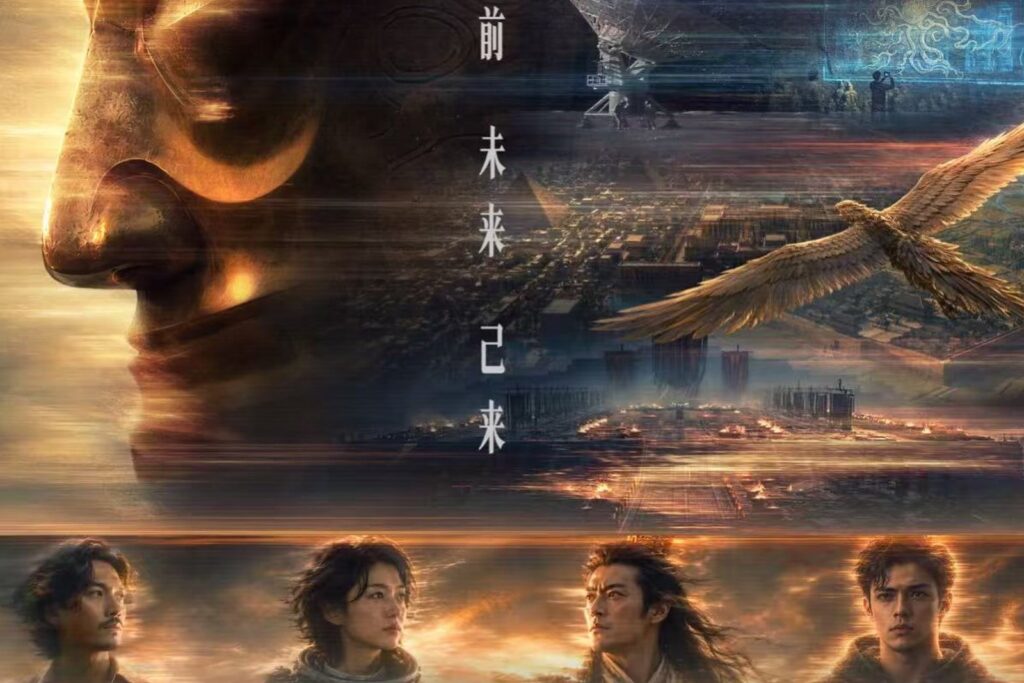
China's inaugural AI-generated feature film, "Sanxingdui: Future Past," has underperformed at the box office, despite employing a sophisticated artificial intelligence production process that involved more than a million images and a two-year development period. The film, which draws inspiration from the ancient Sanxingdui civilization in Sichuan province, debuted in theaters on October 23 and generated approximately 1.21 million yuan (US$181,000) in its first three days, according to preliminary figures.
The production cost of the film surpassed 10 million yuan (about US$1.5 million), and it marks the first AI-workflow feature to receive a public screening license from China's National Film Administration. However, weak early ticket sales suggest that the novelty of AI filmmaking alone has not been sufficient to attract a large audience.
The science-fiction narrative envisions a future where humanity entrusts its decisions to algorithms, and a global crisis prompts a search for answers through seven ancient symbols reminiscent of Sanxingdui. Nearly 100 individuals were involved in the production, generating over 1.2 million base images and refining the film over 100 times.
Bona Film Group utilized its proprietary Boka Film Cloud Studio platform to harness AI for visual creation, while human contributors handled the concept, script, shot design, and overall aesthetic.
Despite the film's digital characters being original creations, not replicas of real actors, early reactions indicate that audiences judge the finished movie rather than the technology used to produce it. Reviews from a free preview screening suggested that viewers would not pay to see "Sanxingdui: Future Past" due to its quality. Additionally, AI director Zhang Jun noted that audiences would not buy tickets simply based on the film's AI-generated nature.
The film's challenges are distinct from those of generating individual images or short videos. Ensuring consistency across scenes and maintaining narrative engagement over the film's runtime proved particularly demanding, as evidenced by the extensive revisions required. These complexities highlight the difficulty of translating AI-generated material into commercially successful cinema.
While AI-generated entertainment has garnered significant online engagement in China, such as AI-generated short dramas on Douyin accumulating over 200 billion views in September, this popularity does not automatically translate into cinema ticket sales. Viewers often consume short-form videos during brief phone sessions, whereas feature films require a sustained time commitment and a paid ticket purchase. Thus, the extensive production of visual content does not guarantee audience connection or commercial success.
The substantial production budget of "Sanxingdui: Future Past," exceeding eight times its earnings by October 26, further underscores the financial risks involved. For a film to recover its production costs through box-office revenue alone, it must achieve a significantly stronger commercial performance. The outcome of this AI-driven feature sets the stage for further exploration of AI filmmaking, with another project, "Gods Don’t Give Gifts," slated for a limited U.S. theatrical release on December 4 and a potential Oscar nomination in the best animated feature category.
Written by urgent.news from Colombia One's reporting — not their text. Machine-written — may contain errors; check the original before relying on it.