20 AWS Cost Optimization Moves That Still Pay Off
Discover 20 practical AWS cost optimization strategies for EC2, EKS, S3, RDS, and networking, with pricing examples and a 30-day action plan.
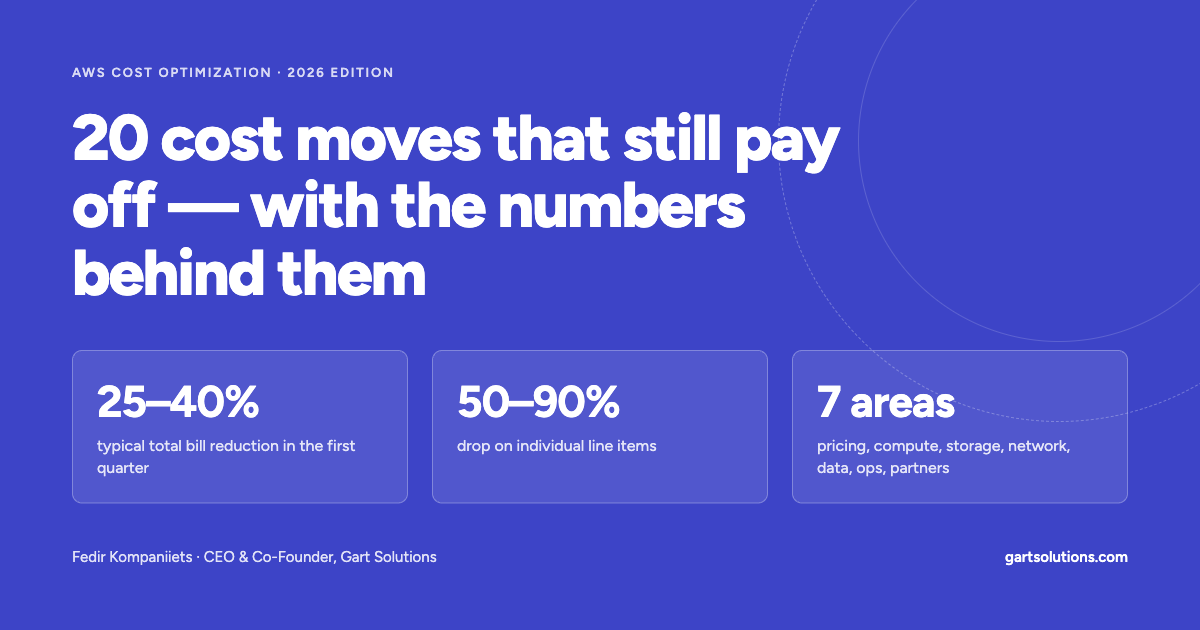
Most AWS bills are inflated due to overlooked defaults, such as using on-demand pricing for steady workloads, gp2 volumes, unexpired log groups, S3 buckets without lifecycle rules, and NAT gateways routing unnecessary traffic. Below are 20 cost optimization solutions, categorized by where the waste occurs, with realistic savings ranges, examples, and relevant commands or configurations. Implementing these measures can typically yield a 25-40% reduction in the first quarter.
1. Leverage Savings Plans for consistent workloads: Compute Savings Plans offer up to 72% savings for predictable EC2, Fargate, or Lambda usage over three months. EC2 Instance Savings Plans provide deeper discounts (up to 72%) for a specific instance family in a region. SageMaker Savings Plans offer savings for ML usage. Commit to 70-80% of the lowest 30-60 day compute spend, paying the remainder on-demand or via Spot. Review quarterly to add smaller plans as needed.
2. Utilize Reserved Instances for managed databases: Compute Savings Plans don't cover databases. However, classic RDS Reserved Instances provide deeper discounts (up to 72%) if database usage is stable. Database Savings Plans, introduced in 2025, offer up to 35% savings for Aurora, RDS, DynamoDB, ElastiCache, and other managed databases, regardless of engine or instance class changes over the year.
Written by urgent.news from HackerNoon's reporting — not their text. Machine-written — may contain errors; check the original before relying on it.