What do you do when your love and your life are in two different places?
Hi readers! Shayla Love here, science journalist and longtime fan of Your Mileage May Vary. I’m honored to be subbing for Sigal Samuel while she’s out on parental leave. I’m diving into your questions as a way to help understand human nature and our choices through multiple lenses: philosophical, psychological, and beyond. Please send in […]
Dear Fork in the Road, you've discovered a life full of connections and embarked upon a love you envision lasting a lifetime. While being in two places simultaneously seems impossible, the magnetic pull of two different destinations presents a dilemma. It's a quandary that has left many pondering the consequences of their choices.
To navigate this complex situation, some have turned to the Many Worlds Interpretation, a concept rooted in quantum physics. Imagine that every decision creates a new universe. In this scenario, if you were to move, there would be a parallel world where you remained in your current location. However, while this thought experiment may provide solace, it doesn't offer a practical solution to your predicament.
When faced with such a choice, emotions often cloud our judgment. Psychologists Daniel Kahneman and Amos Tversky identified a cognitive bias called loss aversion. People tend to fear losing something more than they appreciate gaining something of equal value. This bias can play a significant role in decision-making, particularly in personal relationships and social connections. For example, people may cling to fading friendships for fear of losing them, even if they're not deeply connected to them.
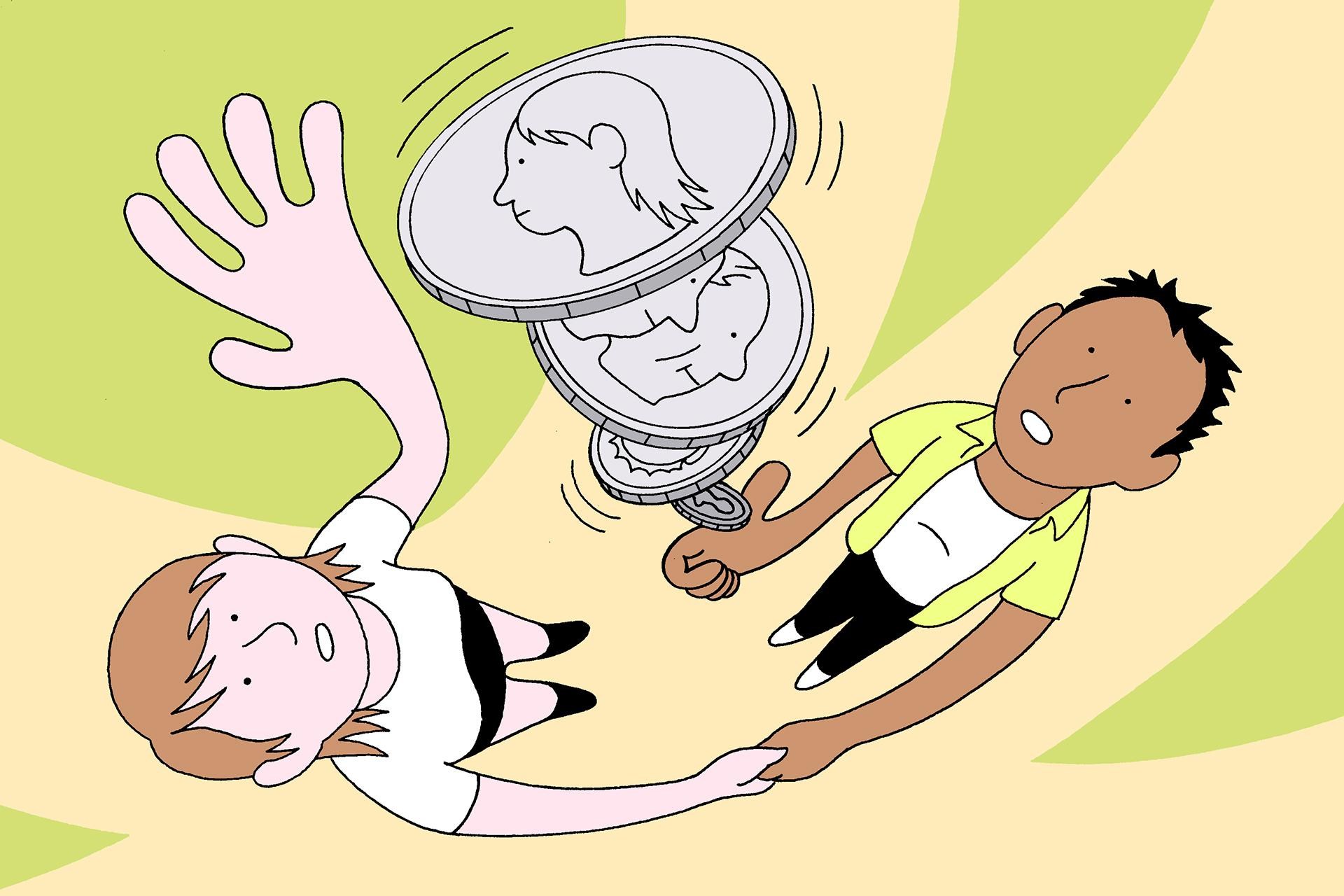
Another common hurdle is analysis paralysis. This occurs when people become overwhelmed by the uncertainty of a decision, leading to excessive overthinking and second-guessing. Research has shown that making a choice by flipping a coin can actually increase happiness. By eliminating the burden of analysis, individuals are more likely to embrace change and be content with their decision.
Instead of forcing yourself into a binary choice, consider introducing additional options. The French philosopher Jacques Derrida, known for his theory of deconstruction, challenged the notion of black-and-white thinking. He argued that many situations contain multiple perspectives and that rigid binary categorization often oversimplifies complex issues. In your case, explore whether there might be a third or fourth viable path forward, rather than being confined to only two possibilities.
Ultimately, the decision you make should be based on your genuine feelings and values, rather than being dictated by external pressures or cognitive biases. Accept that your decision-making process is influenced by emotions, biases, and personal circumstances. By acknowledging and accepting these factors, you can make a more informed and authentic choice, one that aligns with your desires and aspirations.
Written by urgent.news from Vox's reporting — not their text. Machine-written — may contain errors; check the original before relying on it.