The Inner Geography Of Travel: Journeys Into The Human Soul
Travel is often imagined as an encounter with the unfamiliar: a distant landscape, an alien culture, a bustling marketplace or a road disappearing into the mountains. Yet, the most enduring travel writing takes us somewhere more intimate. It uses the outer world to illuminate the inner one, revealing our fears, prejudices, desires, memories, and contradictions. In the works of Amitav Ghosh, Pico…
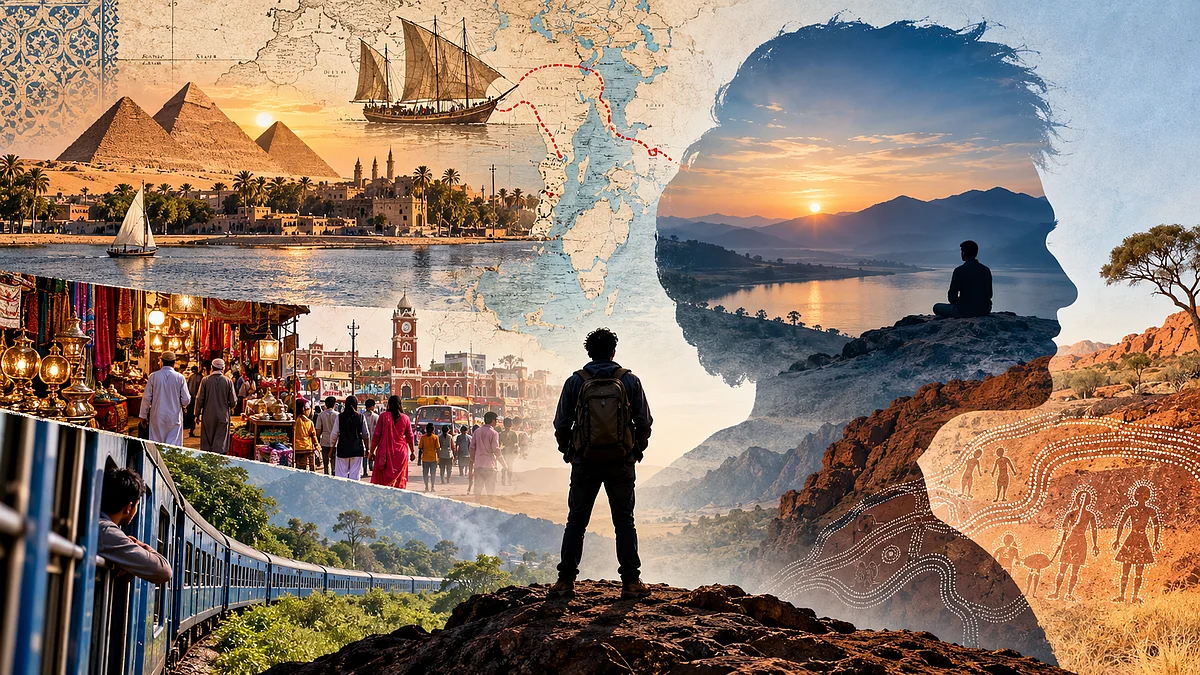
Travel is more than a physical journey; it can be an exploration of the human soul. Writers like Amitav Ghosh, Pico Iyer, Pankaj Mishra, Paul Theroux, and Bruce Chatwin reveal this deeper meaning in their works. Ghosh's travelogue 'In an Antique Land' delves into Egypt's history and people, showing how intimacy and belonging transcend cultural boundaries.
Iyer's 'The Art of Stillness' argues that meaningful travel involves pausing to reflect, rather than merely moving from place to place. Mishra's 'Butter Chicken in Ludhiana' examines India's shifting society, where modern aspirations intersect with cultural traditions. Theroux's 'The Tao of Travel' emphasizes self-discovery through firsthand experiences, revealing how encounters can challenge preconceived notions.
Chatwin's 'The Songlines' explores the connection between movement and memory, illustrating how travel can uncover hidden stories and deepen our understanding of place. Collectively, these writers suggest that travel is an exploration of both external and internal landscapes. A new self may be found in a foreign street, conversation, or landscape, reminding us that the greatest journeys sometimes lead to the discovery of ourselves.
Written by urgent.news from Free Press Journal's reporting — not their text. Machine-written — may contain errors; check the original before relying on it.