The Gulf’s unfinished defence infrastructure
The Gulf states find themselves at the centre of a regional war that is not of their making . A confrontation that began with US and Israeli strikes on Iran has spread into a web of proxy conflicts, reaching from the Strait of Hormuz to the Red Sea and Bab Al Mandeb, through Iraq and Yemen. The members of the GCC now face a question they can no longer put off: will they turn their commitment to…
The Gulf states find themselves entangled in a regional conflict that did not originate within their borders. This conflict, sparked by US and Israeli strikes on Iran, has evolved into a complex network of proxy conflicts spanning the Strait of Hormuz, the Red Sea, and Bab Al Mandeb, as well as Iraq and Yemen. The Gulf Cooperation Council (GCC) members now confront a critical question: will they transform their commitment to collective security from mere declarations into a functioning military deterrent?
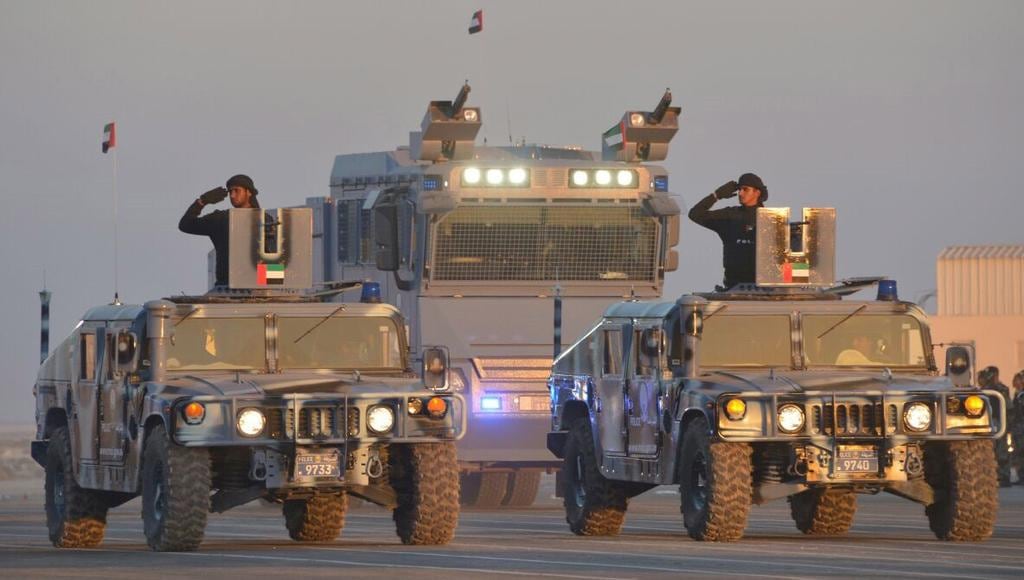
Over the past several decades, the Gulf states have heavily invested in advanced military capabilities. However, the pace of integration between these capabilities has lagged behind. While they possess weapons and institutions, what is lacking is a cohesive, collective response to regional threats. Despite existing defense cooperation mechanisms, each state continues to rely on its own national defense arrangements, even as regional threats increasingly operate through interconnected armed networks.
This situation leaves states with sophisticated arsenals vulnerable to attacks from armed groups using relatively inexpensive drones and missiles.
Iran has long cultivated armed partners in Lebanon, Iraq, and Yemen, extending its influence and leverage well beyond its borders. While Iran does not directly order every attack, the strategic impact remains the same: multiple fronts from which neighboring states can be threatened and strained. As pressure on Iran intensifies, the potential for more dangerous escalations increases, particularly if Iran's armed partners engage in conflict.
Armed non-state actors are now integral to the region's deterrence calculations, with civilian targets like airports, seaports, energy installations, and critical infrastructure becoming frequent victims of these groups.
The recent escalation by Houthi rebels against Saudi Arabia, as well as previous attacks on critical facilities in the UAE, Kuwait, Bahrain, and Qatar, underscores a dangerous shift in the region's dynamics. Iran's aim is no longer solely to exchange strikes; it seeks to infiltrate civilian and economic life, turning public safety, market stability, trade, and shipping into tools of coercion.
The Gulf cities risk becoming battlegrounds where regional grievances are settled, with civilians and economies becoming legitimate targets for groups that operate outside the realm of statehood and ignore sovereignty and the laws of armed conflict.
The GCC faces an uncomfortable irony: states that pursued diplomacy and avoided involvement in the war may still suffer the consequences. Remaining neutral does not guarantee immunity, and restraint alone will not dissuade actors who view escalation as their most effective bargaining tool. While the GCC does not need to create collective defense from scratch, the existing framework must be revitalized.
The Joint Defence Agreement stipulates that an attack on one member is an attack on all, and the Peninsula Shield Force and Unified Military Command have been established to bolster collective security. The challenge now lies in ensuring these structures can effectively counter contemporary threats such as missile and drone salvos, cyberattacks, and simultaneous strikes on critical infrastructure.
For the Gulf, the effectiveness of collective defense hinges on whether military cooperation can credibly deter potential attacks. Armed groups are not deterred by mere expressions of condemnation or post-conflict solidarity. Deterrence requires an aggressor to understand that attacking one Gulf state means facing an integrated defense system, rather than an isolated response.
This necessitates moving beyond coordination to integration. Practical steps include fully operationalizing the Unified Military Command with authority to coordinate joint responses, linking early-warning and air and missile defense systems across the six GCC states, establishing real-time intelligence sharing mechanisms, developing joint plans to protect critical infrastructure, and enhancing shared counter-drone and cyber-defense capabilities.
Increasing investment in regional defense industries would also lessen reliance on external suppliers.
While some may argue that bolstering joint defense could escalate tensions with Iran, the true purpose of deterrence is to prevent war. Credible, integrated defenses enable Gulf states to protect their interests and pursue diplomacy from a position of strength, reducing their susceptibility to coercion and prolonged attrition. Collective defense should be grounded in international law, clearly distinguishing between legitimate self-defense and open-ended retaliation.
The message to Tehran should be equally clear: Iran cannot pursue normal relations with its Gulf neighbors while arming groups that threaten them. Regional dialogue depends on a commitment to non-aggression and respect for the security and stability of all Gulf states.
Written by urgent.news from The National Business's reporting — not their text. Machine-written — may contain errors; check the original before relying on it.
Also reported by 1 other outlet
- The Gulf’s unfinished defence infrastructure thenationalnews.com