The debating club that helped shape NHS architect Aneurin Bevan's drive for power
How a group of young radicals helped set Aneurin Bevan on the path to founding the NHS.
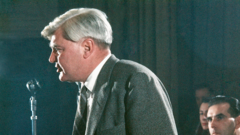
In the winter of 1921, a group of men assembled in Tredegar, a working-class town in south Wales. These individuals were predominantly coal miners, who had witnessed firsthand the disparities in wealth distribution resulting from the industrial revolution. The group, which would eventually become the Query Club, gathered in a local café to deliberate on ways to rectify this injustice.
This marked the birth of a semi-secret society that would eventually wield significant influence over the region and even the entire country. One of the club's key members was Aneurin Bevan, who would later go on to found the National Health Service (NHS) and transform housing for ordinary people.
The Query Club, a group of socialist thinkers, gradually recognized the need to gain power to effect change. They understood that the only way to achieve their goals was to be at the heart of decision-making processes, as Dr Nye Davies, a senior lecturer at Cardiff University, explained. The club believed that infiltrating every committee, board, and institution with like-minded socialists was the key to achieving their objectives.
One of the club's prominent members was Walter Conway, a 30-year-old orphan who had risen from the local workhouse to become the secretary of the Tredegar Medical Aid Society. Under Conway's leadership, the society expanded from 5,000 members to 20,000 in just a few years, providing medical care to 95% of the town's population. The society, like the club, aimed to challenge the dominance of the Tredegar Iron and Coal Company, which controlled the town's institutions.
The Query Club members infiltrated various organisations within Tredegar, undergoing rigorous tests and interviews to ensure they were committed socialists. This strategy allowed them to gain a foothold in institutions such as the council, hospital board, and medical aid society. By doing so, they sought to displace the entrenched power of the Tredegar Iron and Coal Company, which had long held sway over the town's decision-making processes.
As the club's influence grew, Bevan decided to run for the town council in 1922. By 1929, the Query Club's members, comprising 10 Labour supporters and five of its own members, held key seats on the council. Bevan's quest for power continued as he was elected to the county council in Newport in 1929. However, he soon realized that this was still not enough power to enact the changes he desired.
It was at this point that he decided to pursue a career in Parliament, where he could truly wield the power necessary to effect change.
Written by urgent.news from BBC Health's reporting — not their text. Machine-written — may contain errors; check the original before relying on it.