Sultan Sooud Al Qassemi on art: How an Egyptian weaving village became a lesson in the power of giving
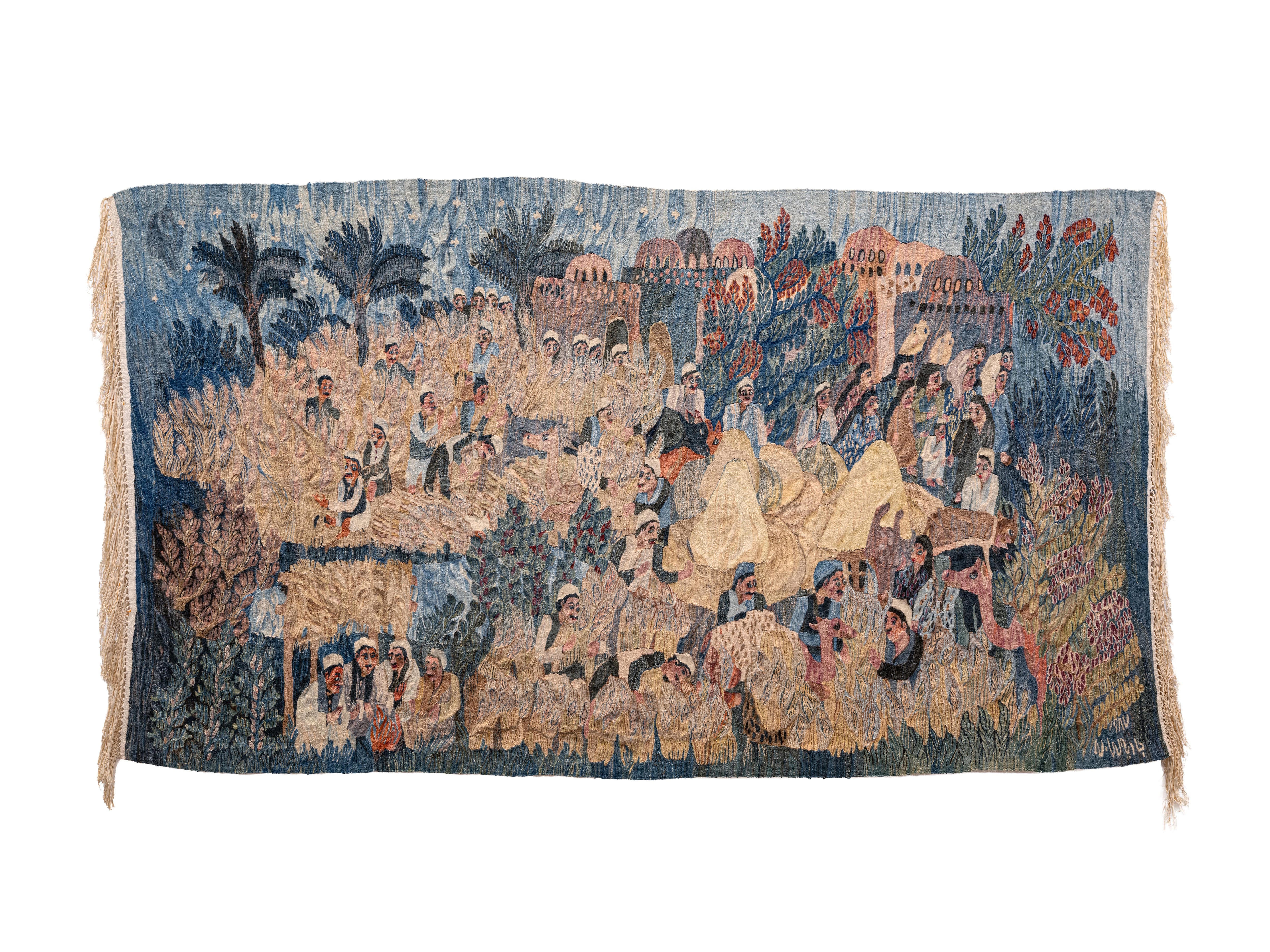
A busy village scene in the Upper Egyptian Delta depicts a crowd of men harvesting corn and placing it on the backs of animals of burden, while women look after the children nearby. In the bottom-left corner, four men gather around a fire, possibly hinting that the scene is set in the autumn months, coinciding with the end of the corn harvest season in Egypt. The background is peppered with…
The bustling village of Harraniya, located 15km southwest of central Cairo in Upper Egypt, was the canvas for a transformative project that has since become a testament to the power of giving. Founded in 1951 by Ramses Wissa Wassef and his wife Sophie Habib Gorgi, the Ramses Wissa Wassef Art Centre aimed to provide villagers with new opportunities to earn a livelihood and bring life to their quiet community.
Initially employing 45 individuals in weaving, stoneware, and batik painting, the center has since become a beacon of empowerment and self-sufficiency. As Sophie once shared, "One day [Ramses] said to me, 'Why don't we look for a simple village with quiet people and start a project that brings the place to life and helps the villagers learn something different?'"
This philosophy, rooted in generosity and selflessness, echoes the time-honored proverb: "Give a person a fish and you feed them for a day; teach them how to fish and you feed them for a lifetime."
The center's initial success lay in harnessing the talents of local artisans and artists, providing them with a platform to hone their skills and earn a living. As Mahmoud, one of the first-generation weavers, shares, his close friendship with the founders allowed him to create heartfelt gifts for their family, such as a tapestry celebrating their daughter Suzanne's engagement in 1972.
Over the years, the legacy of the Ramses Wissa Wassef Art Centre has continued to flourish, with generations of artisans and artists finding inspiration and support within its walls. The center's tapestries have become sought-after collectibles, gracing the walls of art enthusiasts in Lebanon, the United States, the United Kingdom, and Sweden.
Moreover, the center's impact extends beyond the artistic realm, with contributions from the UAE and Kuwait serving as powerful examples of how small acts of generosity can yield lifelong bonds and transform entire communities.
Written by urgent.news from The National UAE's reporting — not their text. Machine-written — may contain errors; check the original before relying on it.
This story
This is one outlet's version. Read the fullest account.