Serbian Strongman Vucic Concedes Defeat in Snap Elections
Former Serbian President Aleksandar Vucic concedes defeat to Student List in major parliamentary elections on Sunday. The result brings an end to 14 years of rule by Vucic’s Serbian Progressive Party.
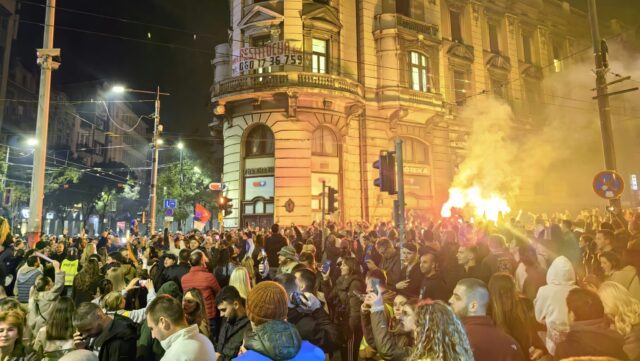
In a landmark political shift, Serbia has elected the Student List as the ruling party, marking the emergence of a student-led movement that grew out of months of protests and transformed into the nation's most influential political force. Outgoing President Aleksandar Vučić conceded defeat, stating that the Student List has secured a parliamentary majority, with between 135 to 140 seats compared to the Serbian Progressive Party's 105.
The Student List garnered around 2.2 million votes, outpacing the ruling party by a significant margin of 52% to 32.3%. This victory signifies more than just a change in parliamentary representation; it symbolizes a profound rejection of the political model that dominated Serbia for over a decade. The movement's success transcended its initial roots as a protest force, attracting not only university students but also urban middle-class individuals, opposition-minded voters, and those who felt alienated by established parties.
For the ruling establishment, the outcome marks a significant political setback for President Vučić and the Serbian Progressive Party, which had long entrenched themselves through strong electoral organization, extensive political influence, control over media, and a personalized political strategy centered on Vučić. However, the path to governance for the Student List may prove challenging.
They must now demonstrate their ability to govern effectively, addressing critical issues such as the economy, foreign policy, EU accession progress, relations with Kosovo, security, energy, public finances, and Serbia's ties with Russia and China.
The election result heralds several potential consequences for Serbia. Firstly, it signifies a generational shift in political leadership, with a young, protest-driven movement challenging an entrenched establishment. Secondly, it could trigger a major institutional reset, requiring a new government to assert control over key sectors, including the judiciary, public media, and electoral processes.
Thirdly, Serbia's foreign policy could undergo a transformation, with the new leadership facing immediate questions about EU integration, relations with Western powers, and balancing ties with Russia and China. Lastly, the political future of Aleksandar Vučić becomes uncertain, as his influence over the political landscape diminishes, and his party faces the challenge of rebuilding in opposition.
While the Student List's electoral triumph represents a political rupture in Serbia, its ability to transition from a protest movement to a governing force remains the pivotal test. The question now shifts from whether the students can challenge the established order to whether they can effectively replace it and shape the future direction of Serbia.
Written by urgent.news from Euronews's reporting — not their text. Machine-written — may contain errors; check the original before relying on it.
This story
This is one outlet's version. Read the fullest account.
- Vučić concedes defeat in pivotal Serbian elections, says Student Movement has won euronews.com
- Russian-friendly Vucic concedes defeat to student protest movement in Serbian election kyivindependent.com
- Serbian President and Netanyahu ally Vučić concedes defeat in parliamentary election haaretz.com
- Breaking: Serbian president concedes defeat to student-led movement in election abc.net.au
- Serbia’s ex-president Vučić concedes defeat to Student List in parliamentary poll ft.com