Präsidentenwahl: Kann Lula das Ruder in Brasilien noch herumreißen?
Flávio Bolsonaro geht mit Rückenwind in die Stichwahl. Lula setzt im Endspurt auf große Kundgebungen - und auf die Erfolge seiner Regierung. Reicht das, um die Wahl noch zu drehen?
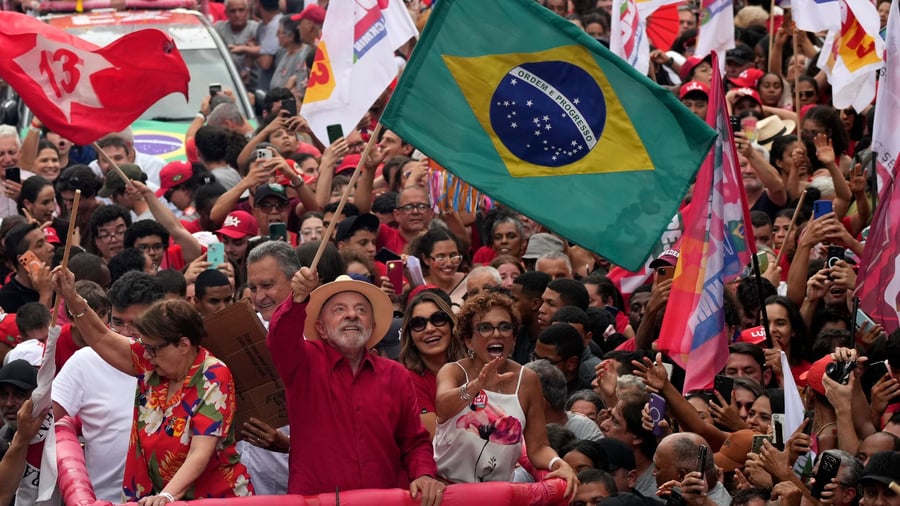
The upcoming Brazilian presidential election poses a significant challenge for incumbent President Luiz Inácio Lula da Silva, who must convince voters to support his fourth term. At Copacabana in Rio de Janeiro, thousands gathered in support of Lula's return to power, including Andrea, who has never actively backed him but aims to prevent the Bolsonaro family from regaining control.
The election will determine whether the 80-year-old remains in office or is replaced by his right-wing challenger, Flávio Bolsonaro. Both candidates face substantial opposition. Bolsonaro enters the runoff with backing from several defectors and with over two million votes in the first round. He also receives support from several retired candidates.
Can Lula still turn the tide? Lula is focusing on gaining prominent support and nationwide mobilization, using Copacabana as his political stage. Prominent Brazilian musicians like Caetano Veloso performed for his supporters. The famous Copacabana beach promenade turned into a political stage. Lula supporters' message was "fanatism is not an argument."
In cities like São Paulo, Brasília, and others, people flooded the streets. Flávio Bolsonaro is also mobilizing, particularly in regions where he performed weaker, such as the poorer Northeast. In Fortaleza, he mobilizes his supporters with fireworks and radio music, almost like a carnival parade. He promises a tough stance against criminal gangs: "They will be arrested or neutralized by the police."
He also suggests chemical castration for rapists. Safety and crime drive many Brazilians. Several political observers see Flávio Bolsonaro in the advantageous position, as he can count on support from parts of the political center and the right wing. Can Lula's good social balance make a difference? Lula can point to economic and social achievements, with unemployment reaching a historic low, poverty decreasing, and the real minimum wage rising.
A decision was also made to end the widespread six-day workweek: employees will generally work five days. However, such successes do not automatically translate into approval. "What matters most to many Brazilians is not whether the economy is growing statistically, but what remains in their pockets at the end of the month," says Maximilian Hedrich, head of the Konrad-Adenauer-Stiftung office in Rio de Janeiro.
Everyday concerns like living costs, public safety, and corruption are more immediately felt. Additionally, there is widespread political fatigue, Hedrich notes. Lula has been at the center of Brazilian politics for decades, embodying social advancement for his supporters, while his opponents see him as the representative of the Worker's Party PT and the corruption allegations connected to it.
Flávio Bolsonaro benefits from a broader rightward trend: the right gained significant strength in Congress during the first round of voting. The campaign is conducted aggressively, as shown by the first direct TV debate. "Brazil will send you to retirement," Flávio Bolsonaro said to the 80-year-old incumbent. Lula mocked, claiming his challenger had never worked and knew only workers from literature.
Flávio Bolsonaro marked "corrupto" (corrupt) on his hand and pointed at Lula, while the president accused his challenger of connections to organized crime. Flávio Bolsonaro wrote "corrupto" on his hand and showed it towards Lula, while the president accused him of having ties to organized crime. When asked why 73% of prisoners voted for Lula, Flávio Bolsonaro retorted, "I want 100% - even from your father."
Former President Jair Bolsonaro was sentenced to over 27 years in prison for attempting a coup and is currently under house arrest. He is ineligible to vote. His son hopes to secure an amnesty for him and announced that if Bolsonaro wins the election, he would take over the presidential sash. For some, the ex-president's conviction proves that Brazil's democracy defends its institutions.
Others view it as political persecution. Flávio Bolsonaro's campaign is closely linked to his father's fate. Even apart from the duel, both camps launch attacks. Lula offered to disclose his and his family's bank and tax data if Flávio Bolsonaro did the same. Lula's campaign team also accused the Facebook company Meta of disadvantaging his campaign content.
Meta denied political bias. As people line up at a voting booth in Rio de Janeiro, Manuel Herreira had already grown tired of Brazil's politics before casting his vote in the first round. "It's all the same - Lula and Bolsonaro. I'm really fed up," he told the dpa. Before every election, there are grand promises, which are often unfulfilled.
He wanted to invalidate his vote. On Sunday, Brazilians will decide whether to give Lula another term or choose Flávio Bolsonaro for a political change. For Herreira, the runoff will likely offer little excitement. For millions of others, it's about deciding which of the two candidates they will give their vote to despite reservations.
Written by urgent.news from Handelsblatt's reporting — not their text. Machine-written — may contain errors; check the original before relying on it.