Pollution and kids: 4 doctors explain how to choose the right mask and check its fit
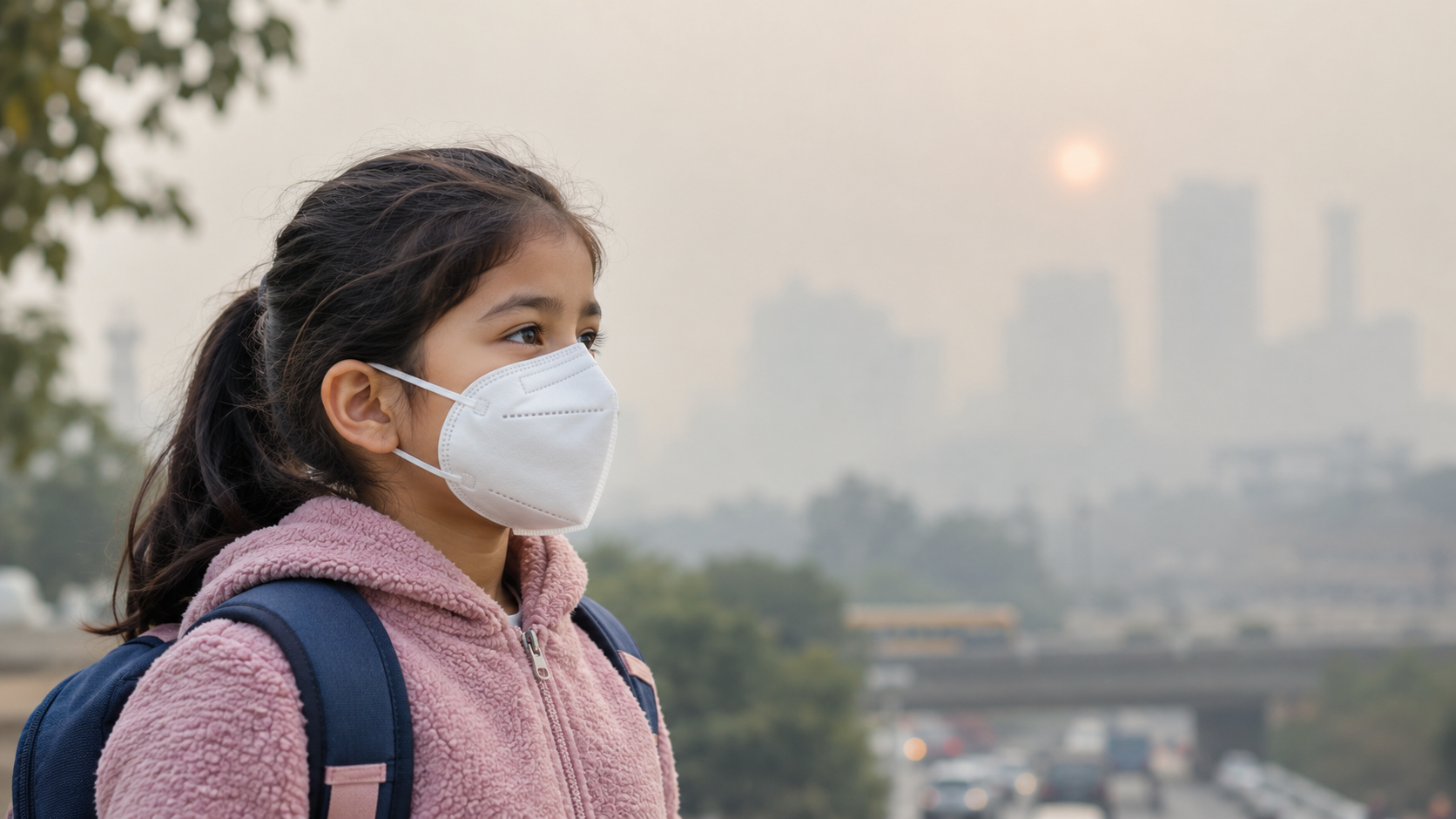
When the air quality deteriorates, parents often seek ways to protect their children. A colourful mask may look appealing, but for combating air pollution, appearances are deceiving. Which mask is suitable for children and how to ensure a proper fit is the focus of this guide by four paediatric experts.
Specialised certified respirators such as N95, KN95 or FFP2 can significantly reduce exposure to harmful particles when venturing outdoors is unavoidable. Dr Amit Gupta, a senior paediatrician, recommends child-sized N95 or KN95 masks for children above five to six years. Parents should seek masks with a good filter, a soft inner layer, and adjustable straps. However, attractive designs should not be the sole deciding factor.
Dr Ravi Malik, founder of Malik Radix Health Care, emphasizes that only respirators with a certification mark, a child-specific size, and a soft adjustable nose clip offer meaningful filtration of fine particles (PM2.5). Valved masks should be avoided as they don't filter exhaled air and fit poorly on small faces.
Proper fit is crucial, as even a high-quality mask will be ineffective if it doesn't cover the nose, mouth, and chin, leaving gaps near the cheeks or nose bridge. Dr Sumera Khan provides instructions on checking the fit: the mask should cover the nose, mouth, and chin completely, with no gaps at the cheeks or nose bridge. Air should not escape near the eyes or fog up glasses, as these indicate a poor fit.
Dr Indu Khosla adds that children's faces can make achieving a tight seal challenging, even with a suitable respirator. Masks should not obstruct vision or require constant adjustment.
Toddlers under two years old should never wear masks due to the risk of suffocation and their inability to remove them or communicate distress. Children aged 2 to 5 should only wear masks during high pollution periods, under adult supervision. Cloth and surgical masks are not sufficient against fine pollution particles and fit loosely.
There is no fixed schedule for replacing a child's mask, but it should be replaced when it gets wet, dirty, damaged, or difficult to breathe through. Masks should only be washed when disposable, not reused, and shared among children. If a child feels breathless or uncomfortable, use an air purifier with a HEPA filter and follow air quality advisories.
Written by urgent.news from The Indian Express's reporting — not their text. Machine-written — may contain errors; check the original before relying on it.