No more Superpowers
The failure to achieve victory in their respective wars of choice demonstrates that the US and Russia no longer qualify as 'superpowers'.
The term "middle powers" has gained prominence in recent times, prompting a reevaluation of which nations fall under this classification. After all, does not most of the world's states belong to this group? Canadian Prime Minister Mark Carney's influential speech at the World Economic Forum in Davos in January reignited discussions about changing power dynamics in today's world.
He contended that we are witnessing a "rupture" in the global order, necessitating middle powers to collaborate to withstand economic pressure and political domination by others. Although he did not single out the United States, President Donald Trump swiftly discerned that Carney's remarks were likely aimed at him. Nonetheless, how should the middle powers Carney had in mind be differentiated from the other influential entities of our time?
Perhaps the first step involves scrutinizing those other powers. The concept of "superpower" once referred to nation-states wielding powers far greater than any others on the global stage. After World War II, this term encompassed not only the United States and the Soviet Union but also, briefly, the British Empire. Subsequently, the two undisputed superpowers were characterized by their substantial nuclear arsenals, each possessing tens of thousands of warheads and the capability to launch them anywhere on Earth within minutes, with no means of defense against an attack.
Each had the ability to obliterate the other within half an hour. Over time, other states acquired nuclear weapons, but none achieved the capacity or determination to develop arsenals equal to those of the two superpowers. Following the dissolution of the Soviet Union, the term "superpower" began to lose relevance. The United States was occasionally still referred to as such, but during this brief "unipolar era," it also earned the designation "hyperpuissance" from Hubert Védrine, France's foreign minister between 1997 and 2002.
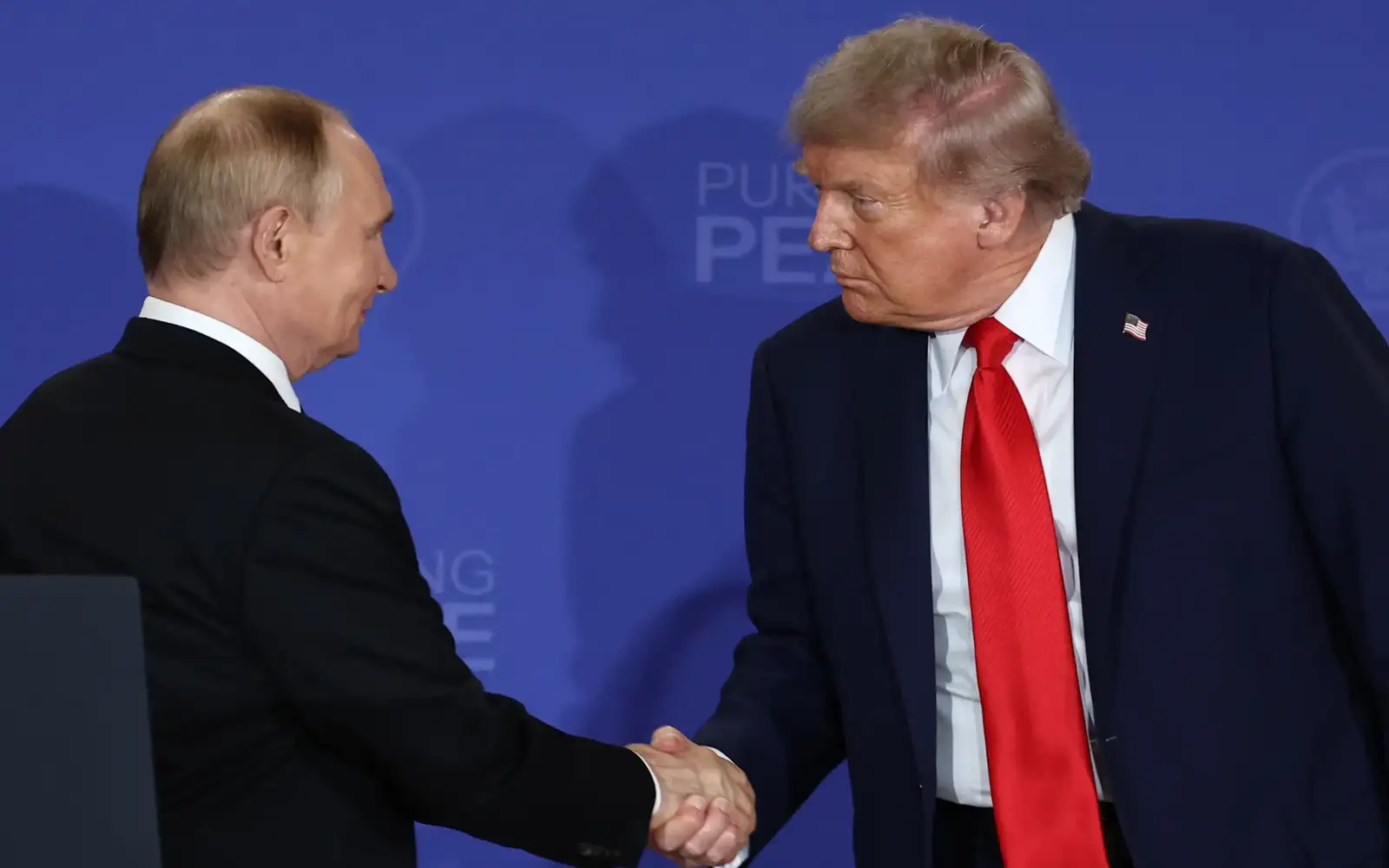
Presently, the US remains highly powerful, and Russia continues to command considerable military resources, including the world's largest nuclear arsenal. However, both countries' influence has increasingly been marked by their evident limitations. Despite mobilizing its extensive conventional arsenal, Russia has failed to subdue its significantly smaller neighbor, Ukraine.
Similarly, despite President Trump's constant boasting about his country's military prowess, his campaign against Iran has thus far resulted in higher oil prices and a precarious stalemate. The inability to achieve victory in their respective wars of choice indicates that the US and Russia no longer qualify as "superpowers." Are they still considered great powers, or do they ultimately belong to the same broad category of middle powers?
Regardless, the era of superpowers has come to an end. Even the most nominally powerful countries are highly constrained. The limitations of their influence have been exposed, irrespective of whether they acknowledge it. While middle powers come in various forms and sizes, most are cognizant of their status. Nations such as India, Brazil, and Canada cannot employ military force to mold their political landscape according to their desires.
Instead, each must depend on economic engagement and diplomatic relationship-building to exert influence. Yet, the same applies to the US, Russia, and other larger, more powerful entities like the European Union. The late Joseph Nye's legacy remains pertinent to today's middle powers. He introduced the concept of "soft power" to distinguish between persuasion and coercion in international relations.
Military capability yields "hard power," while "soft power" - Nye's term for "the power of attraction" - stems from cultural exports, economic ties, diplomacy, goodwill, and trust cultivated over many years. Perhaps middle powers can be defined along these lines, primarily relying on soft power. Of course, some countries might still harbor aspirations of grandeur, convinced that hard power is sufficient to bend others to their will.
It may take time for recognition of their diminished status to take hold. However, regardless of what those in Moscow or Washington may claim, the fact remains that the world has changed. There are no superpowers left. Carl Bildt, a former prime minister and foreign minister of Sweden, asserts that these are his views and those of the writer, which may not align with the perspectives of FMT.
Written by urgent.news from Free Malaysia Today's reporting — not their text. Machine-written — may contain errors; check the original before relying on it.
Also reported by 1 other outlet
- No more Superpowers freemalaysiatoday.com