Nikon’s weirdest and smallest-ever SLR camera was built for a doomed Kodak film format – but it foreshadowed photography's digital future
The rise and swift fall of APS film: A $1 billion lesson in bad timing
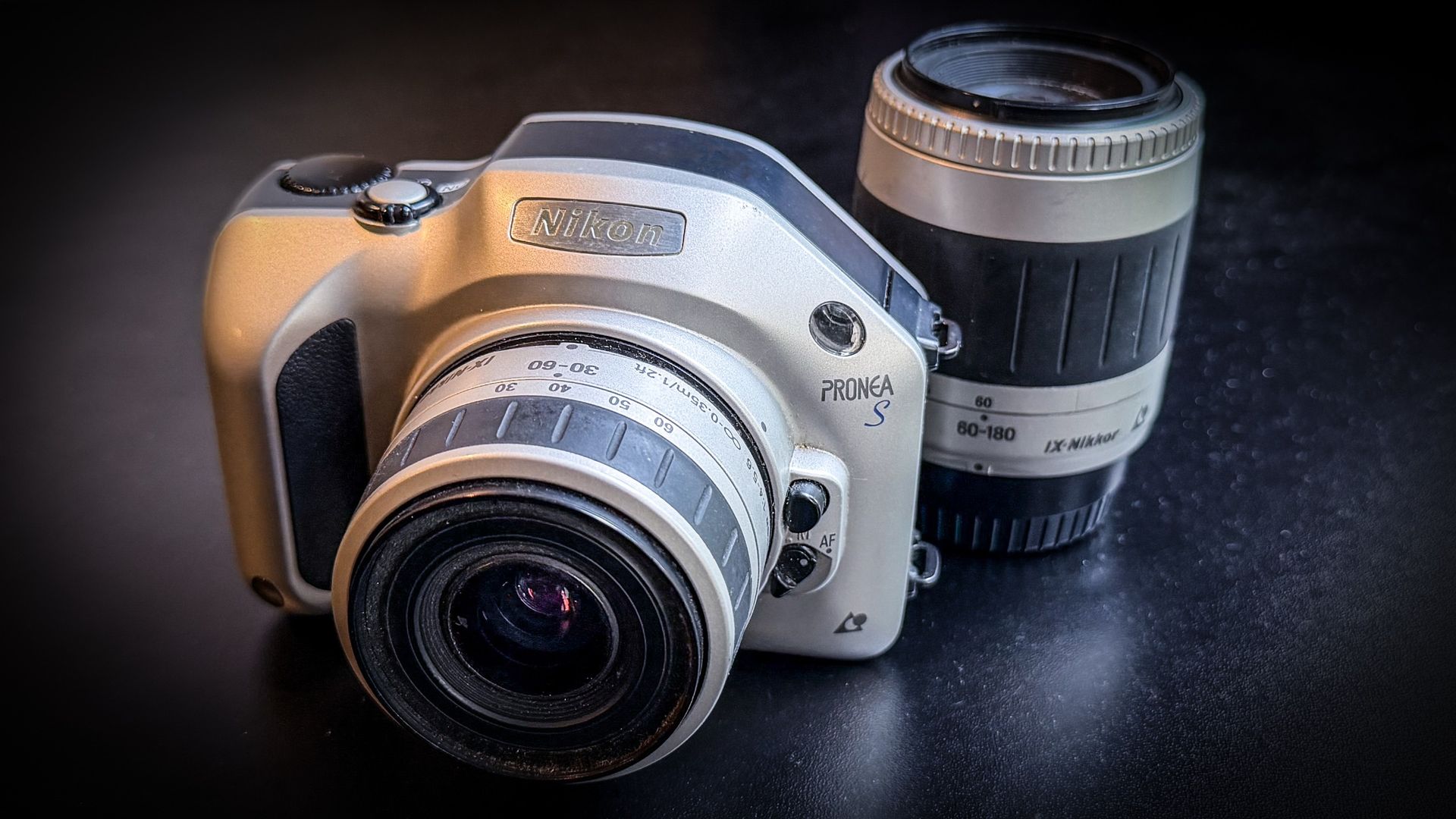
In 1996, the photography industry launched the Advanced Photo System (APS), a joint venture between Kodak, Canon, Nikon, Fujifilm, and Minolta in an effort to revolutionize film photography. Despite its innovative features, APS never gained significant traction and was eventually discontinued in 2011 as digital cameras eclipsed its capabilities.
Among the three interchangeable-lens SLR systems produced for the APS format, Nikon's Pronea S stands out as the most compact and lightweight option designed for travelers and women photographers. This camera, introduced in 1998, boasted an incredibly thin body, autofocus, multi-segment matrix metering, built-in flash, and a 1.5 frames per second shooting speed.
The Pronea S also offered nearly all the exposure controls of Nikon's 35mm SLRs, making it appealing to those seeking SLR capabilities in a smaller package. While APS introduced several concepts that would later become standard in digital photography, the format ultimately failed to gain widespread adoption due to the rapid advancements in digital technology and the increasing popularity of digital cameras.
Written by urgent.news from Digital Camera World's reporting — not their text. Machine-written — may contain errors; check the original before relying on it.