Man’s Best Friend Turns Into His Biggest Foe
The alarming incidence of dog bites in Mumbai during 2025, revealed by an RTI application, should compel the Brihanmumbai Municipal Corporation (BMC) to assess the true scale of the problem today. In absolute terms, the figure of 154,017 dog bite cases—or an average of 17 bites an hour—last year seems extraordinary. To put it in perspective, the Supreme Court also intervened in November 2025 to…
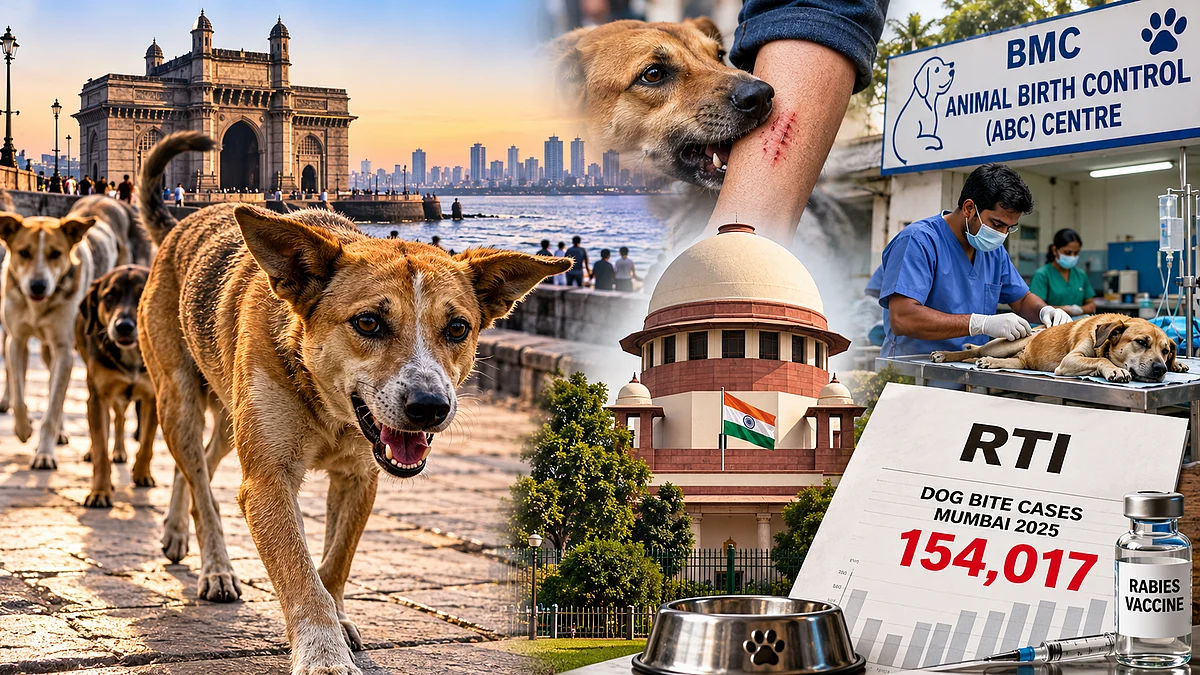
A recent revelation about the alarming number of dog bites in Mumbai has prompted the Brihanmumbai Municipal Corporation (BMC) to reevaluate the severity of the issue. According to an RTI inquiry, there were 154,017 recorded dog bite cases in the city last year, translating to an average of 17 bites per hour. This figure has raised concerns about the true extent of the problem and whether the BMC has made meaningful strides since then.
The Supreme Court intervened in November 2025 to address the menace, but its impact on the BMC's efforts remains uncertain.
The issue of dog bites in India is particularly complex due to the prevalence of free-ranging dogs in major cities, where they are often cherished members of working-class communities. However, this lack of control exposes these animals to the risks of rabies and allows their population to flourish. The paths of people and dogs frequently intersect, leading to confrontations and, occasionally, severe injuries.
The Supreme Court has firmly stated that community dogs have no place in neglect, insisting that local authorities take decisive action, including establishing at least one Animal Birth Control (ABC) centre in each district for sterilization and vaccination programs.
High courts have been monitoring the situation in response to the Supreme Court's directives, urging authorities to submit compliance reports. These reports should ensure that sterilized and vaccinated dogs are not released into public spaces such as schools, hospitals, bus stations, and railway stations, where they pose a greater threat to vulnerable individuals like children, the elderly, and the disabled.
It is crucial to address the question of whether the problem of free-ranging dogs should be approached with hostility, given the strong affection many community members, particularly the middle class, hold for dogs.
To alleviate the problem, a partnership between the community and authorities is necessary, leveraging the support from voluntary organizations that rescue and treat injured animals, despite receiving limited official backing. Establishing a civil society collaboration with these non-governmental organizations (NGOs) and reactivating dormant ABC centers for regular sterilization services is essential.
Recent high court rulings have shown a firm stance against laxity among municipal officials, emphasizing the right to compensation for dog bite victims and denying appeals from local bodies. This approach serves as a warning to address the issue proactively. Ultimately, the key to resolving the dog bite crisis lies in managing canine populations, providing veterinary facilities, and preventing violent encounters with people.
Written by urgent.news from Free Press Journal's reporting — not their text. Machine-written — may contain errors; check the original before relying on it.