Is the Mars Grand Canyon still tectonically active?
Researchers said the red planet is still tectonically active today. A team found the epicenter of a marsquake at the Grand Canyon of Mars. The post Is the Mars Grand Canyon still tectonically active? first appeared on EarthSky .
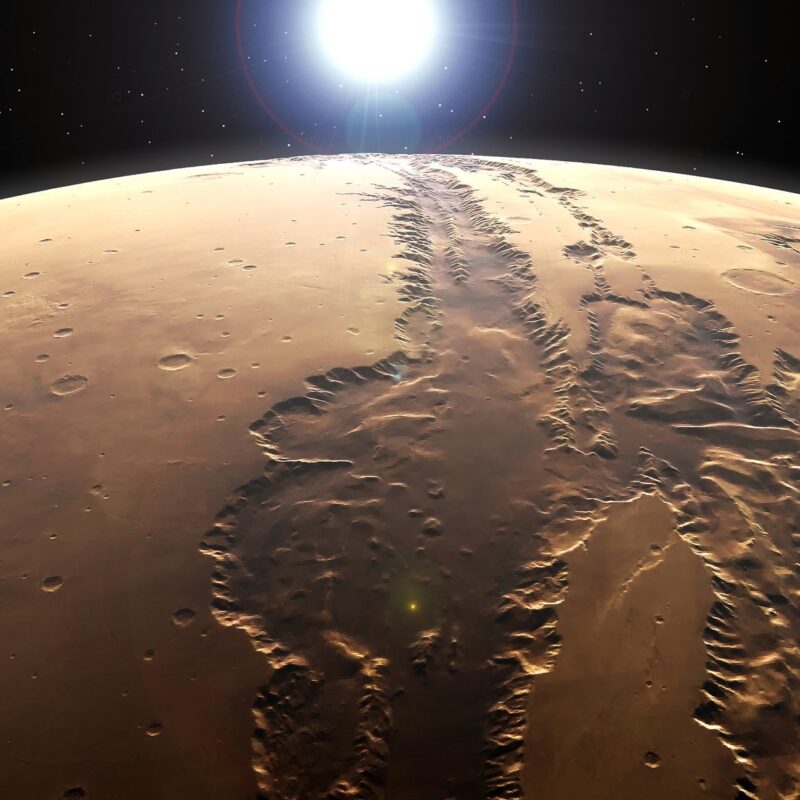
The Mars Grand Canyon, also known as Valles Marineris, is the largest canyon system in the solar system and stretches over 2,500 miles (4,000 km) long. Scientists recently discovered that this Martian landscape is still tectonically active, despite having formed billions of years ago. Although Mars does not possess the tectonic plates that cause earthquakes on Earth, the red planet still experiences seismic activity due to ancient fault lines deep within its crust.
In 2021, NASA's InSight lander detected a marsquake that traveled through Mars' core, with its epicenter situated 12 to 25 miles (20 to 40 km) beneath Valles Marineris. This marsquake, named S0976a, was likely caused by a strike-slip event, where two crustal pieces move horizontally past each other along a steep fault with a deep root. The quake's magnitude was comparable to a magnitude 5 on Earth.
The researchers observed that both seismic waves and geology from orbit confirm the presence of active faults beneath the canyon. According to co-author Doyeon Kim from Imperial College London, the findings suggest that Valles Marineris is not a "dead" fossil landscape, as faults deep beneath the canyon continue to slip and generate marsquakes even after the geological processes that initially formed them have ceased.
Unfortunately, the InSight lander ceased operations in 2022 due to excessive dust on its solar panels. Therefore, current observations of marsquakes on the Martian surface are limited to potential future detections by astronauts on the surface of Mars.
Written by urgent.news from EarthSky's reporting — not their text. Machine-written — may contain errors; check the original before relying on it.