Higher temperatures fuel gun violence. Now we know how much is from climate change.
A new Climate Central analysis measures how many shooting incidents are linked to rising heat.
This year, Philadelphia is poised to record its lowest number of homicides since 1963. However, a heat dome covering Maine to the Gulf of Mexico has resulted in 165 million people experiencing major or extreme heat. Cities like Boston, Baltimore, and Raleigh witnessed record temperatures, with Philadelphia hitting 100 degrees for three days straight.
The sweltering city also saw a surge in gun violence between July 2 and July 4, with the Gun Violence Archive noting nine shootings that left three dead and nine wounded. Marion Campbell, executive director of Eddie’s House, a Philadelphia nonprofit, explained that economically vulnerable individuals often lack access to air conditioning.
When it's hot, people become more irritated, which could heighten their inability to manage frustration. While this phenomenon is not new for Campbell and others in the field, a recent revelation by Climate Central sheds light on the impact of climate change on gun violence. According to Climate Central, approximately 2,000 shootings between 2021 and 2025 in the 100 U.S. cities with the highest rates of gun violence are linked to high temperatures exacerbated by climate change.
The extreme July Fourth weekend in Philadelphia was at least twice as likely due to climate change, the nonprofit reported. This is just the beginning, as rising temperatures are expected to further increase the risk of gun violence. Kristina Dahl, vice president for science at Climate Central, emphasized that climate change is raising the risk of gun violence across all the studied cities.
However, it's crucial to note that even though record high temperatures have occurred this summer, many cities have also seen record low gun violence. This discrepancy does not negate the effect of climate change, as explained by John Roman, a distinguished senior fellow at the University of Chicago’s NORC social research center.
"If we had the same climate as in 1980, we'd likely see even lower violence today," Roman stated. For years, researchers have struggled to quantify the specific impact of climate change on violence. According to Dahl, the new analysis reveals close to 2,000 shootings that can be attributed to climate change's influence on high temperatures.
"That's still a significant number of people exposed to this traumatic event due to climate change." Researchers didn't attribute any individual shootings to climate change. Instead, they examined the overall connection between climate change, temperature, and gun violence in 100 cities. They began by establishing the relationship between temperature and gun violence, creating individual city models based on historical data.
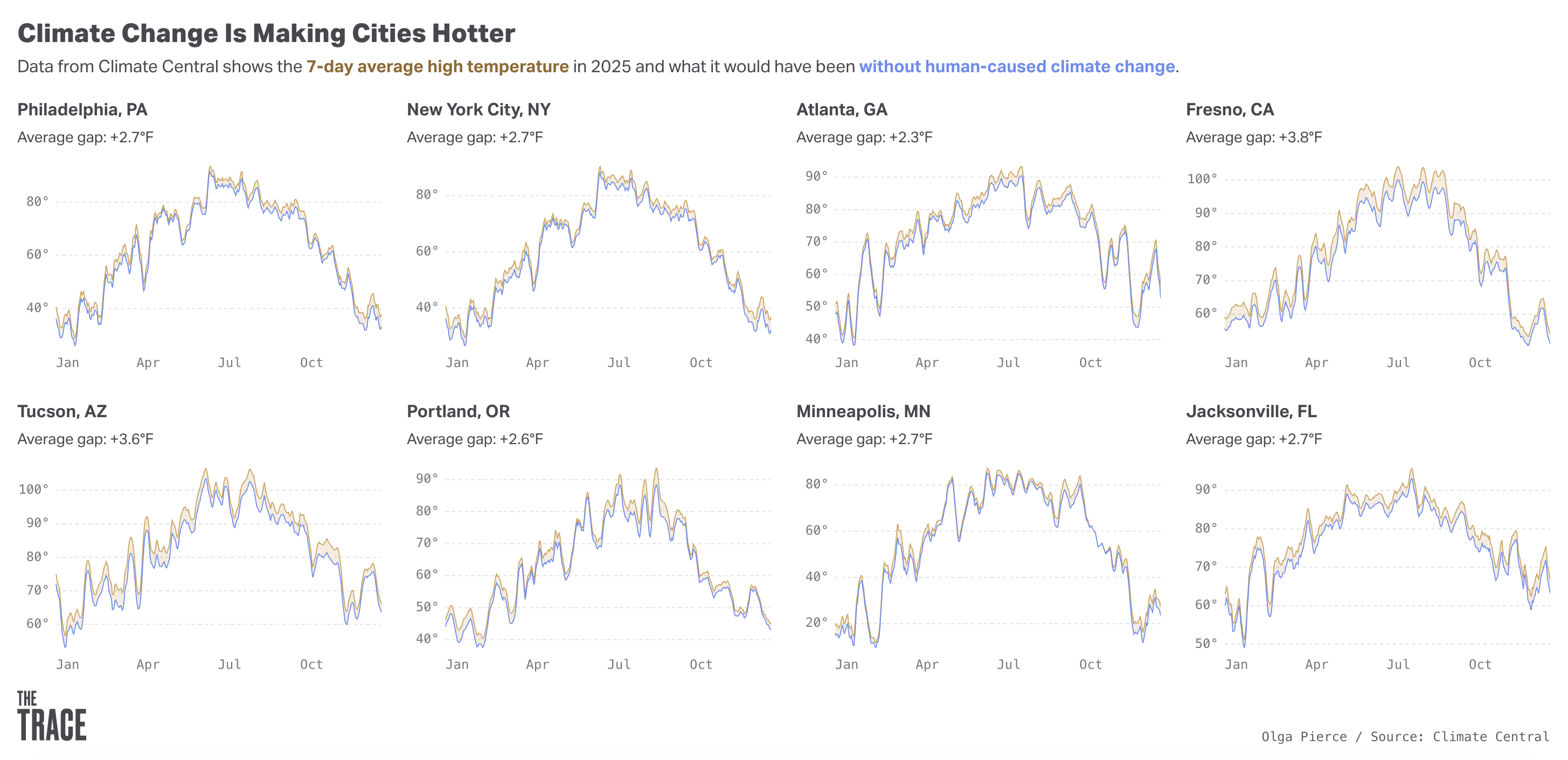
These models predict the expected number of shootings for any given temperature. To simulate a cooler world, researchers used climate models and real-world temperature records to create hypothetical daily temperatures for each city. Comparing these temperatures to actual recordings provided estimates that climate change has made the typical day in these cities about 2.4 degrees Fahrenheit hotter.
When researchers know this gap, they can estimate the number of shootings associated with it using the city's temperature model. Over five years and 100 cities, this discrepancy amounts to about 1,950 shootings, representing roughly 1.7 percent of the total shootings recorded by the Gun Violence Archive during that period. In Philadelphia, the estimated additional shootings due to climate change from 2021 to 2025 are around 149.
It's important to note that these estimates are based on simulated temperatures and gun violence rates, which are not definitive. However, they do provide a clearer picture of the potential impact of climate change on gun violence.
Written by urgent.news from Grist's reporting — not their text. Machine-written — may contain errors; check the original before relying on it.