BOOK REVIEW: Simon Sebag Montefiore’s ambitious attempt to make sense of the Middle East
British historian Simon Sebag Montefiore hits paydirt again with another engaging yet thoughtful volume, this time covering the past 125 years of the entire Middle East and Maghreb.
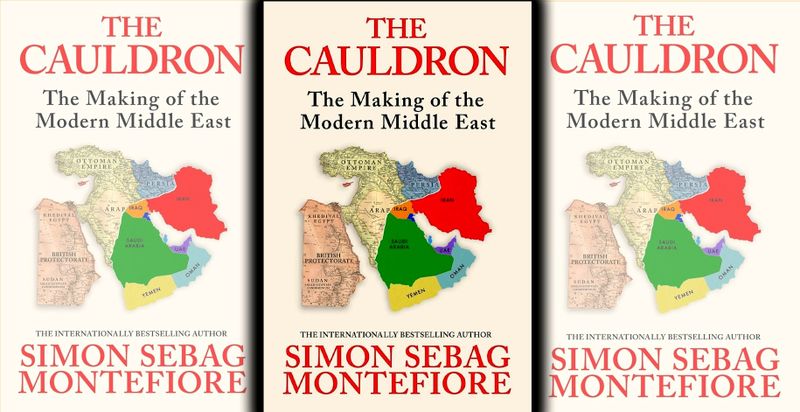
British historian Simon Sebag Montefiore delivers an ambitious and meticulously researched analysis of the entire Middle East and Maghreb over the past 125 years in his latest book, The Cauldron. Unlike most works that focus on individual societies or bilateral conflicts, Montefiore treats the region as an interconnected whole, with nations and ethnicities possessing varying degrees of agency.
Montefiore, a respected British historian known for his works on Russia, the Soviet Union, Jerusalem, and global history, aims to highlight the historical connections among the region's diverse societies, which are bound together by shared histories, rivalries, conflicts, and the influence of conquerors. The book, spanning over 400 pages, traces the region's history from the beginning of the 20th century, focusing on the interactions between the Americans, Russians, French, British, Italians, and other imperial powers.
Throughout the narrative, the author highlights the complex relationships between various religious traditions, ethnicities, and tribal conflicts within the Middle East. He also emphasizes the lasting impact of the Ottoman empire, which only disintegrated at the end of World War 1. Montefiore remains even-handed in his assessment of the region's conflicts, avoiding excuses for the suffering and casualties, but his judgements may not be universally welcomed.
The author examines the roles of Turkey, Iran, and Israel as the three non-Arab nations in the region, which possess military capabilities to influence their neighbors. He also delves into the evolution of social-political-religious movements, such as Wahabism, Islamicism, and Zionism, as well as the importance of historical memories, including Egypt, Turkey, and Iran's half-mythic ancient glories.
Montefiore's work presents several key observations about the region. First, the overhang of centuries-old Ottoman domination or suzerainty has not entirely dissipated, and Turkey's current leaders seem eager to revive some aspects of it. Second, as European powers, Russia, and America diminish in influence, the future of the region is likely to be shaped by Turkey, Iran, and Israel, who hold substantial military capabilities.
The book also addresses the impact of religion, the fragility of states, the artificiality of borders, and the legitimacy of rulers. Montefiore dedicates significant attention to the evolution of movements like Wahabism, Islamicism, and Zionism, as well as the importance of historical memories such as the ancient glories of Egypt, Turkey, and Iran, and the earlier Arabic world.
While the book is comprehensive and vivid, it could benefit from more attention to the economic forces shaping the region. Petroleum and natural gas play a crucial role in the successes, failures, and future prospects of many nations, and their influence should be examined more thoroughly in the context of their relationships with the rest of the world.
Given the ongoing conflicts in the region, Montefiore's book serves as a timely and essential exploration of the complex and interconnected nature of the Middle East and Maghreb. It is likely to be immediately adapted into a video series, reaching a vast audience captivated by the region's rich history and the struggles it faces today.
Written by urgent.news from Daily Maverick's reporting — not their text. Machine-written — may contain errors; check the original before relying on it.