Aleksandar Vucic: Serbia's veteran ruler felled by student-led movement
Aleksandar Vucic: Milosevic minister to long-serving Serbian ruler
After nearly two decades at the helm, Serbian President Aleksandar Vucic conceded defeat in a snap parliamentary poll on Sunday, marking the end of his long tenure in politics. Emerging from the ashes of Slobodan Milosevic's cabinet, Vucic rose to power through his populist nationalism, presenting himself as a symbol of stability and development for a country still healing from the 1990s wars and international isolation.
However, Vucic was also accused of exhibiting increasingly authoritarian tendencies, constantly shifting alliances between Moscow and Brussels, and leading a government plagued by allegations of widespread corruption.
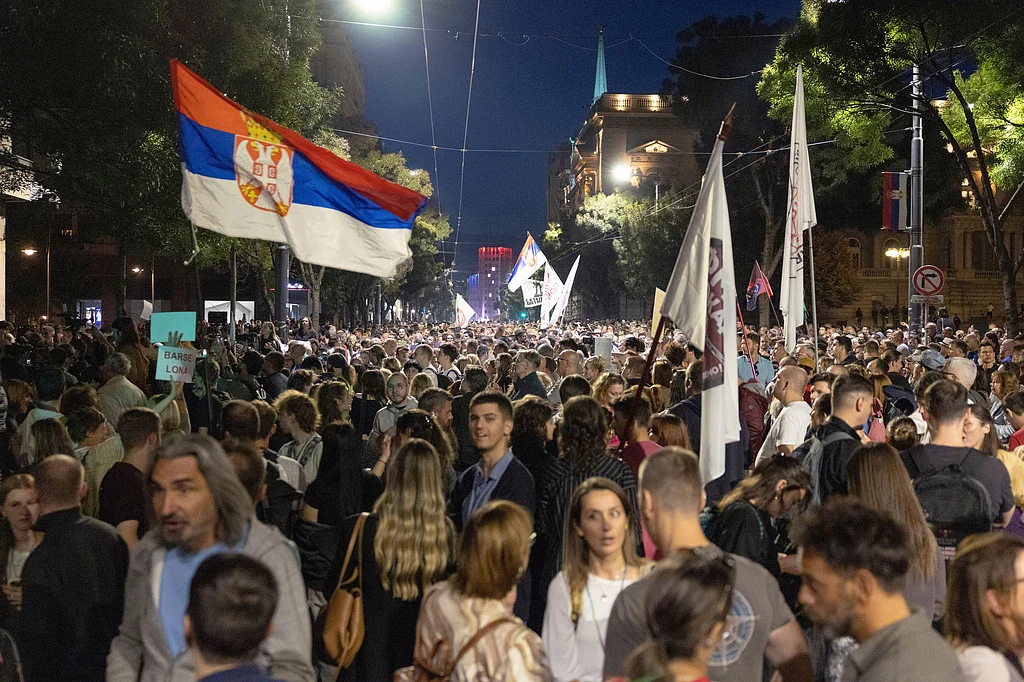
In an emotional concession speech, Vucic acknowledged that Serbia's students had defeated his party at the polls. He stated that the country was turning a new page, as nearly 2 years of protests culminated in a decisive victory for the student-led movement. Opposition to Vucic had been growing steadily, with widespread demonstrations and calls for transparent investigations into corruption after a tragic incident at a renovated train station in 2024, which left 16 people dead and sparked massive protests.
Despite his efforts to deny state involvement, several of his ministers attended a large funeral for former Bosnian Serb leader Radovan Karadzic, drawing sharp criticism from Brussels.
Vucic's political journey began in the 1990s as an ultra-nationalist ally of Milosevic, eventually becoming a senior figure in the Serbian Radical Party after the Yugoslav strongman's ousting in 2000. He later co-founded the conservative, pro-European Serbian Progressive Party in 2008, which went on to win parliamentary elections in 2012 and has dominated Serbian politics ever since.
However, Vucic has struggled to distance himself from nationalist leanings and far-right associates, often defending convicted war criminals and failing to condemn atrocities committed during the 1990s conflicts.
Written by urgent.news from Gulf News's reporting — not their text. Machine-written — may contain errors; check the original before relying on it.