White Dwarfs Are Actually…Yellow, Green, Pink, and Purple?
The universe hosts a myriad of star types, including supergiants, giants, main sequence, red dwarfs, brown dwarfs, white dwarfs, and neutron stars. What makes these stars stand out are just their sizes, but their colors, as each one hosts a distinct color based on their surface temperature, specifically orange, red, blue, and white based on cooler to hotter temperatures. While the correlation…
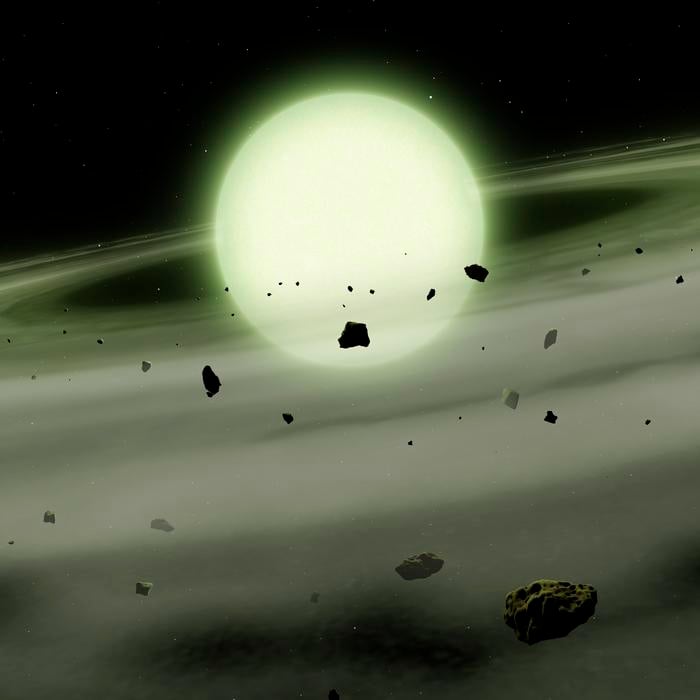
White dwarfs, the remnants of stars similar to our Sun, have long been understood to be mostly white due to their extremely high surface temperatures. However, a team of researchers from the University of Warwick may have revealed a surprising twist: white dwarfs can also appear in other colors such as yellow, pink, and even green. Published in RAS Techniques and Instruments, this discovery opens up new avenues for understanding star formation and evolution.
The study focused on 151 white dwarfs within 20 parsecs (65 light-years) of Earth, aiming to explore if certain elements like carbon, calcium, or sodium in their dense atmospheres could influence the glow of these stars. The researchers found that five out of the 151 white dwarfs exhibited pink and yellow hues, with two being yellow and three pink. This indicates that roughly 3.3 percent of white dwarfs in the universe might not adhere to the traditional "white" color scheme.
To determine why this color change occurs, the researchers examined the impact of different elements on the white dwarfs' atmospheres. Carbon was found to cause white dwarfs to appear pink or purple, while cooler white dwarfs with hydrogen and helium tended to be cyan or blue. Additionally, white dwarfs with debris from their original planetary system were typically found to be green.
Stars are traditionally referred to as "perfect radiators" or blackbody objects, meaning their glow is solely dependent on their temperature. As an object heats up, it changes color from red to orange, then to blue. However, this study suggests that there might be exceptions to this rule, especially considering the influence of elements present in a star's atmosphere.
Another class of objects, brown dwarfs, also exhibit unexpected colors due to their cold temperatures and the presence of dense atmospheres, which can alter their radiation in the infrared spectrum.
Written by urgent.news from Universe Today's reporting — not their text. Machine-written — may contain errors; check the original before relying on it.