Watch the full 'Hunter's Moon' rise next to Saturn this weekend
You'll have two chances to see October's full Hunter's Moon rise dramatically this week. Here's when to get the best views.
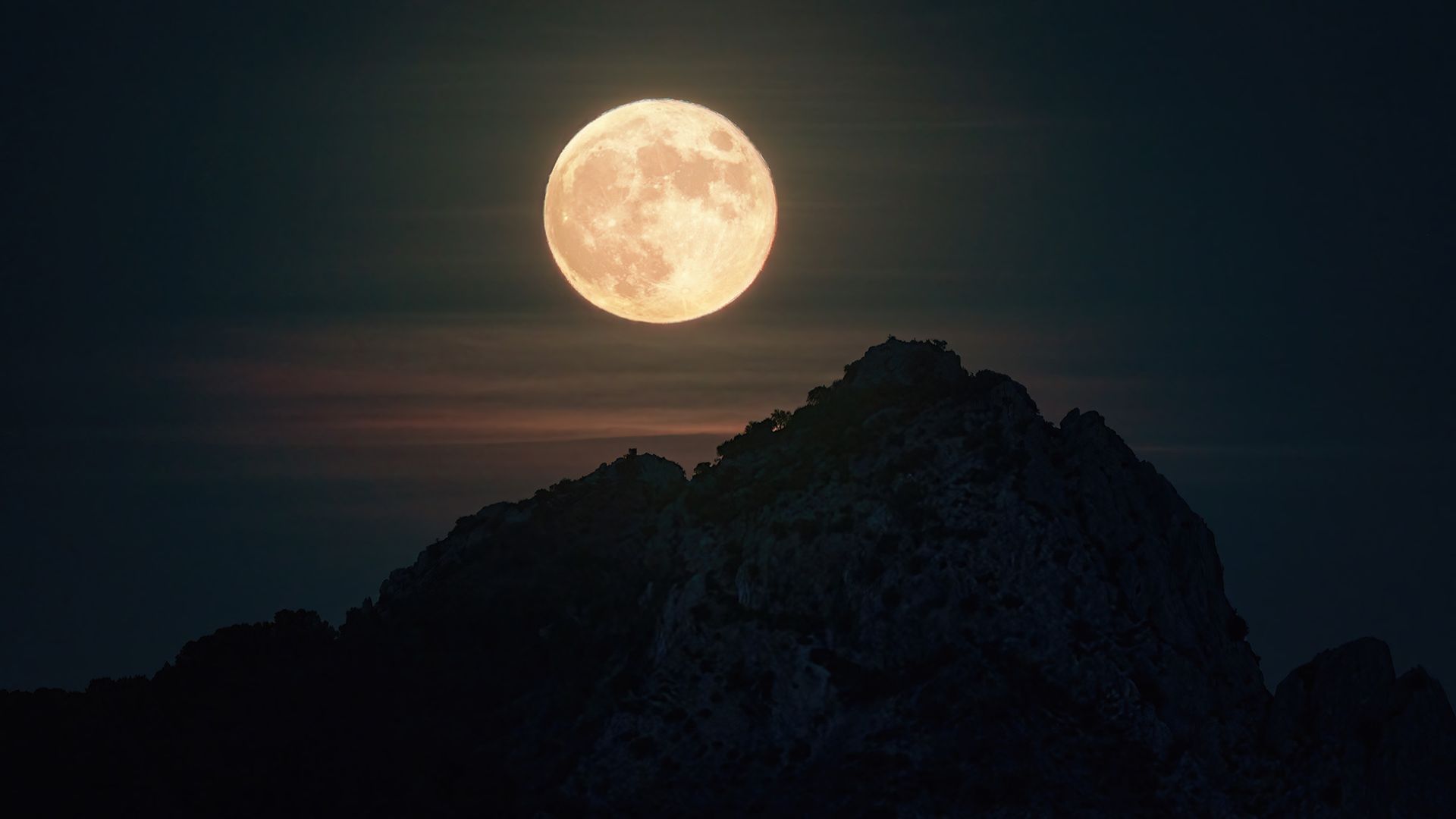
This weekend, skywatchers have two opportunities to witness the full Hunter's Moon rising near Saturn. Although the moon officially becomes fully illuminated on Monday, October 26 at 12:11 a.m. EDT, it will appear almost completely full as it rises on Sunday, October 25 and Monday evenings.
The Hunter's Moon is named after hunters preparing for winter by hunting, slaughtering and preserving meat. Native American names for the moon include the Drying Rice Moon, the Falling Leaves Moon and the Freezing Moon.
On Sunday, the almost-full moon will rise in the east just before sunset. On Monday, the moon will rise again after sunset, providing a more dramatic view due to the darker sky. At rise time, the moon will be located in the constellation Aries, with Saturn positioned to its upper right.
For optimal viewing, find a location with a clear eastern horizon, preferably an elevated viewpoint, open field or coastline to ensure visibility. The moon illusion may make the Hunter's Moon appear larger when viewed near the horizon due to our brains misjudging size based on distance.
Though not a supermoon, this Hunter's Moon precedes four consecutive supermoons that will occur between November and February. A supermoon occurs when the full moon coincides with the moon being closest to Earth in its elliptical orbit, making it appear slightly larger and brighter. Take this opportunity to test your knowledge about the moon with a moon quiz!
Written by urgent.news from Live Science's reporting — not their text. Machine-written — may contain errors; check the original before relying on it.
This story
This is one outlet's version. Read the fullest account.