Waste recycling technologies: why are BRICS countries moving towards circular economy?
BRICS countries are actively discussing the transition to a circular economy. Why is this needed? Which national programmes and joint initiatives are already in place? And what still needs to be done? The post Waste recycling technologies: why are BRICS countries moving towards circular economy? appeared first on KBC Digital .
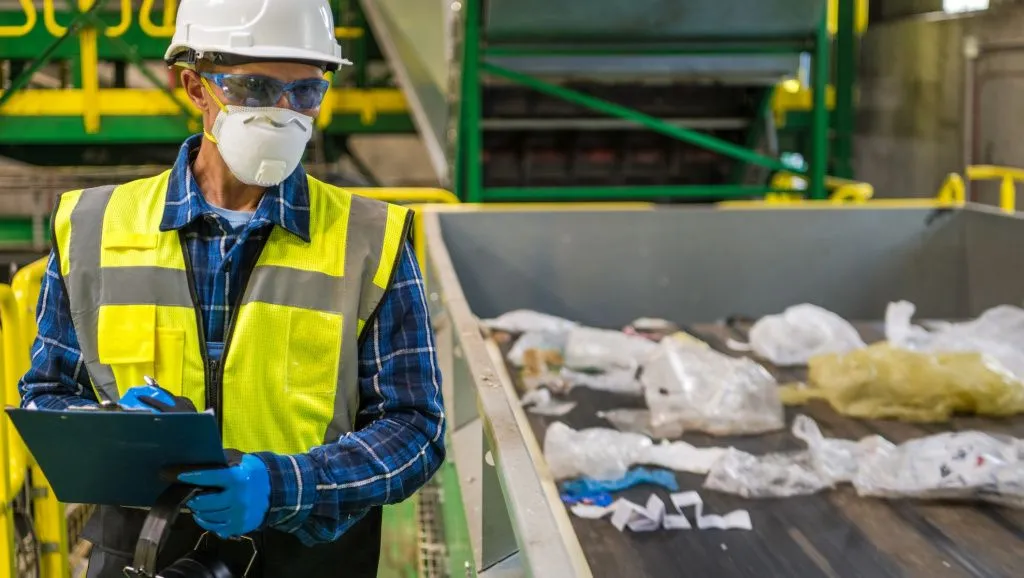
BRICS nations are shifting focus towards circular economy principles in order to preserve resources, cut down on waste, and reduce costs associated with waste disposal. This alternative to the conventional “production – use – disposal” model replaces it with a regenerative cycle, enabling the global economy to save substantial amounts of money and resources.
During the 2026 BRICS Summit in New Delhi, waste recycling technologies once again came to the forefront as a topic of discussion. Moreover, the circular economy is identified as one of the key strategies to achieve UN Sustainable Development Goal (SDG) 11, known as "Ensuring the openness, safety, resilience and environmental sustainability of cities and human settlements."
Experts emphasize that achieving this goal necessitates not only financial investment but also cooperation and coordination among various stakeholders, both domestically and internationally. The BRICS group is undertaking both national programs and joint initiatives as part of this transition to a circular economy. Despite differences in approaches, there are also common trends, such as the development of infrastructure, encouragement of waste recycling, and exchange of innovative technologies.
Ekaterina Reshneva, an Associate Professor at Saint Petersburg Mining University, pointed out this during a TV BRICS interview.
National and joint BRICS initiatives showcase the continent's significant potential in critical resources and technologies, which is considered an advantage in achieving sustainable development goals. However, the transition to a circular economy is uneven among BRICS member states. China, for instance, has made significant progress with mandatory household waste sorting and the world's largest waste-to-energy network, processing 1.11 million tonnes daily.
The country's "Waste-Free City" initiative covers 113 cities, with a goal of processing 45 billion tonnes of bulk waste annually.
In contrast, Brazil presents a different scenario, with strict legislation but relatively weak implementation. As of 2022, only 1.8% of municipal waste was recycled, although the recycling rate for aluminium cans reached 100%. Brazil has also made progress in composting organic waste and utilizing anaerobic digestion methods, resulting in biogas for electricity and heat generation, and digestate as high-quality organic fertilizers.
Scientists from the Federal University of Alagoas and Tambov State Technical University are also developing a technology for treating wastewater using fungi.
Russia, on the other hand, has recently implemented a waste reform that shifted responsibility for waste collection and disposal from municipal institutions to regional operators. The primary objectives of this reform are to curb illegal dumping and boost waste recycling, with a target of recycling 60% of waste by 2024. As of now, however, around 90% of waste remains in landfills, and separate waste collection is still limited in many Russian regions.
Since 2025, Russia has been implementing the national project "Environmental Well-being," which includes the federal project "Circular Economy," aiming to establish a circular economy that ensures the sorting of 100% of municipal solid waste annually by 2030.
Written by urgent.news from KBC's reporting — not their text. Machine-written — may contain errors; check the original before relying on it.