This Terengganu repository brings rare stingless bees, giant lilies and lost palms together
MARANG, Oct 25 — A collection of 20 stingless bee species, including species not previously recorded in Peninsular...
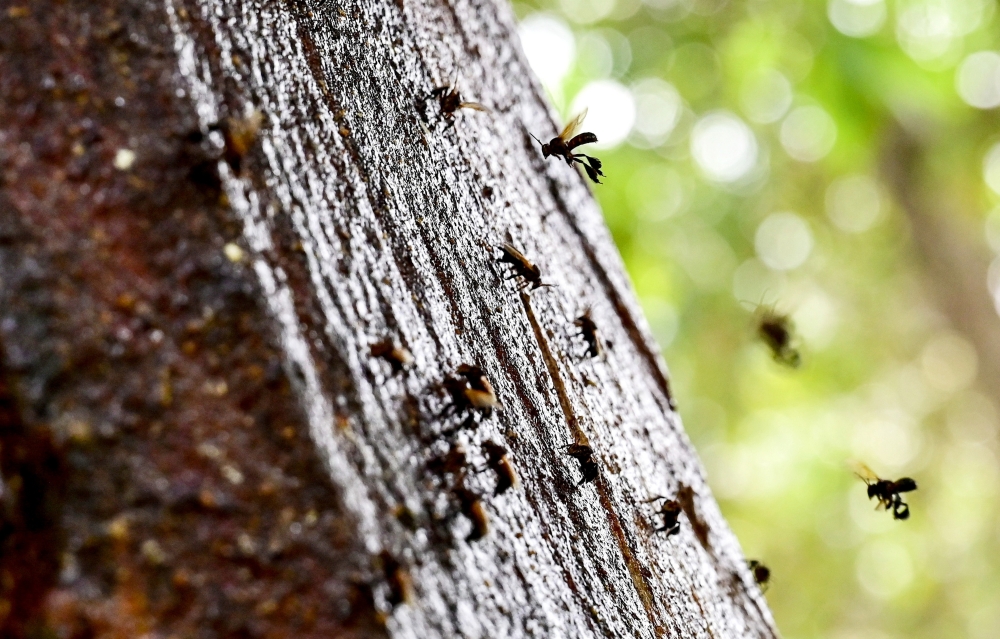
A unique collection of 20 stingless bee species, some previously undocumented in Peninsular Malaysia, forms an intriguing highlight at Universiti Malaysia Terengganu’s Indo-Malaya Stingless Bee Repository in Bukit Kor. Established by Prof Dr Shamsul Bahri Abd Razak, the repository features verified species such as Heterotrigona erythrogastra, Tetrigona peninsularis, and Odontotrigona haematoptera.
Its extensive collection is believed to be the largest of its kind in the Indo-Malaya region, offering valuable insights for research and conservation.
The repository complements its bee collection with a carefully designed flower garden aimed at supporting stingless bees and other pollinators. Shamsul Bahri explained that the garden, still under development, will eventually feature a diverse array of flowering plants with staggered blooming periods to ensure a consistent food supply for bee colonies throughout the year.
Additionally, the repository is making concerted efforts to reintroduce four species of Kor palms (Johannesteijsmannia altifrons, magnifica, lanceolata, and perakensis), once prevalent in the area but now gone due to extensive land clearing for agriculture.
Another striking element of the repository is the presence of Victoria amazonica, a giant water lily native to the Amazon Basin, featuring enormous leaves that can span up to three meters in diameter under ideal conditions. Its unique flower changes color from white to pink over the course of two nights. Moreover, the repository has planted 400 trees from 90 rare species, including traditional fruit trees and food plants, in a bid to reintroduce heritage flora significant to local heritage and village lifestyles.
UMT aims to transform Bukit Kor into a nature-based biodiversity learning center and an ecotourism destination, leveraging these facilities to educate visitors on the importance of preserving regional biodiversity.
Written by urgent.news from Malay Mail's reporting — not their text. Machine-written — may contain errors; check the original before relying on it.