These glowing neurons might look like an alien forest at night, but this photo is actually letting you see inside a mouse’s brain
Two scientists swelled a sample of brain tissue to reveal its tangled wiring, and this incredible photograph is the result.
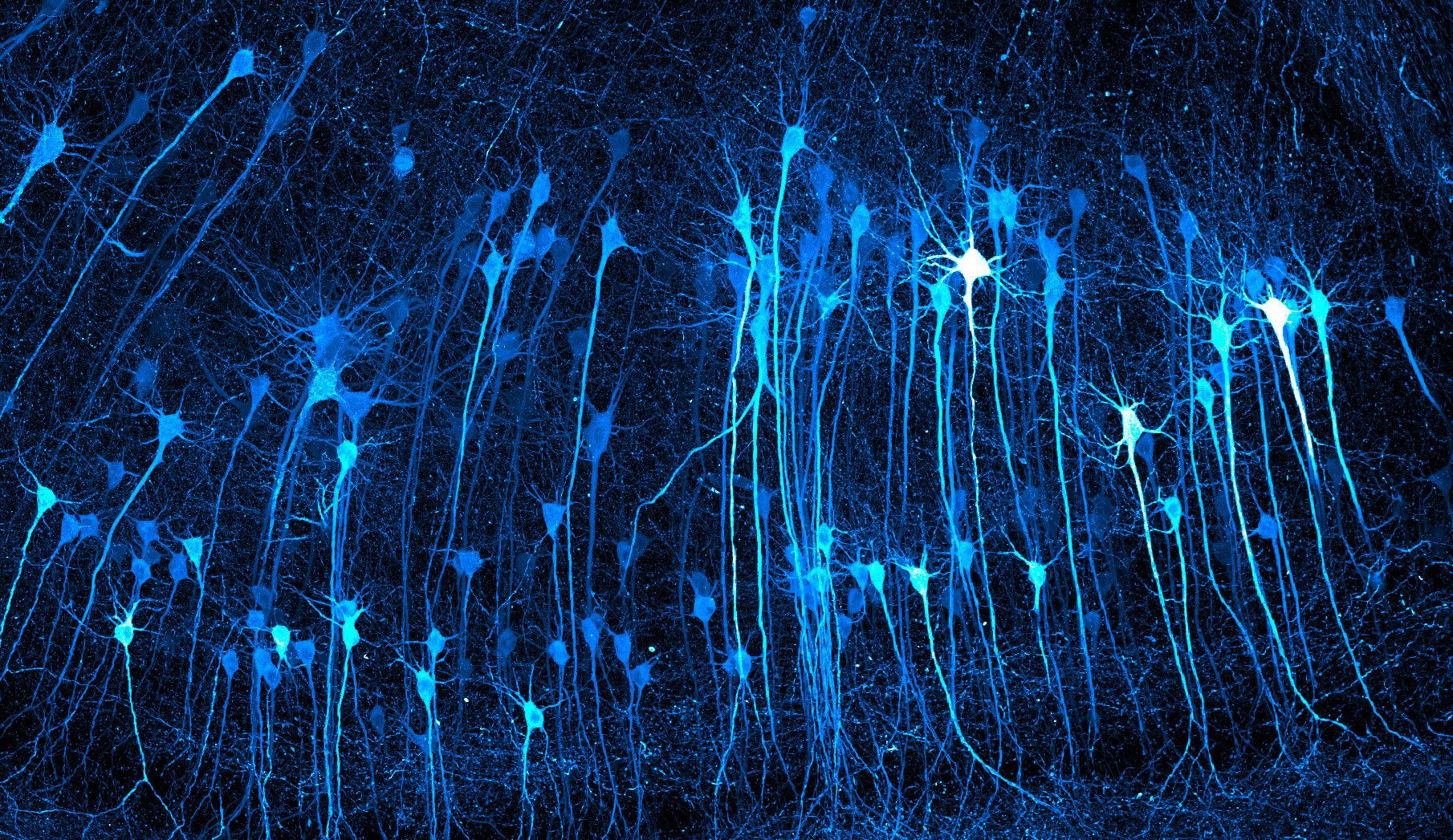
Glimpsing at this image without any background knowledge, one might think they're observing a forest of trees on an alien planet. In reality, you are actually observing the neurons residing within a mouse's brain. This remarkable image, crafted by Kaelin Wulf and Rachel Flannery from the Allen Institute in Seattle, secured third place in the Nikon Small World 2026 Photomicrography Competition.
The process behind this image is truly exceptional. Neurons, or nerve cells, are the basic functional units of the brain and nervous system. They employ chemical and electrical signals to receive, process, and transmit information throughout our minds and bodies. Within an enlarged mouse brain, neurons are undoubtedly minuscule.
Their branches are even tinier, making them challenging to distinguish even with a regular light microscope. To photograph these elusive structures, the team at the Allen Institute, a non-profit organization dedicated to large-scale research on the brain, cells, and the immune system, could not solely rely on magnification. Instead, they employed a method known as expansion microscopy.
This technique essentially entails physically enlarging the tissue by encasing a sample of the brain within a special gel that causes it to expand like a balloon. The scientists further utilized two additional methods to enhance their image. Firstly, they utilized fluorescence, a process that causes the labelled neurons to emit a bright glow, rendering them distinct against the dark background.
Secondly, they applied light sheet imaging, a technique that involves scanning the sample with a thin beam of light, which enables the creation of a sharp, three-dimensional picture, one slice at a time. By integrating these three techniques, the image could then be captured using a relatively simple 5x objective lens. The end result is not only scientifically valuable but also visually captivating.
The Nikon Small World competition, which showcases the beauty and intricacy of life as seen through the light microscope via photography and video, is open to anyone with an interest in microscopy. The overall winner this year was Ole Bielfeldt's unprecedented view of an inkjet printer at work. For those interested, you can explore all the winning images on the Nikon Small World website.
If you're into photography, you might enjoy browsing the best Nikon cameras and the best Nikon Z lenses. For those interested in close-up shots, our guide to the best camera for macro photography and the best macro lenses could be helpful. For those looking for photography competitions to participate in, there are 10 global photo contests currently accepting entries from October 2026 to February 2027.
Written by urgent.news from Digital Camera World's reporting — not their text. Machine-written — may contain errors; check the original before relying on it.