Medusa's eye, Halloween fireballs and more: 5 skywatching targets to look out for this spooky season
Five spooky skywatching targets perfect for naked eye stargazing this Halloween!
The spooky season has arrived, and for those who enjoy stargazing, there are five celestial targets to delight in this Halloween. The night sky, shaped by human beliefs over millennia, often features celestial objects imbued with eerie meanings. Here are some spooky skywatching targets to admire with the naked eye or binoculars.
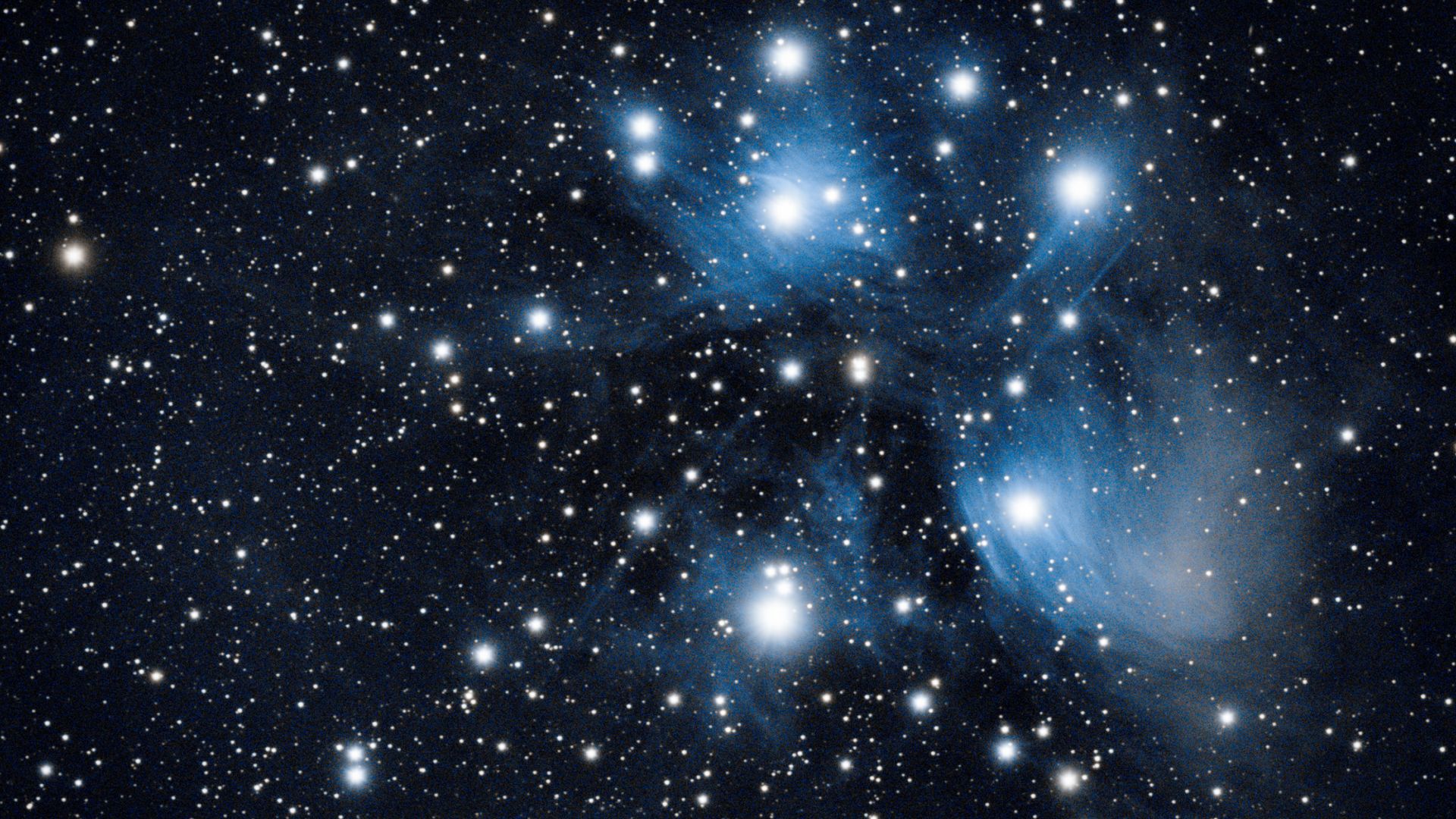
The Pleiades open star cluster is a cluster of blue-white stars that have a spooky connection to ancient Celtic druids who held Samhain celebrations when the cluster was at its highest point at midnight. Visible as six or seven twinkling stars to the naked eye, a pair of binoculars reveals dozens more of the 1,000-strong star cluster.
To find the Pleiades in October, locate Orion's Belt and trace an imaginary line upward through the trio of stars until you see the bright orange star Aldebaran, representing an eye of the great bull in Taurus.
Next, look for the "Demon Star" Algol, a binary system representing the monstrous Gorgon Medusa's eye. Algol appears to wink every 2.867 days during its 10-hour eclipses, dimming 3.3 times during the minimum of each eclipse. Although it won't be eclipsed on Halloween night in 2026, it may appear slightly dimmer during the surrounding minima on Oct. 29 and Nov. 1.
The constellation Cetus, known as the sea monster or whale, is another spooky target. Cetus can be found shining in the southeastern sky after sunset in late October. According to Greek mythology, Cetus was a sea beast terrorizing the coast of Aethiopia under the command of Poseidon, killed by the hero Perseus. Some tales claim Perseus used Medusa's severed head to turn Cetus to stone.
Spiderwebs on the moon can be spotted in the week surrounding the full moon on Oct. 26, surrounding the Tycho, Copernicus, and Kepler craters. These spiderweb-like patterns are bright material cast across the lunar surface by the impacts that created the bright young craters. Best viewed around the full moon phase, these lunar features add an eerie touch to an already spooky season.
Finally, for the most challenging target, keep an eye out for bright, slow-moving meteors belonging to the Taurid meteor shower. The Taurids appear to streak away from a patch of sky near the Pleiades in the constellation Taurus. Consisting of two separate meteor showers—the Northern Taurids and Southern Taurids—this shower is active in late October as Earth passes through the debris trails left by the 3-mile-wide Comet 2P/Encke.
Written by urgent.news from Space.com's reporting — not their text. Machine-written — may contain errors; check the original before relying on it.