Jensen Huang Says AI Demand Is "Off the Charts." The Money to Pay for It Isn't
Key PointsNvidia CEO Jensen Huang said demand from AI cloud providers is enormous, but there isn’t enough capital to fund it.
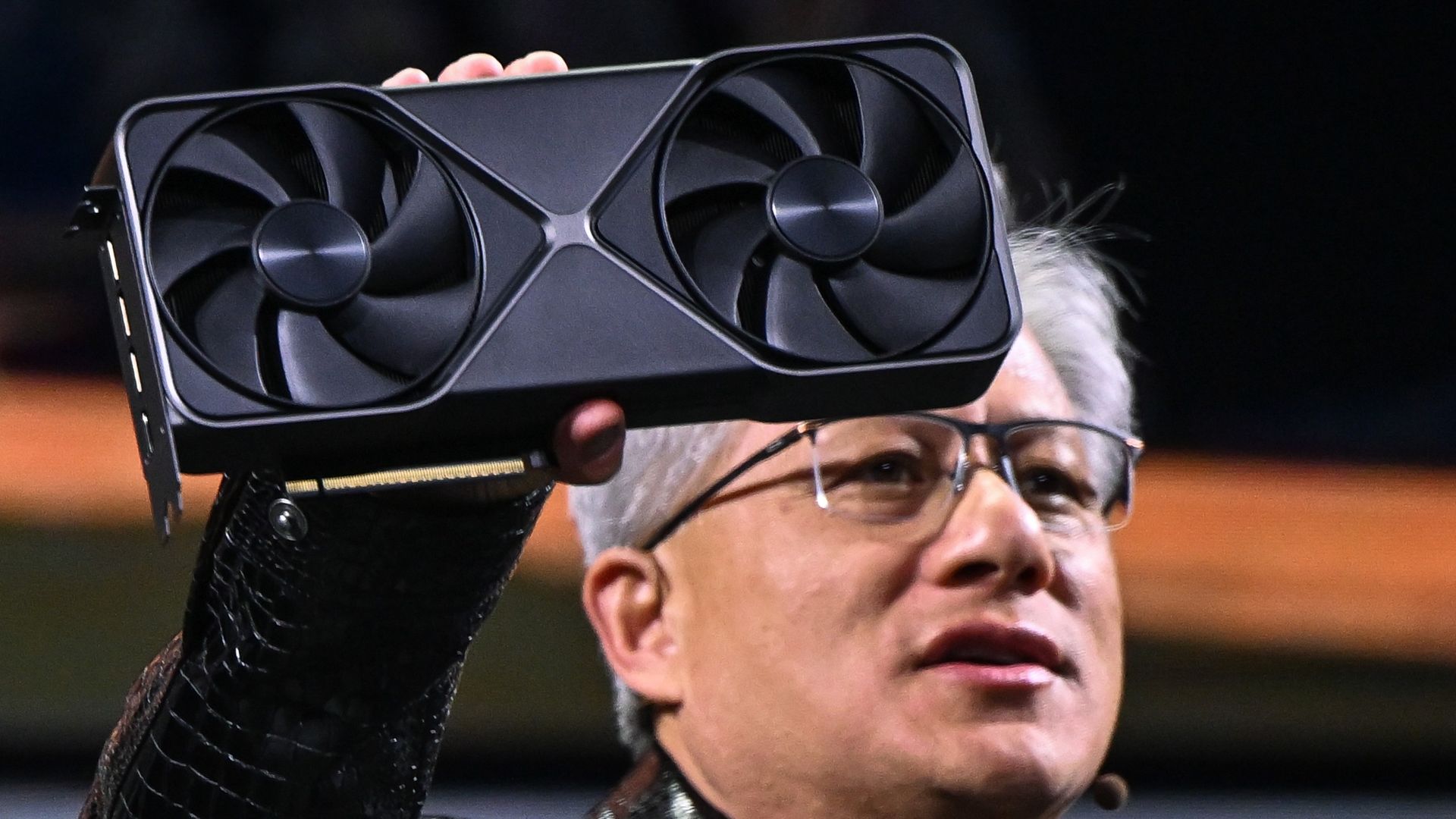
Chip stocks faced a setback on Thursday, with the Philadelphia Semiconductor Index dropping nearly 7% and all 30 companies in the index declining. Nvidia (NVDA), the sector leader, saw a 4.5% decrease, as investors grew doubtful about the AI spending surge lasting for years. During the same day, Nvidia CEO Jensen Huang declared in an interview that demand from 'neoclouds' - companies renting Nvidia-powered computing capacity - was unprecedented.
However, Huang also highlighted that the funds required to meet this market demand far exceeded what was currently accessible.
Huang proposed transforming Nvidia's chips into "financeable assets," using the company's chips as collateral to secure loans for AI infrastructure, akin to a vehicle securing an auto loan. Nvidia has been collaborating with investment banks for months to mobilize over $500 billion in financing for AI infrastructure. Chips, typically viewed as rapidly depreciating assets, are seen by Huang as productive, durable possessions that can be transferred from one customer to another.
He pointed out that rental prices for Nvidia's older H100 chips actually rose between October 2025 and March 2026.
Comparing Huang's proposal to obtaining a mortgage, the author believes a car loan would be a more appropriate analogy. Homes appreciate in value, which is why mortgage interest rates are typically lower than car loan rates. If borrowers cannot repay the loan, lenders can foreclose, sell the home, and recover their investment. However, since cars depreciate in value over time, lenders are willing to finance them due to their understanding of the rate at which they lose value.
The question remains whether AI chips' depreciation can be predicted. Huang claims that Nvidia's chips can generate revenue for over a decade, but many in the industry remain skeptical, given that computing hardware is usually depreciated over just three to four years.
The author acknowledges that while demand isn't the issue, helping customers address their capital constraints could increase order volume. However, this approach makes investors uneasy, as Nvidia is effectively enabling its customers to borrow money to purchase its products and may guarantee part of the chips' future value. As Nvidia's growth increasingly depends on its customers' ability to borrow money, it becomes more vulnerable to a potential credit crunch.
Despite the dominant position of Nvidia in the market, the AI build-out still heavily relies on borrowed money, a trend that does not seem to be changing anytime soon. When considering investments in AI infrastructure companies, investors should be aware of this risk factor.
Written by urgent.news from Motley Fool's reporting — not their text. Machine-written — may contain errors; check the original before relying on it.
This story
This is one outlet's version. Read the fullest account.