Japan’s mission to Martian moon and back underway
This mission is expected to be the first-ever Martian moon landing. At 4:41 a.m. on 20 October, an H3 rocket took off from the Tanegashima Space Center in Kagoshima Prefecture. It was carrying the MMX (Martian Moons eXploration), one of Japan’s largest-ever spacecraft, with a weight of 4,480 kilograms (9,877 pounds), and as of this […]
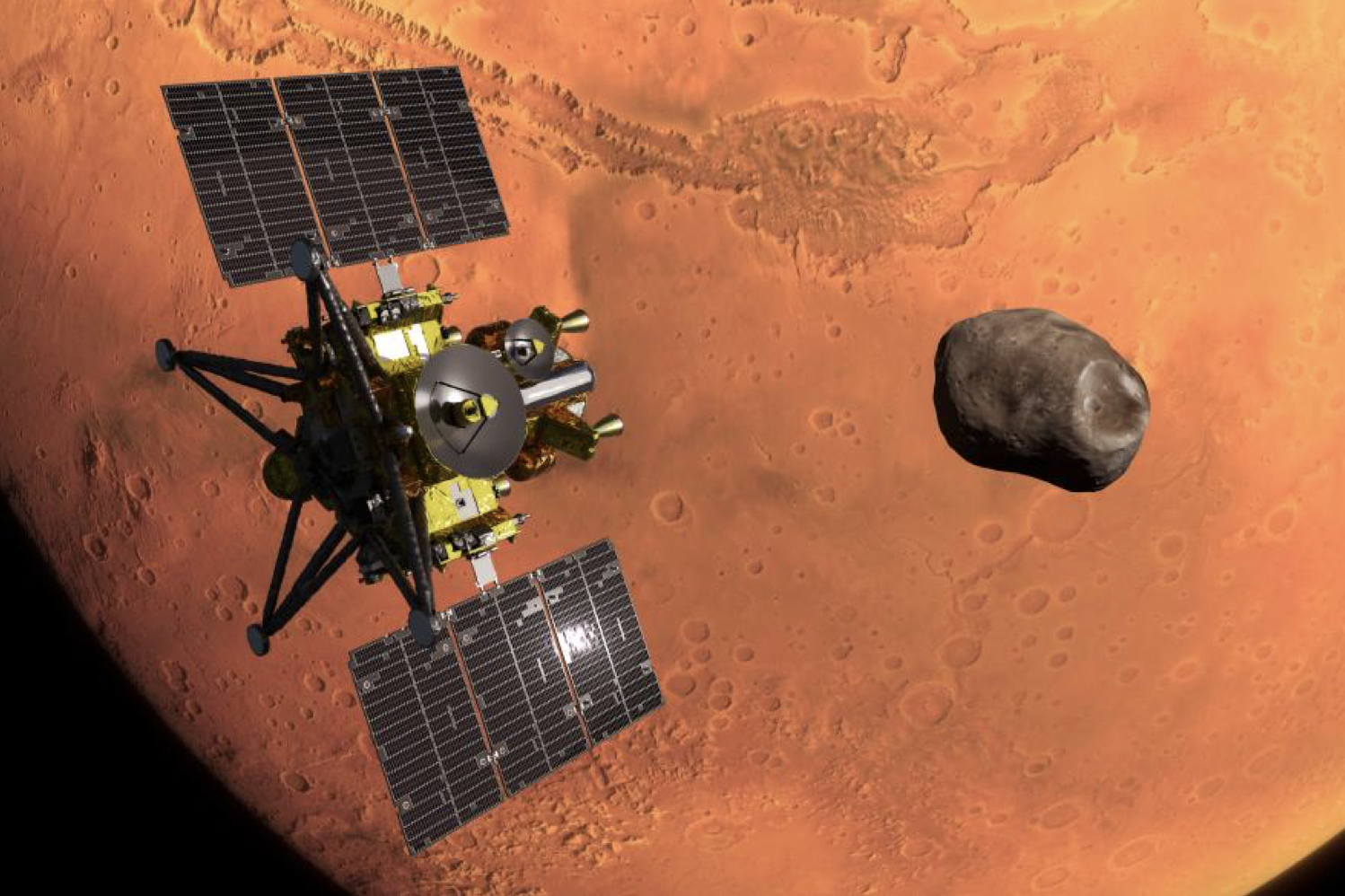
Japan’s ambitious Martian moon mission, known as MMX (Martian Moons eXploration), is currently underway, marking a significant milestone in the country’s space exploration efforts. On October 20th, an H3 rocket lifted off from Tanegashima Space Center in Kagoshima Prefecture, carrying the 4,480-kilogram MMX spacecraft. As of now, all systems are functioning as expected and operating normally.
The primary objective of this mission is to reach Phobos, one of Mars’ moons, and collect samples for return to Earth. This ambitious endeavor could potentially provide valuable insights into the formation of Phobos and Mars’ other moon, Deimos. Scientists believe they may have formed either from captured asteroids or from debris ejected by a massive collision with Mars. Additionally, it is estimated that roughly 0.1% of Phobos’ material is actually Martian soil, which was expelled during meteorite impacts on the planet.
Japan’s space agency, JAXA, has a proven track record in space exploration, having successfully landed on asteroids and returning samples twice before. Despite Phobos being up to ten times larger than those asteroids and orbiting Mars, the mission remains a challenging one. The MMX will need to execute a soft landing on Phobos and then take off again to return to Earth. This complex mission will consume about 68% of the spacecraft’s total weight in propellant.
The MMX mission hopes to collect at least 10 grams of material from Phobos, with an estimated 0.01 grams of pure Martian material. This mission is set to launch in 2024, but development delays have pushed the timeline back. China, currently preparing its own Mars mission, Tianwen-3, aims to collect 500 grams of Martian soil and return it by 2031. If both missions are successful, it could be a close race to see which country achieves this feat first.
Regardless of the outcome, the samples collected by the MMX mission could significantly enhance our understanding of the Martian environment, including the potential existence of life there. With these valuable insights, we may finally be able to turn our attention to exploring our neglected neighbor, Venus, which could reveal even more fascinating discoveries.
Written by urgent.news from SoraNews24's reporting — not their text. Machine-written — may contain errors; check the original before relying on it.