Indian Physicist Ashoke Sen Becomes First Indian To Receive Prestigious Oskar Klein Medal
Sen, a renowned physicist and professor at the Bengaluru-based International Centre for Theoretical Sciences (ICTS), has earned global recognition for his contributions to string theory and research on black holes. His latest achievement marks a significant moment for Indian science and highlights the country's contribution to advanced research in physics. Pioneering Work In String Theory Sen,…
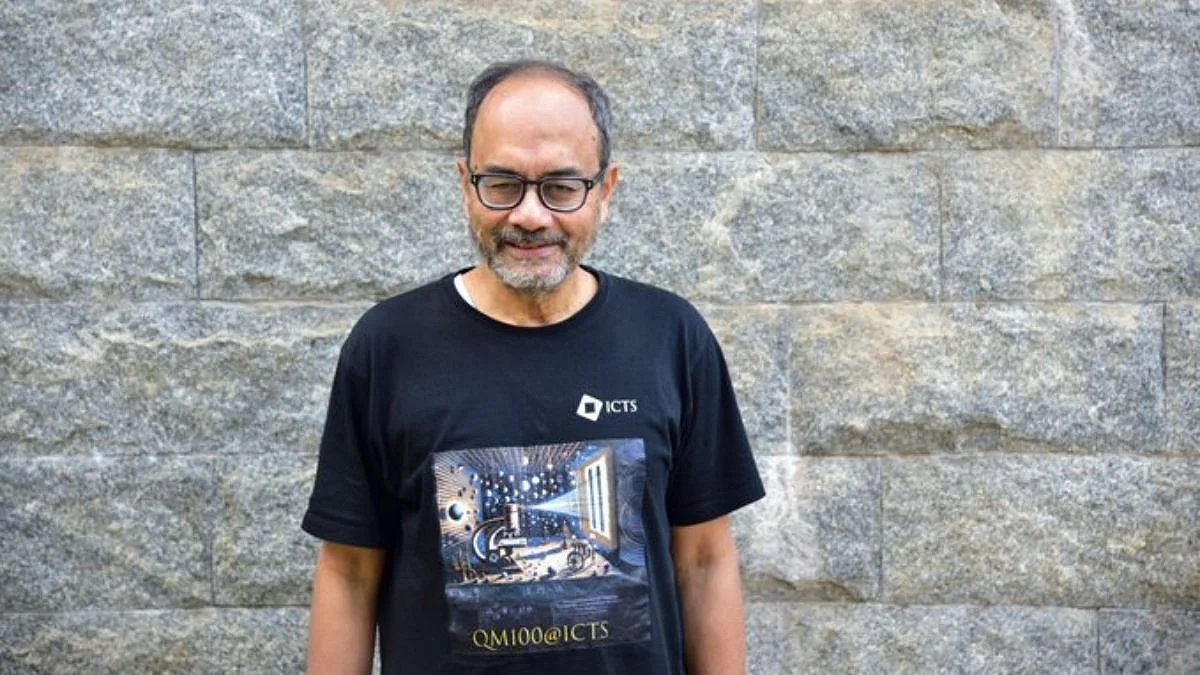
Renowned Indian physicist Ashoke Sen has become the first Indian to receive the prestigious Oskar Klein Medal. The award, given annually by Stockholm University and the Nobel Committee for Physics, recognizes significant contributions to the field of physics. Sen, a professor at the Bengaluru-based International Centre for Theoretical Sciences (ICTS), has made groundbreaking contributions to string theory and research on black holes.
His pioneering work in S-duality, precise counting of black-hole entropy, and string field theory has played a pivotal role in shaping modern string theory.
In 2026, Sen delivered the Oskar Klein Memorial Lecture titled 'Gravity from Strings and Strings from Gravity' at Stockholm University's AlbaNova Centre. This achievement further solidifies Sen's impressive list of accolades, which includes the Breakthrough Prize in Fundamental Physics (2012), the Dirac Medal (2014), the ICTP Prize (1989), the Shanti Swarup Bhatnagar Prize (1994), the Infosys Prize in Mathematical Sciences (2009), the Padma Shri (2001), and the Padma Bhushan (2013). He was also elected a Fellow of the Royal Society in 1998.
ICTS Director Rajesh Gopakumar congratulated Sen on this remarkable achievement, praising his contributions to the institution and its academic environment. The Oskar Klein Medal, named after Swedish theoretical physicist Oskar Klein, highlights Sen's decades-long dedication to theoretical physics and his crucial role in advancing the understanding of fundamental scientific concepts. This recognition from international peers underscores India's growing presence in advanced research within the field.
Written by urgent.news from Free Press Journal's reporting — not their text. Machine-written — may contain errors; check the original before relying on it.
This story
This is one outlet's version. Read the fullest account.