Ice sheet expansion may have started 2,000 years ago, but we canceled that
The tiny remains of the Laurentide Ice Sheet began getting somewhat less tiny.
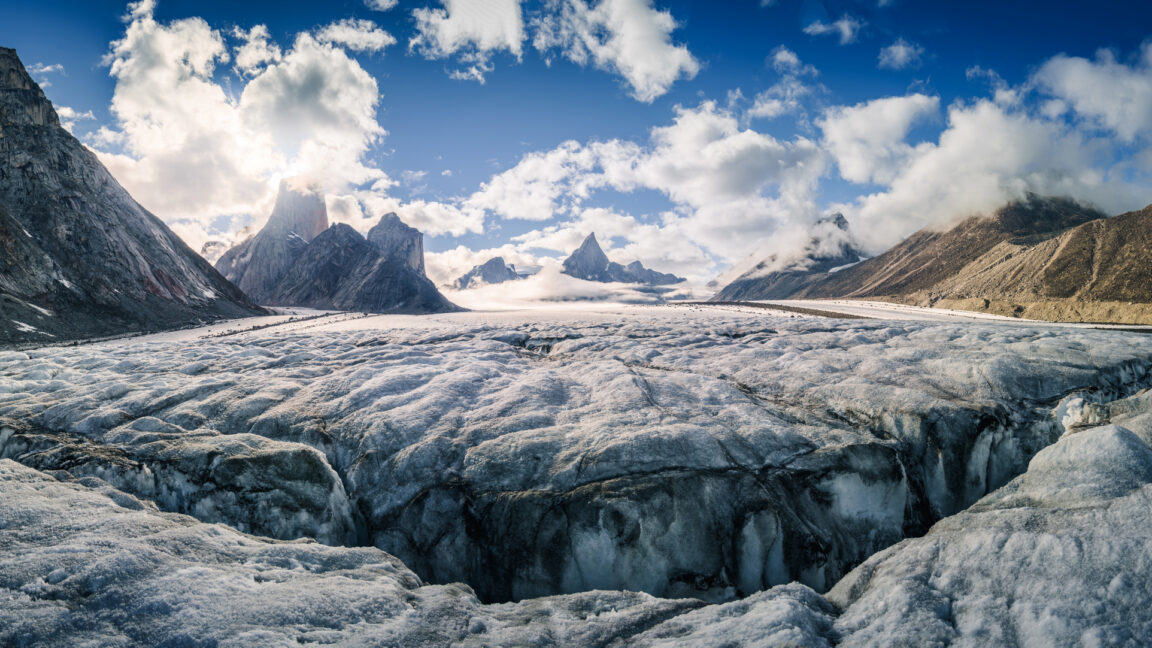
The Barnes Ice Cap, located on the central plateau of Baffin Island in the Canadian Arctic, represents the last remaining fragment of the Laurentide Ice Sheet. This once massive ice sheet covered much of North America during the Pleistocene era, burying Canada under a thickness of two miles of ice and locking away approximately 80 meters of sea level.
Recently, a scientific study published in the esteemed journal Science has provided compelling physical evidence that the Laurentide Ice Sheet may have temporarily reversed its retreat and begun to expand again thousands of years ago.
According to the researchers' findings, the Laurentide Ice Sheet reached its smallest size around 3,600 years ago, only to start re-expanding approximately 2,000 years ago. The team interpreting this phenomenon as the initial phase of a forthcoming glaciation. This newly discovered period of ice age was poised to unfold until approximately 1960, when human-induced climate warming abruptly halted this natural progression.
Nicolás Young, a geologist at Columbia University's Lamont-Doherty Earth Observatory and the lead author of the study, emphasizes that Barnes Ice Cap is the sole surviving piece of the Laurentide Ice Sheet, which once covered the entire region. As the ice sheet thinned throughout the Holocene epoch, its edge gradually retreated onto Baffin Island, leaving behind the deflated core that now exists. The reason Barnes Ice Cap can provide insight into its own history is due to the temperature at its base.
The researchers' discovery underscores the significant role that climate change has played in shaping the Earth's geology and highlights the potential consequences of human-induced climate change.
Written by urgent.news from Ars Technica's reporting — not their text. Machine-written — may contain errors; check the original before relying on it.
This story
This is one outlet's version. Read the fullest account.