French police use tear gas to disperse protesters in Lyon
French police fired tear gas to break up demonstrators in Lyon, as student unions and the Yellow Vests called for protests across France.
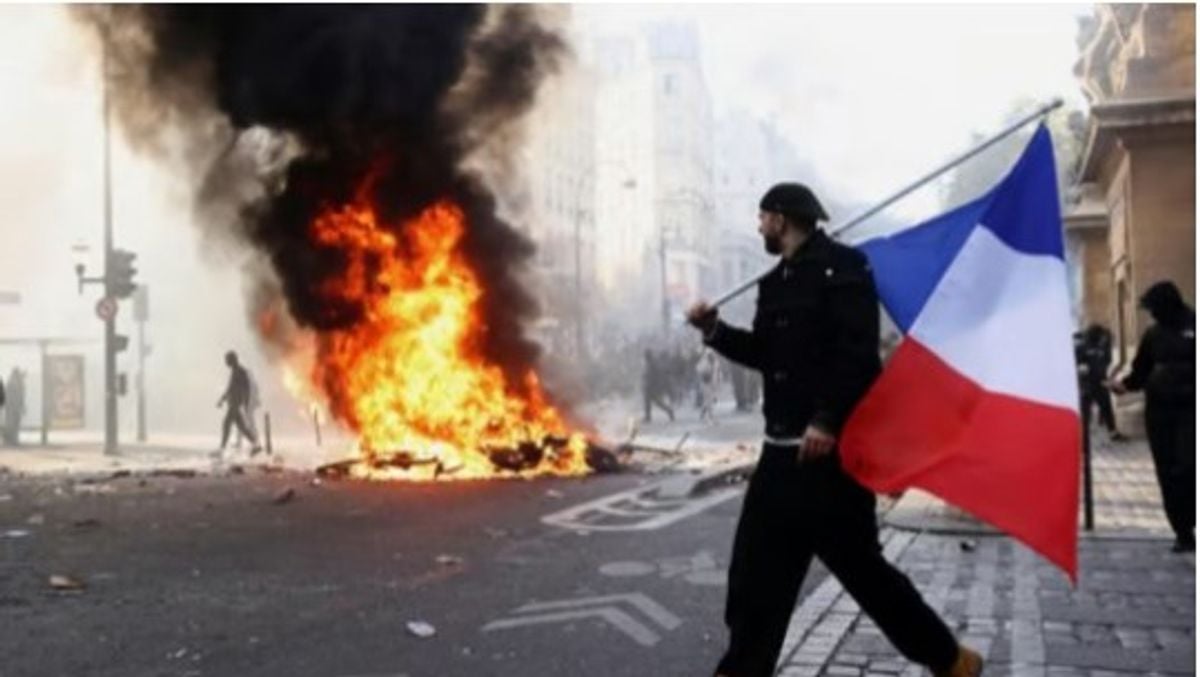
Police in Lyon, France, deployed tear gas to disperse approximately 150 protesters who attempted to obstruct a road during nationwide demonstrations on Saturday. These protests were triggered by concerns over the escalating cost of living, with France currently experiencing the highest inflation rates in Europe, largely due to the ongoing Middle East conflict.
In Lyon, tear gas was used to clear the demonstrators from a road near the city center, where protests had been banned. Elsewhere, authorities and business owners prepared for potential unrest, with shopkeepers removing merchandise and installing boards to indicate closures. Key cultural institutions, including the Louvre and Musee d'Orsay, remained closed. Around 70,000 security personnel were mobilized across France, as confirmed by the interior ministry, to counteract the significant threat of violence.
Interior Minister Laurent Nunez warned that rioting would not be tolerated, after calls for violence and looting were circulating on social media. Responding to the tensions, thousands of anti-fascist protesters marched against far-right leader Marine Le Pen and incumbent President Emmanuel Macron in Orleans, where Le Pen was set to begin her election campaign for the upcoming presidential race.
The atmosphere of violence from last weekend's protests, which saw clashes between protesters and police, damage to public buildings, and widespread looting of stores, underscored the heightened tensions in France. Over 2,700 individuals were arrested, with damages and stolen goods estimated at hundreds of millions of euros. President Macron attributed much of the violence to "ultra-left" groups intent on destabilizing the republic.
Demonstrations on Saturday were spurred by protesters expressing frustration over the government's perceived neglect of public discontent regarding rising costs and student conditions. Inflation, like in other countries, has risen due to geopolitical tensions, particularly the ongoing conflict in the Middle East. Similar protests have occurred in Italy, Belgium, Spain, and Portugal, driven by concerns over inflation and educational issues, although the specific grievances vary.
In Paris, the streets were notably calm, with many shop windows boarded up in anticipation of the demonstrations. The Yellow Vest movement, which had previously disrupted traffic eight years ago, claimed it would not comply with the government's request to alter the route of a union-organized march. This move was approved, but the Yellow Vest organization indicated it would not follow the directive.
President Macron and his administration have attempted to distinguish between legitimate protests and the destructive actions that occurred during last weekend's events. Courts have already convicted 217 individuals, some of them first-time offenders, for their roles in the incidents. Meanwhile, Macron has stated that only union-led demonstrations will be accepted, while other gatherings deemed "illegitimate" will be met with resistance.
Critics, including Amnesty International, have condemned the government's measures as a step toward authoritarianism, arguing that they jeopardize the right to peaceful protest. Eva Cosse, a senior researcher at Human Rights Watch, emphasized that police must ensure peaceful and safe protests while protecting the public from violence.
Written by urgent.news from Free Malaysia Today's reporting — not their text. Machine-written — may contain errors; check the original before relying on it.
This story
This is one outlet's version. Read the fullest account.
- Police fire tear gas as new French demonstrations kick off dawn.com
- Police fire tear gas as new French demonstrations kick off freemalaysiatoday.com
- Watch: French police deploy armoured vehicles in Paris and Marseille euronews.com