External Affairs Minister S Jaishankar Visits Baku's Ateshgah Fire Temple; Know Its Connection To Zoroastrianism And Hinduism
External Affairs Minister S Jaishankar visited the historic Ateshgah Fire Temple in Baku, Azerbaijan, on Friday, October 23, 2026. The visit brought attention to one of the region's most distinctive historical landmarks, known for its association with fire worship, Zoroastrian traditions and the cultural links between India and Azerbaijan. His visit to Azerbaijan for talks with his counterpart…
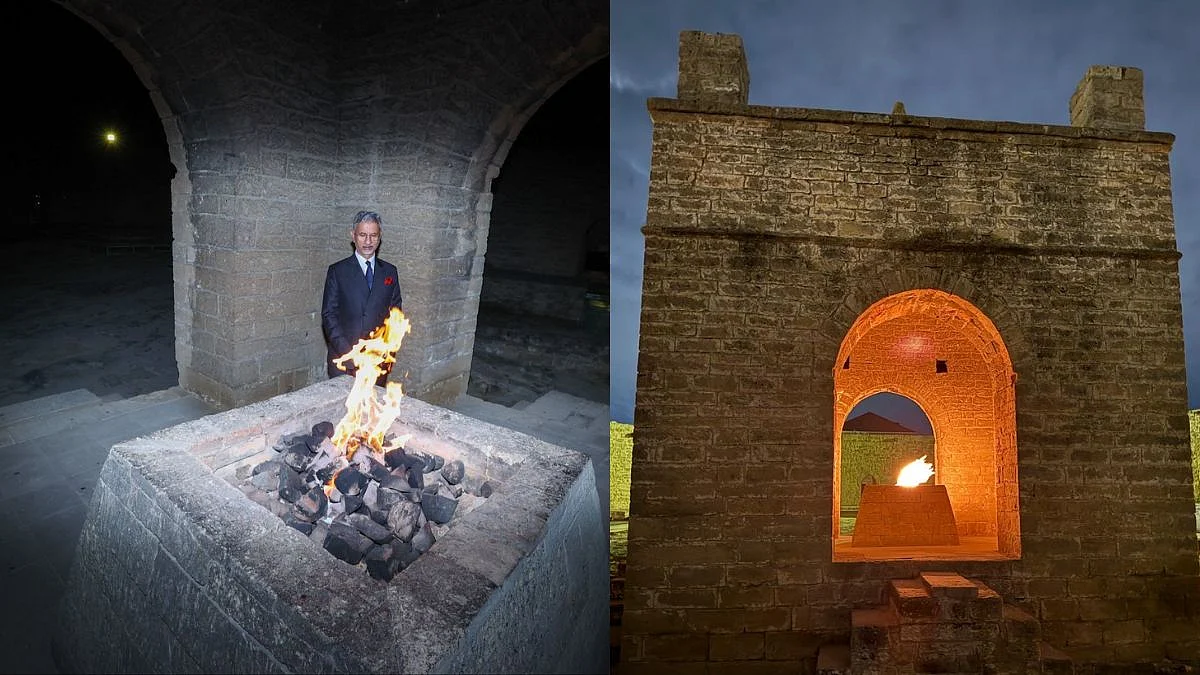
External Affairs Minister S Jaishankar journeyed to Baku's Ateshgah Fire Temple on October 23, 2026. This historic site, steeped in Zoroastrian and Hindu traditions, symbolized the cultural bond between India and Azerbaijan. The visit marked Jaishankar's first to Baku in eight years, following Sushma Swaraj's 2018 trip. The Ateshgah Fire Temple, a pentagonal stone complex dating back to the 17th and 18th centuries, was constructed by Hindu, Sikh, and Zoroastrian merchants and pilgrims from the trade routes.
The temple's central altar and surrounding cells once housed worshippers and pilgrims, reflecting the region's rich religious history. Positioned near Baku's natural gas reserves, the temple's association with eternal flames made it an important destination for those who followed fire-related religious practices. Zoroastrianism, one of the world's oldest religions, venerates fire as a symbol of purity and a conduit for prayers.
Similarly, Hindu and Sikh traditions have contributed to the Ateshgah's significance. The temple, now a museum and cultural attraction, invites visitors to delve into the area's religious and commercial heritage, bridging ancient Indian pilgrim journeys with present-day Azerbaijani culture.
Written by urgent.news from Free Press Journal's reporting — not their text. Machine-written — may contain errors; check the original before relying on it.