Colombian Biotechnologist Transforms Fruit Waste into Textile Applications
Finding new ways to make use of things that normally end up being discarded. That is the idea driving Colombian biotechnologist Darling Juliette Pineros Mayo. The concept is easier to understand in practice: some fruit waste can be turned into food for bacteria capable of producing polymers. To make the idea even clearer, it is […]
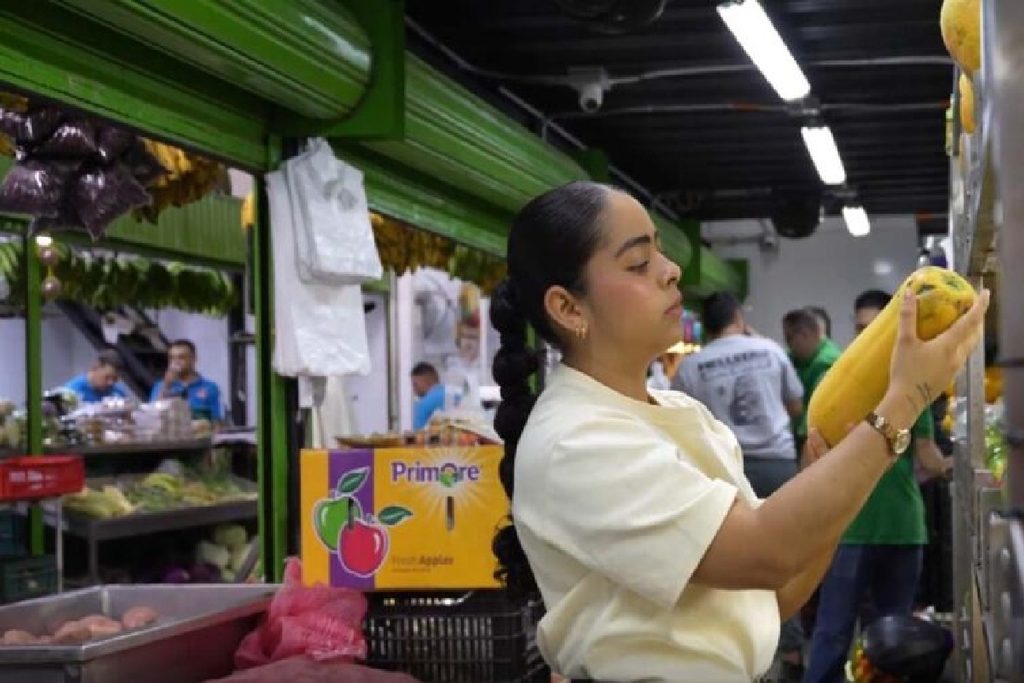
Colombian biotechnologist Darling Juliette Pineros Mayo is transforming fruit waste into textile applications, demonstrating a novel approach to making use of discarded materials. The idea is straightforward in practice: bacteria can produce polymers from fruit waste, which can then be used to create textiles. Pineros Mayo began experimenting with fruits like pineapple and mango, primarily waste from the Central Mayorista de Antioquia in Medellin.
The process begins with a preservation phase, followed by fermentation, during which bacteria create a membrane that can undergo various treatments to explore textile uses.
Pineros Mayo emphasizes that this process requires patience, knowledge, and experimentation. Producing a sheet of material can take between 10 and 15 days, depending on the desired thickness, while the entire process can extend over approximately one month. This is due to the fact that it involves living microorganisms and biological processes that require time to develop.
Pineros Mayo explains that timelines in biotechnology are different from those of conventional industrial manufacturing, where products must be ready in a few months. Comprehensive research, testing, validation, and characterization are necessary before considering commercialization on a larger scale.
Initially, Pineros Mayo worked from her home with basic resources, starting with a refrigerator as her first infrastructure. She collected around 50 kilograms of fruit waste and began processing it, having to find ways to preserve it to continue her experiments. With support from the Medellin Mayor’s Office Secretariat of Economic Development, she strengthened her production capacity and acquired essential equipment.
Now, she collaborates with a company that tests her prototypes, evaluating aspects such as resistance, wear, washing behavior, and other characteristics to determine potential applications.
The initiative aims not only to produce a new material but also to demonstrate that waste can become raw material and that innovation can contribute to more circular production models. This work contributes to two major goals in Medellin: waste valorization and the circular economy, and scientific innovation to address specific city challenges.
Pineros Mayo's experience challenges the notion that a District of Science, Technology, and Innovation requires large infrastructures or exclusive reliance on advanced technologies like artificial intelligence. Instead, it highlights how innovation can emerge from identifying problems, using available resources, and building partnerships with universities, companies, entrepreneurs, and public entities to accelerate validation processes and explore new development opportunities.
Written by urgent.news from Colombia One's reporting — not their text. Machine-written — may contain errors; check the original before relying on it.