Why Trump Can’t Sell Putin a Deal
Economic incentives don’t persuade the Russian leader. Here’s what could.
On April 7, 1965, President Lyndon B. Johnson addressed an audience at Johns Hopkins University, essentially proposing to build a comparable authority for North Vietnam provided Hanoi halted backing the insurgency in South Vietnam. Upon returning from the speech via helicopter, Johnson confided in an aide, touching his knee and saying, "Old Ho can't turn that down."
Ho Chi Minh, the North Vietnamese leader, ultimately rejected Johnson's offer. This incident serves as a lesson in political psychology, demonstrating how presidents may naively assume that transactional politics, prevalent in local governments, will translate to the international stage, only to realize that nationalism, ideology, and rivalry hold greater significance.
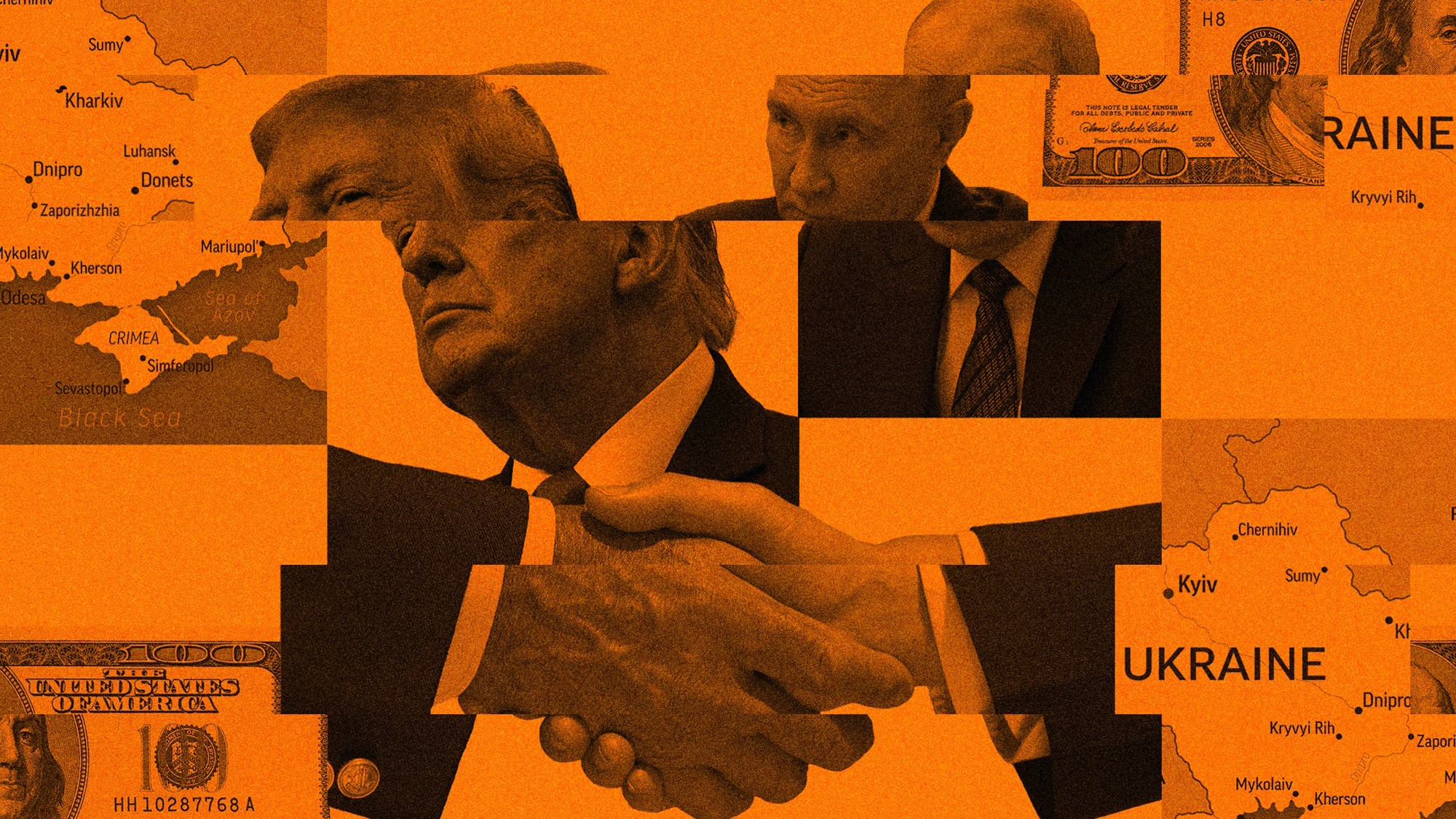
Donald Trump has encountered a similar predicament with Vladimir Putin. He appears to believe that economic incentives will convince the Russian leader to pursue peace. However, this strategy is failing, effectively thwarting the realistic means to bring an end to the conflict in Ukraine and raising the likelihood of the war expanding and intensifying.
During his second term, Trump was taken aback by Putin's unwillingness to end the war promptly through a freeze of territorial boundaries and a pledge that Ukraine would not join NATO. Rather than concentrating on enhancing Ukraine's battlefield standing or leveraging against Russia through sanctions, Trump opted to convince Putin that peace would yield financial rewards.
He removed his Ukraine envoy, Lieutenant General Keith Kellogg, from the negotiating team, displeasing the Kremlin, and replaced him with Steve Witkoff, a real-estate magnate. Russian financier Kirill Dmitriev would serve as Trump's liaison to Putin.
Witkoff and Dmitriev had previously formulated a deal around a year prior, which comprised lifting sanctions, joint U.S.-Russian business ventures, and even Russia's return to the G7 (evolving into the G8). Nevertheless, the proposal fizzled due to Putin's insistence on Ukraine ceding territory during the conflict. Witkoff and Dmitriev persevered.
The most recent iteration surfaced in recent days as U.S.-Ukraine relations hit their lowest point since the February 2025 Oval Office confrontation. Trump and Putin reached an agreement in which Russia would supply diesel fuel to the United States and worldwide markets. Ukrainian President Volodymyr Zelensky denounced the arrangement, deeming it "unfair and honest" and likening it to "a birthday present for Putin."
An enraged Trump called for Zelensky's dismissal and stated that he was more challenging to deal with than Putin.
In the ensuing days, Kyiv accused Washington of curtailing intelligence cooperation, such as withholding information on incoming ballistic-missile strikes (the administration denied this). The Financial Times reported that the administration is contemplating returning some of the frozen assets to Russia as an incentive for a partial cease-fire.
Trump subsequently waived sanctions on Russia under the Lindsey O. Graham Sanctioning Russia and Iran Act, asserting that it was in the U.S. national interest. On Truth Social, Trump claimed to be in negotiations to resolve the war and did not "wish to do anything that would foolishly drive Russia away from the bargaining table."
As U.S.-Ukrainian relations deteriorated, the administration attempted to rationalize its actions. A senior official disclosed to The Washington Post's David Ignatius that due to the challenging negotiations over a Ukraine deal, the White House would broaden the issue and negotiate a regional deal. This proposal would encompass provisions for supplying energy to Europe via a new pipeline, with profits shared between Ukraine and Russia, as well as resolving Moscow's disagreements with European nations.
This tactic closely mirrors Johnson's earlier plan. The naivete behind this approach might be tolerable if Putin were a new leader with no track record; however, he is a well-known figure. Ukraine is his obsession, his white whale. He yearns to subjugate it and has demonstrated his willingness to pay a substantial price to accomplish this goal.
The immediate diplomatic challenge Trump must address is that Putin will not settle for anything less than the surrender of additional Ukrainian territory, an outcome no Ukrainian leader can accept. Putin faces a slim chance of seizing this land by force, as the front line remains largely static due to the saturation with drones.
However, the Russian leader harbors two hopes. Firstly, he aims to defeat Ukraine this winter through a brutal air offensive that would dismantle its energy grid and inflict misery on millions. This pressure might compel Ukraine's front line to collapse or lead Kyiv to accept Moscow's demands at the negotiating table. The second possibility is escalating Russia's shadow war against Ukraine's European allies.
Moscow is already implicated in assassination plots, arson, and planting explosive-laden drones in airports. Several European leaders, including Polish Prime Minister Donald Tusk and French President Emmanuel Macron, have cautioned that Russia is contemplating targeting Eastern European states with drones and missiles, which it would later deny.
Putin anticipates that these two tactics—intensifying Ukraine's winter and fomenting unrest in Europe—will empower him to conclude that Russia can wage a costly, protracted victory over the next couple of years.
Written by urgent.news from The Atlantic's reporting — not their text. Machine-written — may contain errors; check the original before relying on it.