Resetting Indonesia’s capital market needs verified integrity
Indonesia cannot restore foreign investor confidence with emergency price supports or rhetoric. It must prove the integrity of its markets through independent verification of ownership and true liquidity.
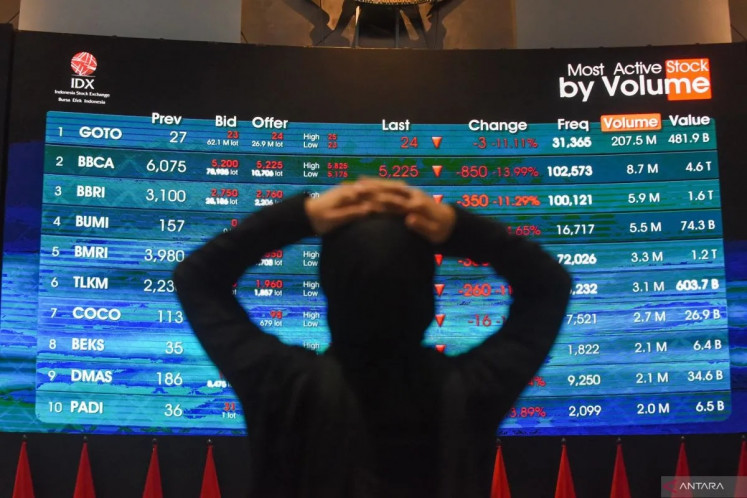
Indonesia must rebuild trust in its capital markets, not just through temporary measures like price supports, but by establishing a more robust system of market integrity. The recent sharp drop in the Jakarta Composite Index, coupled with increasing foreign selling pressure and MSCI's recent market classification review, has exposed deep-rooted weaknesses in the country's financial system.
The core problem is no longer whether Indonesian equities are attractive investments based on their apparent valuations alone. The question now centers on whether international investors can rely on the transparency of reported data, the true ownership structures, and the fairness of trading processes that determine these valuations. Blanket assurances, blaming external agencies, or encouraging investors to buy stocks at lower prices do not address these core issues.
Efforts to bolster liquidity or manipulate share prices alone cannot overcome the fundamental uncertainty surrounding ownership rights, the true free float of shares, the concentration of holdings among a few key stakeholders, or potential coordinated trading behaviors. These structural problems compromise the very foundation of market credibility.
Instead of seeking quick fixes, policymakers should focus on a broader institutional overhaul of Indonesia's capital markets. External ratings agencies like MSCI are not just rating Indonesia's market; they are essentially critiquing the underlying infrastructure upon which its market operates. For foreign investors, the ability to buy, hold, value, and liquidate securities must be based on transparent, predictable conditions.
A company's assets, earnings, or capitalization, while important, are insufficient if the market itself cannot be trusted.
Investors need assurance that ultimate voting control rests with rightful owners, that a significant portion of shares circulates freely among independent holders, and that prices reflect genuine, arms-length transactions without severe distortions. The sheer size of Indonesia's economy and its long-term growth potential do not absolve its markets from adhering to international governance standards.
Ultimately, the well-being of Indonesia's capital markets hinges on whether its exchanges can meet the rigorous international benchmarks for transparency and fairness. The government's role is not merely to stabilize prices but to create a regulatory environment where investors can confidently engage in fair, liquid, and transparent markets.
Written by urgent.news from The Jakarta Post's reporting — not their text. Machine-written — may contain errors; check the original before relying on it.