Reinforcing the value of human understanding at MIT
During the School of Humanities, Arts, and Social Sciences’ 75th Anniversary Symposium, President Sally Kornbluth said “MIT has never needed your particular insight and guidance more than we do now.”
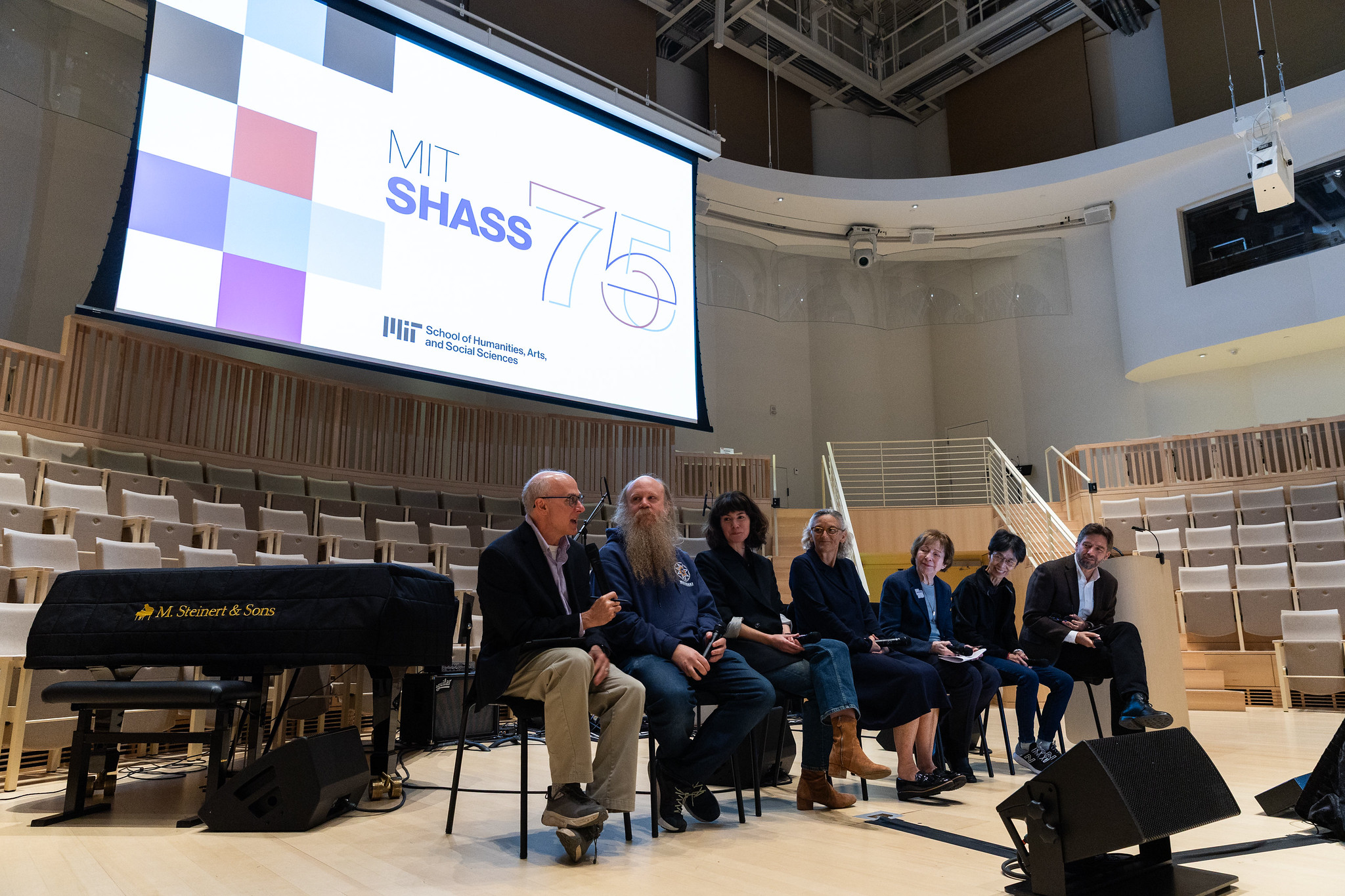
At MIT's School of Humanities, Arts, and Social Sciences (SHASS) 75th Anniversary Symposium, held September 24-25 at the Linde Music Building's Thomas Tull Concert Hall, leaders and attendees celebrated the school's significance while acknowledging how artificial intelligence is reshaping education and research. The event showcased the school's value in addressing societal challenges and fostering critical thinking.
President Sally Kornbluth emphasized the importance of appreciating and honoring SHASS, noting its origins date back to the Lewis Committee Report in 1949, which advocated for integrating scientific and humanistic scholarship. Kornbluth highlighted the current uncertainty surrounding AI's implications for research and education, stating, "As we face the challenges of our own time, MIT needs your particular insight and guidance more than ever."
Provost Anantha Chandrakasan stressed the importance of a human-centered approach to technology, asserting that while technical mastery is crucial, it is not sufficient to solve the world's great challenges. Chancellor Melissa Nobles highlighted the value of SHASS courses from student feedback, stating that students' unique interests may not be apparent to STEM professors.
Agustín Rayo, the Kenan Sahin Dean of SHASS, emphasized that research should not be the sole measure of SHASS's value. He argued that education should also prompt questions about what is worth doing, one's responsibilities to others, and what constitutes a meaningful life. Rayo further emphasized the role of SHASS in understanding the histories, cultures, and social structures that shape human life.
The symposium featured research presentations, panel discussions, and performances, addressing the role of SHASS in tackling contemporary societal issues. On the first day, faculty shared insights on educational innovations, including the MIT Indigenous Languages Initiative Master's Program, MISTI, and the Master in Data, Economics, and Design of Policy (DEDP).
Stephanie Seed, associate professor of literature, discussed the importance of reintegrating classic literature into teaching, drawing attention to the value of understanding the past for envisioning the future. Eric Klopfer, professor of Comparative Media Studies/Writing, emphasized the need for instructors to reassess course design, moving beyond curriculum modifications to fundamentally rethink the educational experience in light of AI's impact.
In a session on computing and society, panelists explored the interplay between technology and human nature, with MIT Professor D. Fox Harrell discussing the intentional nature of AI systems and MIT Professor Sherry Turkle warning about the potential impact of AI chatbots on human attachment. Professor David Autor, head of the Department of Economics, expressed excitement about the rapid advancements in AI and its implications for society.
Celebrating the arts, the symposium concluded with a lively Music and Theater Arts performance showcase featuring a new play directed and performed by students, titled "A Dream Like A Dream."
Written by urgent.news from MIT News AI's reporting — not their text. Machine-written — may contain errors; check the original before relying on it.