Punjab’s smog challenge: will this year be different?
The smog season is upon us once again. As winter approaches, Lahore and other parts of Punjab are preparing for another period of deteriorating air quality. For residents, the concerns are familiar: unhealthy air, respiratory problems, restrictions on outdoor activities and disruptions to daily life. Over the years, smog has become a recurring public health crisis, with little lasting improvement…
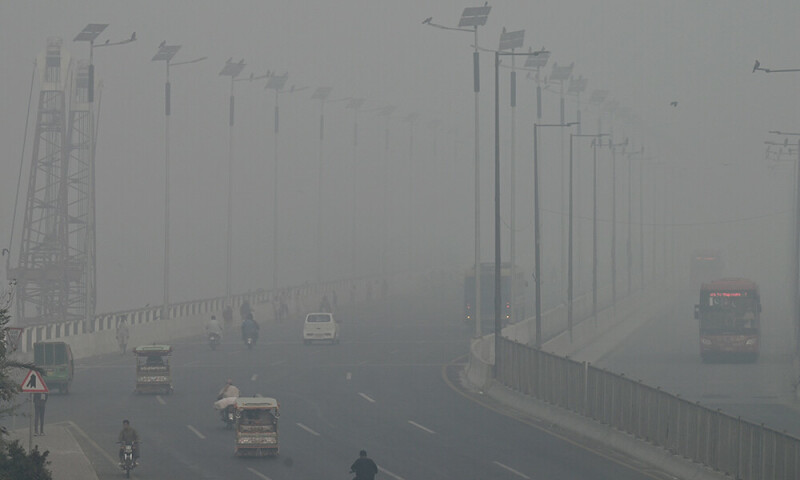
Lahore and other regions of Punjab brace for another smog season as winter arrives, with residents facing unhealthy air, respiratory issues, and restrictions on outdoor activities. Unlike past years, the Punjab government seems to be addressing the problem with greater urgency, allocating more resources and implementing a long-term air-quality management plan.
Central to these efforts is a $300 million World Bank-funded program (PCAP) aimed at reducing PM2.5 exposure by 35% over the next decade, focusing on transport, agriculture, industry, and air-quality management in Lahore. The government is also expanding its monitoring network, with 59 stations now and plans to reach 100. Advanced technologies, including drones, CCTV cameras, and AI-based systems, are being deployed to monitor industrial emissions, identify pollution hotspots, and enforce compliance.
Electric public transport, 120,000 electric two- and three-wheelers, and stricter vehicle emission testing are being promoted, along with efforts to control crop residue burning in agriculture and improve fuel quality. While these initiatives mark a shift towards a more structured approach, the real challenge remains translating plans into cleaner air.
Monitoring technology can identify polluters, but reducing emissions requires sustained efforts in regulation and cleaner technologies. International examples from Beijing, London, and Seoul highlight the importance of reducing pollution at its source through stringent emission standards and vehicle controls. For Punjab, the success will be measured by whether residents can breathe cleaner air consistently throughout the year, rather than just during smog season.
Written by urgent.news from Business Recorder's reporting — not their text. Machine-written — may contain errors; check the original before relying on it.