‘Opportunistic’: experts weigh Manila’s minilateral agenda ahead of Trump-Xi meeting
The Philippines’ dual push for stronger “minilateral” defence links and a more robust Asean security role is dividing analysts, with one calling the move “opportunistic”. Some experts view Manila’s advocacy for the “Squad” alliance as a strategic opportunity to deepen core security partnerships while chairing the Association of Southeast Asian Nations. Others question how much actual weight is…
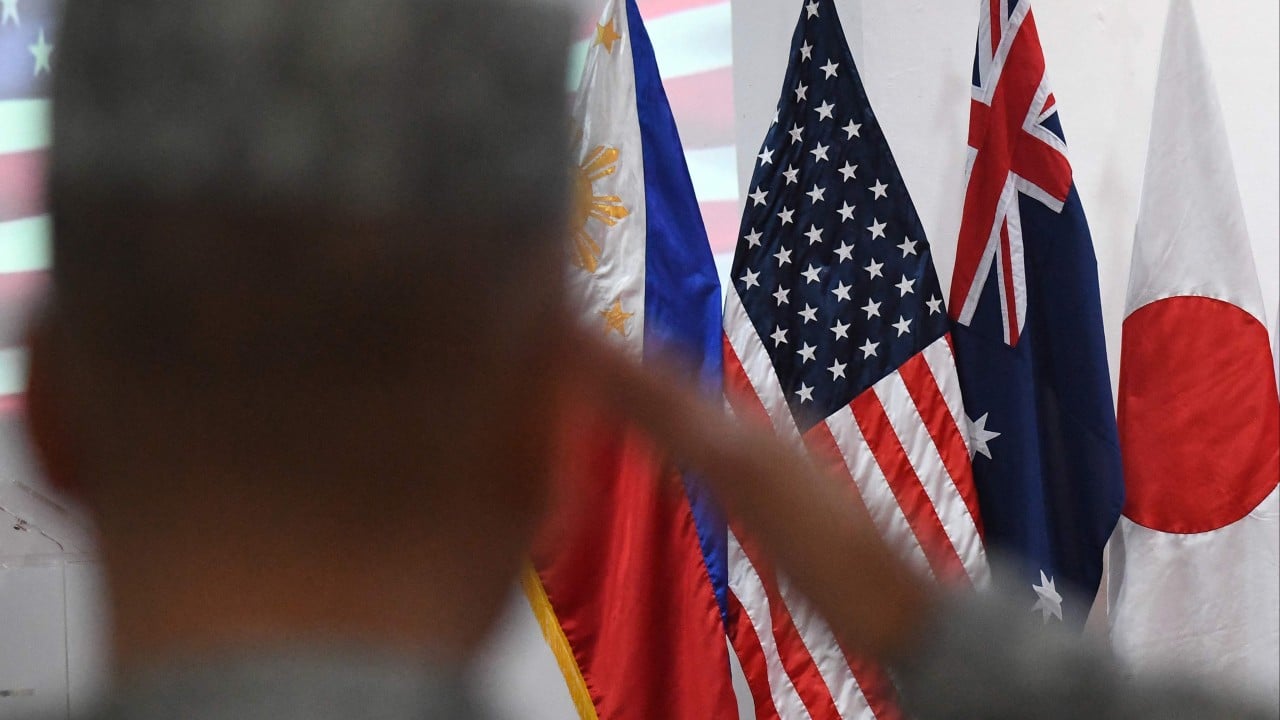
Analysts are divided over the Philippines' push for minilateral defense links and a stronger Asean security role. Some see the alliance of the United States, Philippines, Japan, and Australia as an opportunity to deepen core security partnerships during Manila's chairmanship of Asean. Others question the actual influence of this informal defense grouping, which aims to counter China's regional influence.
They also warn that frequent US-led small-group diplomacy could undermine Asean's centrality at an upcoming summit and limit Manila's strategic options ahead of Trump-Xi talks.
Philippine Ambassador to the US Jose Manuel Romualdez hinted that the Squad could meet during the Asean summit in Manila, just days before Trump meets Chinese President Xi Jinping in Shenzhen. He expressed hope that Asean could take greater responsibility for its own security, similar to NATO. US Secretary of State Marco Rubio confirmed the Quad will hold its first summit in over two years during the Manila gathering.
The Quad, comprising the US, Japan, Australia, and India, is seen as a "diplomatic partnership" to foster a free and open Indo-Pacific. However, US Secretary of State Marco Rubio noted that the recent meeting lacked evidence of the Trump administration's priority in this initiative.
Some analysts argue that the timing of the meetings suggests an opportunity to highlight minilateral security cooperation and potentially affect Asean unity and flexibility towards Beijing. Researchers contend that Manila's pursuit of expanding security partnerships across the Indo-Pacific area is understandable given recurrent maritime clashes with China and limited guarantees from other Asean members.
Nonetheless, experts caution that a meeting of US treaty allies may send a stronger signal to Beijing than a formulaic meeting of the Squad alone.
Written by urgent.news from Reuters Business via SCMP's reporting — not their text. Machine-written — may contain errors; check the original before relying on it.