NASA’s Swift Mission Ends, Leaves Behind Scientific Bonanza
NASA’s Neil Gehrels Swift Observatory has ended its science mission now that the spacecraft is orbiting less than 171 miles (275 kilometers) above Earth’s surface. The greater atmospheric drag at this height prevents the satellite’s telescopes from steadily gazing at their astronomical targets. Swift conducted its final observation on Oct. 20. It is expected to […] The post NASA’s Swift Mission…
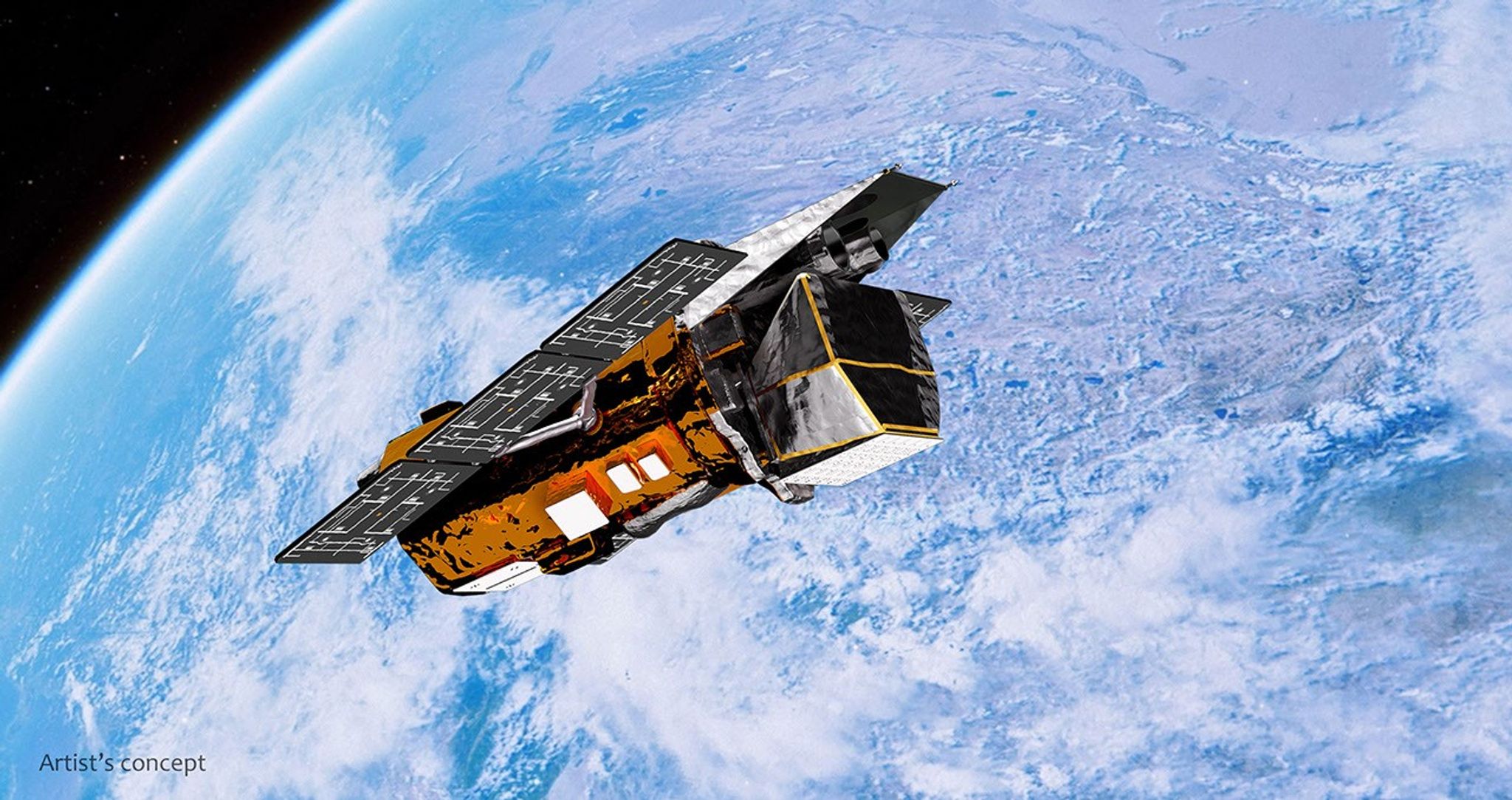
NASA's Neil Gehrels Swift Observatory has concluded its science mission as the spacecraft now orbits just below 171 miles (275 kilometers) above Earth. The reduced altitude causes atmospheric drag, which hinders the telescopes' steady view of celestial targets. Swift conducted its final observation on October 20 and is anticipated to re-enter the atmosphere within the coming weeks.
Despite its mission's conclusion, Swift has made a lasting impact on scientific understanding. NASA's Shawn Domagal-Goldman, Astrophysics Division Director, noted that Swift provided a significant return on investment, delivering more than a decade's worth of valuable data. Over its remarkable career, Swift has observed more than 2,000 gamma-ray bursts, the universe's most powerful explosions, and over 1,400 supernovae.
It has also witnessed stars devoured by black holes, monitored active galaxies, and conducted a comprehensive X-ray survey of the sky. Swift has contributed to approximately 7,000 scientific papers.
Originally designed to study gamma-ray bursts, Swift proved to be a versatile observatory. In 2018, NASA renamed the mission in honor of Neil Gehrels following his death. Speed was crucial for detecting elusive short gamma-ray bursts, which peak in brightness within two seconds. Swift's quick response enabled the detection of an afterglow, providing crucial data supporting the idea that these bursts result from the merger of neutron stars.
Swift's unique rapid response capabilities and flexible mission operations allowed astronomers to request "target-of-opportunity" observations almost instantaneously. As a result, Swift has become a vital tool for astronomers across various research areas. The mission's dataset, publicly available, spans approximately 12 terabytes, equivalent to around 600 high-definition movies.
Written by urgent.news from NASA Science's reporting — not their text. Machine-written — may contain errors; check the original before relying on it.
Also reported by 1 other outlet
- NASA’s Swift Mission Ends Ahead of Re-Entry science.nasa.gov