Mount Erebus Is One of Earth's Most Unusual Volcanoes, With a Rare Lava Lake and Chimney-Like Towers
Learn more about Mount Erebus, why it's so unique, and what modern technology has told us about it.
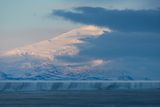
Mount Erebus, located in Antarctica, is the most unusual active volcano on Earth. It was discovered in the 1970s by scientists who found a lava lake in its summit crater. The proportions of carbon dioxide to water vapor in the volcano alternate on a 10-minute cycle. Despite numerous explorers attempting to study the volcano, no one had previously identified how it functioned within its own life cycle.
In 1841, British explorer James Clark Ross came across Mount Erebus while his ship, the HMS Erebus, was near an icy island in Antarctica. The volcano was covered in ice and snow, but plumes of scorching smoke could be seen drifting from its vent. Ross named the volcano after his ship. Mount Erebus is currently the southernmost active volcano on the planet and is considered one of the most intriguing due to the lava lake found in its summit crater.
Recent advancements in technology have allowed researchers to gather more precise measurements and gain deeper insights into this molten mountain. The volcano features "Dr. Seuss-like" ice chimneys formed when steam from the vent collides with the -30-degree air. Below the ice, there are intricate ice crystal sculptures. However, what sets Mount Erebus apart from other volcanoes is its unique behaviors that cannot be observed without the aid of technology.
Using an advanced spectrometer, volcanologist Clive Oppenheimer and his team discovered that the proportion of carbon dioxide to water vapor in the lava lake alternated on a 10-minute cycle. They also used thermal infrared images to analyze the lava lake's movements, noticing a similar 10-minute cycle that influenced the speed at which the lake moved. Additionally, they found that the lava lake's level rose and fell in sync with this cycle.
The volcano exhibits a rhythmic pattern, as if it were breathing. Oppenheimer believes this 10-minute cycle demonstrates the volcano's "pulse." Despite years of exploration, scientists have yet to fully understand what lies beneath the lava lake's surface. However, with the development of more sophisticated sensors and computer models, researchers hope to gain further insight into the lake's properties, such as its density and porosity.
Written by urgent.news from Discover Magazine's reporting — not their text. Machine-written — may contain errors; check the original before relying on it.